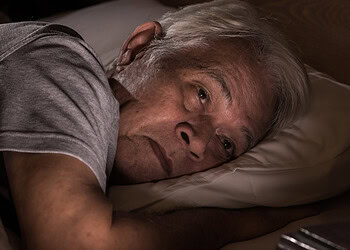
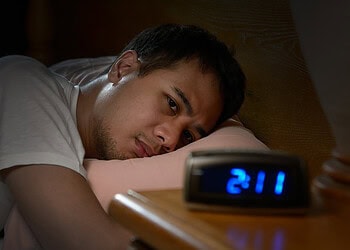
In a novel exploration into the intricate ways our physical states impact our use of words, researchers have discovered a fascinating link between poor sleep quality and an increased use of specific types of arousing language, namely humor and curse words. The study, published in Current Psychology, suggests that those experiencing poor sleep quality may be more inclined to use arousing forms of language as a physiological mechanism to counteract feelings of tiredness.
Prior studies have extensively documented individual differences in the use and appreciation of humor and the use of curse words, focusing on the effects of such language on listeners and identifying various factors, including gender, age, temperament, personality, political orientation, and culture, that influence humor usage. However, most of these studies have not explored the impact of using arousing language on the speakers themselves.
Given the established effects of word arousal on cognitive processing and physiological responses, and the known benefits of humor and cursing in coping with pain and stress, this study aimed to investigate the relationship between sleep quality and the use of arousing language, hypothesizing that fatigue might increase the propensity to use such language.
“Since around the time I was in first grade, I have been interested in words and word meaning,” said study author Shelia M. Kennison, a professor of psychology at Oklahoma State University and author of Cognitive Neuroscience of Humor.
“Curse words are fascinating when considered as a type of word. Most people use them but may not want to admit to using them. They can cause humor (e.g., when small children use them) and fear (e.g., in a confrontation). In the present study, I was interested in the idea that our use of curse words may be linked to biological processes (i.e., our physiological levels of fatigue) operating below the level of consciousness.”
The research team gathered data from a sample of 309 undergraduate students enrolled in psychology and speech communication courses. To assess the various constructs of interest, the researchers utilized a set of existing, validated measures. Participants completed these measures via an online survey, which also included demographic questions and an attention check to ensure data reliability.
The use of humor was evaluated using the Humor Styles Questionnaire, which identifies four distinct humor styles: affiliative, self-enhancing, aggressive, and self-defeating. Participants rated their agreement with statements on a 7-point scale, reflecting the extent to which each statement described their humor usage.
Curse word frequency was measured through a self-report mechanism where participants indicated how often they used 20 common English curse words, ranging from “never” to “very frequently” on a 6-point scale. This approach aimed to quantify the frequency of curse word usage in everyday language.
Sleep quality was assessed using two instruments: the MOS Sleep Problems Index-II (SPI-II) and a subset of items from the CESD-R depression symptoms measure focused on sleep-related symptoms (CESDR4). These measures required participants to reflect on their sleep experiences over the past four weeks and the most recent week, respectively, providing a multifaceted view of sleep quality.
Lastly, sensation-seeking was measured using the Sensation Seeking Scale-Version V (SSS-V), which evaluates the tendency towards thrill and adventure seeking, experience seeking, boredom susceptibility, and disinhibition. This scale helped to control for personality traits that might influence both sleep quality and language use.
One of the key discoveries was the significant correlation between poor sleep quality and the increased use of self-defeating humor. This specific style of humor, characterized by making oneself the target of jokes, was more commonly reported among participants who experienced more sleep problems.
Additionally, the study found a notable relationship between sleep quality and the frequency of curse word usage. Participants who reported more sleep issues were also found to use curse words more frequently. This relationship was evident with both sleep quality measures, indicating a consistent pattern across different aspects of sleep assessment.
The findings suggest that not only does poor sleep affect the type of humor one might use, but it also influences the propensity to use language that is considered more arousing, such as curse words.
“I am always surprised at the relatively high frequency of self-reported cursing among students at my university, which is in the Bible belt and a fairly conservative region of the country,” Kennison said. “One might imagine that our students would avoid cursing due to sociocultural norms here.”
These relationships held even after accounting for other variables, such as gender and sensation-seeking personality traits, indicating a specific link between the physical state of fatigue and the propensity to employ arousing language.
“The causes for our use of curse words are complex and include biological factors (e.g., are we tired),” Kennison told PsyPost. “Some of the biological factors may not be completely under our voluntary control.”
“The general public may see the use of curse words as completely about someone choosing to curse and all about the person’s disposition and/or character (i.e., people who curse a lot are not good people). The research suggests that people who curse a lot may have biological processes occurring that are contributing to it. They are not necessary of poor or questionable character. It may be that they are tired.”
While this study provides valuable insights, it also has limitations, including its reliance on self-reported measures and its cross-sectional design, which restricts the ability to infer causation.
“A self-report methodology was used,” Kennison noted. “Participants estimated their curse word usage frequency. We suspect that the data are underestimates of curse word usage, as many people may view cursing a lot as not ideal given social norms (especially their parents preferences).”
“In future research, I would like to explore the same variables using methods where I would be able to track curse word usage and fatigue throughout the day across many days (i.e., experience sampling methodology). Because curse words are relatively infrequent and because people may be somewhat reluctant to admit how often they curse, it is a difficult topic to study.”
This research offers a pioneering look at how our physical states, particularly sleep quality, can influence our choice of language, shedding light on the complex interplay between physiological well-being and communication. It opens up new avenues for understanding the adaptive functions of language and highlights the importance of considering physiological states in psychological and linguistic research.
“In two studies now, we have found links between the use of curse words and the use of humor, which is also a type of verbal behavior that is related to changing our level of mood and alertness (i.e., increasing positive mood and increasing arousal),” Kennison said. “These types of language use not only affect those listening to the words, but in my view also affects the physiology of those producing the language.”
The study, “The relationships among sleep quality, humor styles, and use of curse words,” was authored by Shelia M. Kennison and Maria Andrea Hurtado Morales.