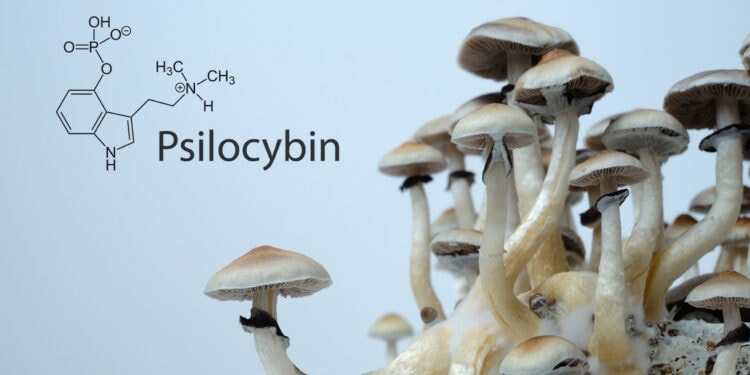
Psilocybin-assisted therapy appears to offer moderate short-term reductions in drinking and improved odds of remaining abstinent over several months for people with alcohol use disorder, according to a systematic review and meta-analysis published in Journal of Psychopharmacology. Pooling data from six modern clinical trials, the researchers found that the medically supervised treatment was generally well tolerated, with mostly mild and short-lived side effects. Although longer-term advantages varied across drinking measures, the findings suggest the approach could eventually become a viable addition to existing addiction care.
Alcohol use disorder is a chronic medical condition marked by a persistent inability to cut back or stop drinking alcohol despite serious harm to a person’s health, relationships, or daily responsibilities. Standard care includes prescription medications such as naltrexone or acamprosate, which target brain pathways involved in cravings and reward, alongside talk therapies like cognitive behavioral therapy and motivational interviewing. Even after receiving these established treatments, many patients return to heavy drinking, driving clinical interest in new therapeutic options.
One emerging option is psilocybin-assisted therapy, in which a patient takes one or more medically supervised doses of psilocybin, the active psychedelic compound in certain mushrooms. Clinics pair those dosing sessions with preparatory counseling beforehand and integration sessions afterward to help patients process the experience. Earlier brain imaging research in patients with alcohol use disorder indicated that this therapy increased activity in prefrontal regions tied to decision-making while dampening activity in areas such as the insula during alcohol and emotional cues.
Medical interest in using classic psychedelics for severe drinking problems dates back to the mid-20th century, when early LSD trials suggested possible benefits before prohibition halted research, though those studies fell short of modern clinical standards. Contemporary work shifted to psilocybin with a 2015 proof-of-concept study of 10 adults with alcohol dependence, which found substantial drops in drinking after psilocybin sessions paired with talk therapy.
Don’t miss the next big psychology finding
Every morning, PsyPost sends a short briefing on the most interesting new peer-reviewed research in psychology and neuroscience.
The first wave of placebo-controlled trials soon followed, yielding mixed results. In a 2022 randomized clinical trial of 93 adults, patients given psilocybin plus psychotherapy had fewer heavy drinking days over 32 weeks than those given an active antihistamine placebo and the same therapy. By contrast, a 2025 randomized trial conducted in Switzerland with 37 adults recently out of alcohol withdrawal found no statistically significant advantage for a single psilocybin dose over an inactive placebo.
Earlier reviews had pooled historical LSD trials or combined several different psychedelics, leaving no focused analysis of modern psilocybin studies for alcohol use disorder. To test whether the combined clinical evidence holds up, researchers conducted a systematic review and meta-analysis, a method that statistically pools data from multiple independent studies to estimate an overall effect. The study was co-led by Gianluca Florineth, a PhD candidate at the University Hospital of Adult Psychiatry and Psychotherapy at the University of Bern in Switzerland, and Anna L. Boeker of the University of Basel.
“Alcohol use disorder (AUD) causes more than three million deaths each year, and a majority of patients relapse even after receiving standard medications and/or psychotherapy,” Florineth told PsyPost. “Psilocybin-assisted therapy is an intervention that is now being tested as a potential treatment for AUD with multiple clinical trials published in the last few years. However, no meta-analysis had pooled these results yet. Additionally, our research group is currently conducting a clinical trial to assess LSD-assisted therapy for AUD, so we wanted a benchmark of what contemporary psychedelic trials show for AUD.”
Following standard guidelines for systematic reviews, with the protocol registered in advance, two authors independently searched three major scientific databases, PubMed, Scopus, and PsycINFO, for clinical studies published between January 2000 and January 2026. Trials were eligible if they enrolled adults formally diagnosed with alcohol use disorder or alcohol dependence, administered at least one dose of psilocybin as part of a psychological therapy program, and reported numerical alcohol consumption outcomes. Studies of informal or recreational psilocybin use, trials testing other substances, case reports, and review papers were excluded.
After screening 132 records, the team identified six contemporary clinical trials involving 202 adults in total, including 127 who received psilocybin and 75 who received control treatments. The studies took place in the United States, France, Switzerland, and Denmark, with participants averaging 44.4 years old and 43.1 percent identifying as female. Three were double-blind randomized controlled trials comparing psilocybin against a control substance: a 1-milligram psilocybin dose in France, an inactive mannitol placebo in Switzerland, or the antihistamine diphenhydramine in the United States.
The remaining three studies were open-label trials: two single-group trials in the United States and Denmark, and a U.S. trial comparing two high-dose psilocybin protocols that the authors analyzed as one pre-to-post group. Patients received one or two moderate-to-high psilocybin doses, typically 25 milligrams and up to 40 milligrams or weight-adjusted equivalents, alongside four to 12 therapy sessions spanning three to 12 weeks. Those psychological approaches varied widely, spanning cognitive behavioral therapy, motivational enhancement therapy, acceptance and commitment therapy, general alcohol counseling, guided imagery, and nature-themed videos.
All six trials tracked alcohol consumption using structured calendar-based recall interviews. This allowed the researchers to analyze average drinks per day, the percentage of days spent drinking, the percentage of heavy drinking days, and abstinence rates.
The authors ran two separate statistical analyses: one tracking before-and-after changes among all psilocybin-treated patients, and a stricter comparison between psilocybin and control groups across the three randomized trials. They grouped drinking outcomes into short-term results within a month of the final dose and longer-term results four to 28 weeks later. The team also reviewed safety records and rated each trial’s risk of bias using standard clinical checklists.
Across all six trials, patients who received psilocybin showed large before-and-after drops across every drinking measure. Those reductions in drinks per day, percentage of drinking days, and percentage of heavy drinking days appeared in the first month and persisted at four- to 28-week follow-ups.
Because people entering alcohol treatment often cut back even in a control group, the stricter test came from the three randomized controlled trials. Within the first month after the final dose, psilocybin recipients showed consistent, moderate advantages over controls. They reported fewer drinks per day, a lower percentage of drinking days, and a lower percentage of heavy drinking days.
At the four- to 28-week follow-up, differences between psilocybin and control groups were more mixed. Participants given psilocybin kept a moderate reduction in their percentage of drinking days compared with controls. Differences in average drinks per day and percentage of heavy drinking days, however, were not statistically significant and varied across trials.
For abstinence, early differences during the first month did not reach statistical significance. At the four- to 28-week mark, however, psilocybin recipients had nearly three times the odds of remaining abstinent compared with controls. Individual trials defined abstinence differently, ranging from strict zero alcohol consumption to up to one drink per day.
Within these supervised research settings, the treatment appeared generally well tolerated, with several trials reporting completion rates of 90 percent or higher and one pilot study recording no dropouts. Across all studies, researchers logged 268 adverse events among psilocybin recipients and 98 among control participants, though more patients received psilocybin overall. Most side effects were mild and short-lived, led by headaches, nausea, brief anxiety, and temporary spikes in blood pressure, with no reports of persistent psychosis or lingering perceptual disturbances.
Of the 10 serious adverse events recorded across all trials, seven occurred in participants who did not receive psilocybin, and none were directly attributed to the drug itself. The three serious events documented in psilocybin recipients were all related to inpatient alcohol withdrawal treatment, tied to participants’ underlying alcohol use disorder rather than psilocybin.
The clinical findings align with an earlier survey of adults who reported curbing problem drinking after psychedelic experiences, though that study relied on retrospective self-reports of informal use rather than controlled trials with structured therapy. They also echo an experimental animal study indicating that psilocybin reduced voluntary alcohol intake in rats by altering gene activity in a brain reward region, although animal findings cannot directly capture the complexities of human alcohol use disorder.
Weighing the pooled findings as a whole, Florineth said, “The evidence is still early and mixed, but it points to some promising signals.”
In the authors’ assessment, the moderate short-term benefits compare favorably with established treatments for alcohol use disorder. Standard medications such as naltrexone, acamprosate, or topiramate and talk therapies like cognitive behavioral therapy generally show small-to-moderate gains over control conditions. Compared with psychedelic trials for depression or anxiety, however, the advantages over control groups in alcohol trials tended to be smaller. The researchers suggest this gap may reflect entrenched addiction habits as well as strong improvements in alcohol control groups, which often receive intensive counseling or recent detoxification.
“The effects are more modest than those often seen in psychedelic trials for depression, which may reflect how difficult AUD is to treat,” Florineth explained. “Still, they compare well to established AUD pharmacotherapies and psychotherapeutic approaches, which typically show small-to-moderate benefits over control treatments. Because psilocybin is given in only one or two supervised sessions rather than taken daily, it avoids the ongoing side effects that often cause patients to stop standard medications, though it requires substantial therapist time and clinical infrastructure.”
One pattern that drew the authors’ attention was how much longer-term results differed from one trial to another. The large U.S. trial paired psilocybin with 12 weeks of specialized alcohol psychotherapy and saw lasting drops in heavy drinking, whereas the Swiss trial offered briefer support and saw group differences fade. In the authors’ reading, psilocybin may act less as a standalone drug and more as a catalyst that amplifies psychotherapy, meaning counseling intensity and each patient’s drinking goals could help shape lasting outcomes.
“Something that stood out was the heterogeneity in results across the trials compared to psychedelic trials in other disorders,” Florineth noted. “While this is still speculative given the small number of studies, it could suggest that efficacy in AUD patients depends more heavily on the therapeutic embedding and clinical context.”
There are several caveats to keep in mind when interpreting these findings. The evidence base remains very small, resting on six modern studies and only three randomized controlled trials, and every included trial was rated at high risk of bias. In the controlled trials, that rating stemmed mainly from the difficulty of keeping participants unaware of their assignment because psilocybin causes pronounced shifts in perception and mood. Knowing whether one received the drug or a placebo can heighten expectations, and unblinding contributed to uneven dropout between the groups in the French trial.
The trials also differed substantially in patients’ baseline drinking severity, co-occurring depression, inpatient versus outpatient settings, and how abstinence was defined. Given the small number of studies and these variations, the authors could not determine optimal dosing schedules, identify which patients benefit most, or separate the effects of psilocybin from the surrounding psychotherapy.
“Readers should also keep in mind that this is not a standalone cure or a DIY approach,” Florineth cautioned. “Every trial paired the substance with medical screening, close supervision, and structured therapy sessions before and after substance administration.”
Looking ahead, the authors argue that the field needs larger trials lasting at least six months that use active control treatments and track whether participants guess their group assignment. They also call for studies testing different therapy formats side by side, alongside several newly registered clinical trials investigating related psychedelics such as LSD.
“The field now needs larger confirmatory trials to clarify both efficacy and potential underlying mechanisms,” Florineth added. “Our research group (in Bern and Basel) is currently conducting a multicenter clinical trial (NCT05474989) in a large sample of patients to evaluate whether LSD-assisted therapy can offer a safe and effective treatment option for people with AUD.”
The study, “Efficacy and safety of psilocybin-assisted therapy for alcohol use disorder: A systematic review and meta-analysis,” was authored by Gianluca A. Florineth, Anna L. Boeker, Tobias Bracht, Alexander Wopfner, Niklaus Denier, Kristina Adorjan, Felix Müller, and Leila M. Soravia.
