A recent study published in iScience suggests that psilocybin does not impair learning and may enhance exploratory behavior. The study marks the first investigation into how psilocybin influences reinforcement learning, a type of learning based on rewards and cues. The results showed that psilocybin maintained learning capabilities similar to a placebo, with higher doses leading to improved learning rates in specific conditions.
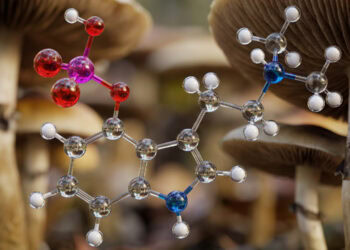
Psilocybin, a naturally occurring psychedelic compound found in certain “magic” mushrooms, has a long history of use in various cultures for spiritual and ritual purposes. When ingested, psilocybin is converted into psilocin, which affects the brain by interacting with serotonin receptors. This interaction leads to altered states of consciousness, changes in perception, mood, and cognition. Recently, psilocybin has garnered significant attention in the medical and scientific communities for its potential therapeutic benefits, particularly in treating psychiatric disorders such as depression, anxiety, and substance use disorders.
“Psilocybin has shown promise in treating mental health conditions like depression, generalized anxiety disorder, and substance use disorder among others,” said study author Andrea F. Casanova, a psychiatry resident at the University of Zurich. “Since treatment involves some form of learning (be it conscious or subconscious), understanding how this aspect is affected by psilocybin helps to optimize and put therapeutic approaches into perspective. As a medical doctor in Switzerland, where such therapy is legal in some cases, I was interested to see how psilocybin affected the cognitive capacities required for therapy.”
The researchers were particularly interested in how psilocybin affects learning when emotional cues are involved. Emotional cues, such as faces displaying different expressions, play a significant role in how we process and retain information. The study aimed to determine whether psilocybin enhances or impairs learning when these cues are presented consciously or subconsciously.
The study included 30 healthy, right-handed white volunteers with an average age of 29 years. Participants were screened to exclude anyone with a personal or family history of major psychiatric disorders, significant medical conditions, or current use of psychotropic medications.
Participants were randomly assigned to receive either psilocybin or a placebo (mannitol) in two sessions spaced two weeks apart. The dosages of psilocybin were adjusted based on body weight: 10 mg for those under 50 kg, 15 mg for those between 50 and 80 kg, and 20 mg for those over 80 kg. The study utilized a double-blind method, meaning neither the participants nor the researchers knew who received psilocybin or placebo in each session, thus minimizing bias.
The core of the study was the EmotLearn task, a probabilistic learning task designed to investigate how emotional cues influence learning. Participants were tasked with maximizing virtual monetary rewards by selecting between two symbols, with one symbol consistently yielding higher rewards than the other. Emotional cues in the form of neutral or fearful faces were presented before the symbols, either consciously (visible for 47 milliseconds) or subconsciously (visible for 33 milliseconds). Each participant completed four tasks with 60 trials each, leading to a comprehensive dataset of 7200 trials for analysis.
Overall, the researchers found that psilocybin did not impair learning compared to placebo; both groups demonstrated similar learning curves, starting from chance level accuracy (around 50%) and improving as they progressed through the trials. This indicates that psilocybin preserves the ability to learn from rewards, a crucial cognitive function.
Interestingly, the study revealed that psilocybin induced higher exploratory behavior. Participants on psilocybin showed greater variability in their choices, suggesting an increased willingness to explore different options rather than sticking rigidly to a learned strategy. This was particularly evident from the borderline significant higher variance in responses under psilocybin compared to placebo.
The impact of emotional cues on learning varied depending on the type of cue and whether it was presented consciously or subconsciously. Subconscious cues significantly disrupted learning under psilocybin compared to placebo.
Participants performed worse when neutral faces were presented subconsciously under psilocybin, indicating that the drug might interfere with the processing of subtle, less noticeable emotional cues. On the other hand, conscious neutral cues led to better learning outcomes with psilocybin, highlighting a nuanced effect where the mode of presentation plays a critical role.
Dosage effects were also notable. The 20 mg dose of psilocybin significantly improved learning rates compared to placebo, suggesting a dose-dependent enhancement in cognitive flexibility and learning efficiency. However, the 15 mg dose resulted in poorer performance compared to placebo, indicating that the effects of psilocybin are not straightforward and may vary with dosage.
Moreover, participants who received psilocybin first in the crossover design performed worse overall compared to those who received placebo first. This suggests that initial exposure to psilocybin might introduce a level of cognitive or emotional disruption that affects subsequent task performance.
Reaction times were generally slower under psilocybin, indicating that the drug may cause a general slowing of cognitive processing. However, within the psilocybin groups, those on the highest dose (20 mg) exhibited faster reaction times compared to the mid-dose group (15 mg), further underscoring the complex relationship between dosage and cognitive effects.
“We thought that psilocybin would fare equally or worse than the placebo in a learning task, but we were surprised to see that the higher dosage (20 mg) led to better performance compared to the placebo group and to faster reaction times compared to the lower dosage,” Casanova told PsyPost.
Finally, despite subjective reports of impaired vigilance and cognition under psilocybin, objective performance measures did not reflect a significant decline. This discrepancy highlights the need to consider both subjective experiences and objective data when evaluating the cognitive effects of psychedelics.
“Not only does psilocybin temporarily and safely broaden the window of emotional perception, offering a novel perspective and potentially disrupting maladaptive thought patterns, but we also showed that it successfully preserved the capacity for strategy finding and decision-making compared to a placebo in a learning task, especially with a higher dosage,” Casanova explained. “In other words, learning is not impeded when in an altered state of awareness induced by psilocybin, as applied in sessions of psychedelics-assisted psychotherapy.”
But as with all research, there are some limitations to consider. First, the sample size was relatively small, consisting of only 30 participants. Future research with larger groups could provide more robust data. Second, the study focused on short-term effects of psilocybin, typically observed a few hours after administration. Long-term studies are needed to understand the lasting impact of psilocybin on learning and cognition.
“Since psychedelic-assisted psychotherapy can be more delicate than regular psychotherapy, it is instrumental to carefully screen and instruct suitable patients for a session,” Casanova noted. “Moreover, this therapy is illegal in many parts of the world, requiring adherence to legal regulations and guidelines.”
“For those interested, another paper emerged from the same study, where we measured brain responses to perturbations under psilocybin. The paper is called ‘TMS-EEG and resting-state EEG applied to altered states of consciousness: oscillations, complexity, and phenomenology,'” he added.
The study, “The influence of psilocybin on subconscious and conscious emotional learning,” was authored by Andrea F. Casanova, Andres Ort, John W. Smallridge, Katrin H. Preller, Erich Seifritz, and Franz X. Vollenweider.