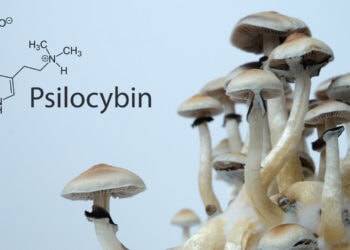
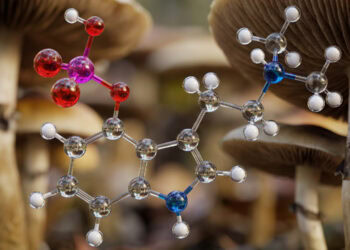
In a recently published study, scientists developed new compounds derived from psilocybin, the active ingredient in “magic mushrooms.” These compounds are designed to reduce the duration of psychedelic effects associated with psilocybin while maintaining its therapeutic benefits. This development, detailed in the Journal of Medicinal Chemistry, could mark a significant step forward in mental health treatment, offering hope for those suffering from these common yet often debilitating conditions.
The motivation behind this innovative research stems from the limitations of current treatments for depression and anxiety disorders. A significant portion of patients suffer from treatment-resistant depression, where traditional medications fail to provide relief. In light of these challenges, scientists have turned their attention to psilocybin, a natural compound found in certain mushrooms, which has been used for centuries in traditional healing practices.
“Recent developments in the world of psychedelic research have unveiled significant long-term neurological benefits linked to the psychotherapeutic application of hallucinogenic compounds such as psilocybin, DMT, ketamine, LSD, in patients struggling with severe depression and anxiety disorders,” said study author Sheetal Raithatha, the director of preclinical development at Enveric Biosciences Inc.
“These molecules are revolutionizing the mechanism of pharmacological intervention for such diseases due to their ability to promote neuronal plasticity (being recently classed as neuroplastogenic agents). Even though these classic psychedelics are demonstrating notable therapeutic value, their clinical application is significantly hindered by their potent hallucinogenic effects, with episodes lasting up to 6 hours from the time of dosing. This feature alone, requiring extended clinical supervision, dramatically limits their feasibility as a psychiatric drug.”
“Taking advantage of our ability for novel synthetic innovation, Enveric Biosciences recognized an opportunity to generate new medicines, inspired by foundational psychedelics, that can alleviate the significant clinical hurdles and get these ground-breaking neuroplastogenic therapeutics to patients in dire need of new treatment options,” Raithatha explained.
To explore the potential of psilocybin in a more controlled and clinically feasible way, the researchers embarked on a mission to create novel derivatives of psilocin – the compound that psilocybin turns into in the body and is responsible for its psychoactive effects. They aimed to modify the pharmacokinetics of psilocybin – essentially changing how the compound is absorbed, distributed, metabolized, and excreted in the body. They ended up with a pool of twenty-eight unique compounds.
The study involved both in vitro (test tube) and in vivo (living organism) methods. Initially, the metabolic stability of each new compound was tested using human liver and intestinal enzymes. This was followed by a pharmacokinetic analysis in male C57BL/6 mice, a common model used in medical research. The mice were given varying doses of either psilocybin or one of the novel compounds, and their blood samples were collected at different time intervals to measure the levels of psilocin and the new compounds. Additionally, the researchers conducted behavioral tests in mice to assess the psychoactive and anxiolytic (anxiety-reducing) properties of these compounds.
The study revealed that these compounds have diverse metabolic profiles. Some were more stable in the gastrointestinal tract, while others were metabolized more efficiently in the liver. This variability in how the compounds are processed by the body opens the door to tailored treatments, potentially offering more personalized and effective therapies for patients with mental health disorders.
Some of the new compounds, particularly those with ester and thiocarbonate linkages, were found to induce strong psychoactive responses in mice, comparable to psilocybin itself. Importantly, these responses were achieved with lower peak concentrations of psilocin in the blood, suggesting that the modified compounds could offer similar therapeutic benefits with a reduced risk of the intense and long-lasting psychedelic experiences associated with psilocybin. In the marble-burying test, a behavioral experiment used to gauge anxiety levels in mice, these compounds demonstrated significant anxiolytic effects, particularly in mice subjected to a mild chronic stress paradigm.
“The goal of this study was to generate a series of novel derivatives of the natural prodrug psilocybin and screen them for altered metabolic processing,” Raithatha told PsyPost. “Enveric Biosciences designed 28 new chemical entities and employed a comprehensive strategy of synthesis and functional screening to identify several novel psilocin prodrugs with candidate potential. We demonstrated that distinct modifications in the chemical structure of psilocybin led to notable changes in the way this natural prodrug was absorbed and metabolized by the body.”
“These structural modifications resulted in reduced overall systemic exposure of the psychoactive metabolite, psilocin, driven solely by where the molecule was processed by the body. Even with altered pharmacokinetic profiles, these novel psilocin prodrugs retained the long-term anti-anxiety benefits equivalent to psilocybin. These results suggest that our novel psilocin prodrugs have the potential to attenuate the duration of psychedelic effects while maintaining long-term therapeutic benefits.”
These results point towards a promising future where modified derivatives of psilocybin could be used to treat anxiety and depression more effectively and with fewer side effects. One of the most significant implications of this research is the potential reduction in the duration of psychoactive effects. This could make psilocybin-based treatments more feasible and accessible, as the current requirement for extended clinical supervision due to long-lasting psychedelic experiences is a major barrier to their widespread use.
The next steps involve more detailed studies on these compounds to understand their pharmacological properties better, and eventually, clinical trials in humans. This research could ultimately lead to the development of new, more effective treatments for anxiety and depression, offering relief to millions of people worldwide. The study not only opens up new avenues in psychopharmacology but also reinforces the importance of looking to nature for potential medical breakthroughs.
“Even though our novel psilocin prodrugs produce reduced exposure, and potentially reduced psychedelic effects, these interpretations are based on established rodent models of pharmacokinetics and behavior,” Raithatha said. “To truly confirm a mitigated psychedelic experience has been achieved with enduring therapeutic benefit, human clinical trials will be necessary.”
The study, “Novel Psilocin Prodrugs with Altered Pharmacological Properties as Candidate Therapies for Treatment-Resistant Anxiety Disorders“, was authored by Sheetal A. Raithatha, Jillian M. Hagel, Kaveh Matinkhoo, Lisa Yu, David Press, Sarah G. Cook, Govinda Sharma, D. Dhananjaya, Glynnis Jensen, Jessica B. Lee, Charlie Cai, Jonathan Gallant, Jaideep Bains, Joseph E. Tucker, and Peter J. Facchini.