A new study published in the Journal of Affective Disorders provides preliminary evidence that creatine levels in a specific region of the brain could play a role in recovering from traumatic events. The study, conducted with a small group of United States veterans, suggests that higher levels of creatine are associated with better recovery from stress caused by traumatic experiences.
The study was motivated by the critical need to understand why some individuals recover from traumatic events while others develop long-lasting psychological conditions like post-traumatic stress disorder (PTSD). Traditional research has often focused on psychological and environmental factors contributing to PTSD, but there is a growing interest in the biological and neurochemical underpinnings that might predispose individuals to or protect them from the long-term consequences of trauma.
PTSD is a mental health condition that can develop after a person has experienced or witnessed a traumatic event, such as a natural disaster, a serious accident, a terrorist act, war/combat, rape, or other violent personal assault.
People with PTSD may have intense, disturbing thoughts and feelings related to their experience that last long after the traumatic event has ended. They may relive the event through flashbacks or nightmares; feel sadness, fear, or anger; and feel detached or estranged from other people.
PTSD is characterized by symptoms that disrupt daily functioning, and these symptoms are grouped into categories: re-experiencing the trauma, avoidance of reminders of the trauma, negative changes in thoughts and mood, and changes in physical and emotional reactions.
Creatine is an organic compound that plays a crucial role in energy production in cells. It is predominantly found in muscle and brain tissues where it helps to maintain energy supply.
Creatine enables the regeneration of adenosine triphosphate (ATP), the primary carrier of energy within cells, which is vital for maintaining cellular function and integrity. The researchers hypothesized that creatine levels in the brain could influence an individual’s ability to recover from trauma by affecting the energy availability in critical brain regions.
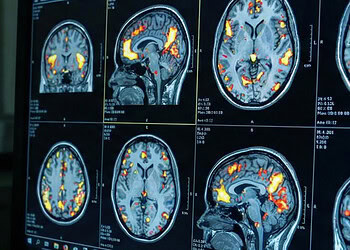
To explore the relationship between brain creatine concentrations and recovery from traumatic stress, the researchers conducted brain scans with a group of 25 U.S. veterans recruited from the Intermountain West region of the United States.
Upon enrollment, participants completed a series of questionnaires to gather data on their demographics, mental health status, and history of traumatic events. For the neuroimaging component, researchers used 1H-Magnetic Resonance Spectroscopy (1H-MRS), a specialized type of MRI that can measure the concentration of brain chemicals, such as creatine, in specific brain regions. The focus was on the anterior cingulate cortex (ACC), a key area implicated in emotional regulation and response to stress.
The researchers found that veterans with higher levels of creatine in the ACC reported greater reductions in stress over time since their most traumatic event. This suggests that creatine may play a role in the brain’s ability to recover from trauma.
Interestingly, the researchers did not find significant relationships between creatine levels and either the number of traumatic events experienced or the current severity of PTSD symptoms as measured by the PTSD Checklist for DSM-5. This indicates that while creatine may influence the recovery process after trauma, it does not necessarily correlate with the initial response to trauma or the ongoing symptom severity in PTSD.
Additionally, the researchers explored whether creatine levels differed between those who were on medications (such as antidepressants and other psychiatric drugs) and those who were not. They found no significant differences in creatine levels based on medication use, suggesting that the observed effects of creatine on stress recovery were not confounded by these medications.
The study, however, has several limitations. The sample size was relatively small, and participants were predominantly male veterans, which may limit the generalizability of the findings. Also, the study relied on participants’ retrospective reports of their stress levels, which could be subject to bias.
Future research could include a larger, more diverse population and employ longitudinal studies to track changes in creatine levels over time after traumatic events. Expanding the research to clinical samples with more severe PTSD symptoms could also provide deeper insights.
“Limitations notwithstanding, the current study provides compelling preliminary evidence that Cr concentrations in the ACC are related to recovery from traumatic life events. If replicated in larger samples, [creatine levels] may show promise as a novel target for intervention to improve mental health outcomes following exposure to traumatic life events,” the researchers concluded.
The study, “Creatine concentration in the anterior cingulate cortex is associated with greater stress recovery from traumatic events: Preliminary evidence from a US Veteran sample,” was authored by James R. Yancey, Jiyoung Ma, Punitha Subramaniam, Chelsea N. Carson, Erin C. McGlade, Deborah A. Yurgelun-Todd, and Perry F. Renshaw.