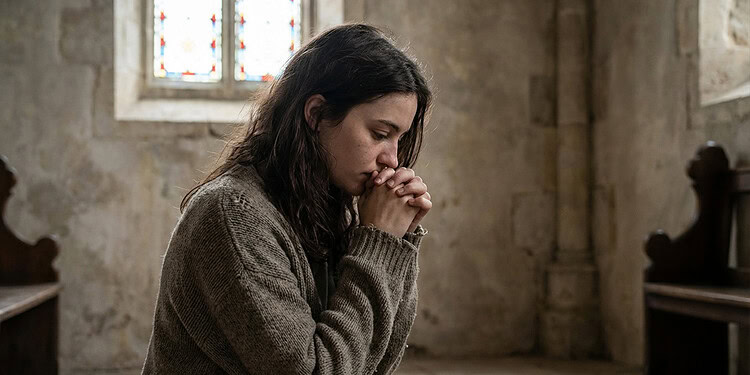

Religious faith is often associated with happiness, peace of mind, and a sense of purpose. A new series of scientific analyses reveals that highly religious people also frequently experience a blend of positive and negative feelings known as mixed emotions. These findings were published in the Personality and Social Psychology Bulletin.
Psychologists typically classify emotions as either strictly positive or strictly negative. Mixed emotions occur when a person feels happy and sad at the same time. This might happen during a graduation ceremony, which involves both pride in achievement and sadness about leaving friends. Vincent Y. S. Oh, a researcher at the Singapore University of Social Sciences, led an investigation into how religion influences these complex states. The research team sought to understand if the worldview provided by religion fosters a unique emotional landscape.
Previous research into the psychology of religion has produced divided results. Some studies indicate that faith boosts positive emotions like gratitude and joy. Other studies suggest it increases negative emotions like guilt or shame. The researchers behind the new study proposed that these perspectives might be missing a third possibility. They hypothesized that religion might provoke both types of feelings simultaneously.
This hypothesis stems from the contradictory nature of religious cognition. Religious teachings often encourage prosocial behavior and offer comfort during difficult times. At the same time, many religious traditions involve a deity who monitors behavior and punishes moral transgressions. This duality could theoretically lead a believer to feel safe yet scrutinized. The researchers aimed to test this idea across multiple datasets and cultural contexts.
The investigation involved five distinct studies encompassing a total of 8,414 participants. The team used data from two different countries to ensure the results were not limited to a single culture. They recruited participants from the United States and Singapore. This allowed for a comparison between Western and East Asian populations.
In the first study, the researchers surveyed 321 American adults. They measured “dispositional religiosity,” which refers to a person’s general, stable tendency to be religious. Participants rated their current emotional state on a scale. They indicated if they felt positive emotions like pride, negative emotions like fear, or mixed emotions. The mixed emotions were described as feeling a mix of happiness and sadness.
The data revealed a clear pattern. Participants who scored higher on religiosity reported experiencing higher levels of mixed emotions. They also reported higher positive emotions. There was no statistical link between religiosity and purely negative emotions in this first group.
The second study expanded this inquiry to the context of the COVID-19 pandemic. The researchers collected data from 1,061 participants in both the United States and Singapore during the early months of the global health crisis. The goal was to see if the high-stress environment changed the emotional outcome. The researchers asked participants how they felt specifically regarding the pandemic over the previous two weeks.
Despite the stressful backdrop of the pandemic, the results mirrored the first study. Religious individuals in both the U.S. and Singapore reported more mixed emotions than less religious individuals. The findings held true even when controlling for demographics like age, gender, and income. This suggested that the link between religion and mixed emotions is robust across different cultures and situations.
To confirm these initial results, the researchers conducted a third study with a pre-registered design. Pre-registration involves stating the hypothesis and analysis plan before collecting data. This practice increases scientific rigor. They surveyed 369 American participants. Once again, the analysis confirmed that dispositional religiosity predicted a higher incidence of mixed emotions.
The fourth study aimed to uncover the psychological mechanism driving this phenomenon. The researchers proposed three potential explanations. The first possibility was “trait dialecticism.” This is the cognitive tendency to tolerate contradiction and view issues from multiple angles. If religious people are more dialectical, they might naturally accept mixed feelings.
The second possibility was “cognitive reappraisal.” This is an emotion regulation strategy where a person reframes a negative situation to find meaning. Religious people often use this to cope with adversity. The process of finding a silver lining in a dark cloud could inherently generate mixed emotions.
The third possibility was “fear of God.” This concept refers to viewing God as a benevolent protector who also serves as a strict moral judge. The researchers theorized that this simultaneous sense of comfort and fear of punishment could trigger mixed affective states. They surveyed 380 participants and measured these three variables alongside religiosity and emotions.
The analysis did not support trait dialecticism or cognitive reappraisal as the primary causes. Religious participants did not show a stronger tendency toward dialectical thinking that linked to their emotions. Similarly, while religious people did use reappraisal, this did not statistically explain the increase in mixed emotions.
The data offered the strongest support for the “fear of God” hypothesis. Higher religiosity predicted a greater fear of God. This specific type of fear was strongly associated with experiencing mixed emotions. The researchers suggest that perceiving a supernatural agent who is both loving and punitive creates a complex emotional experience. The believer feels reverence and comfort but also anxiety about moral inadequacy.
The final study addressed the limitation of time. The previous four studies were cross-sectional, meaning they looked at a single snapshot in time. The fifth study utilized a longitudinal design. The researchers tracked two large samples of adults in Singapore over the course of one month. They measured religiosity at the start and emotions at both the start and the end of the month.
This design allowed the researchers to predict future emotions based on past religiosity. They controlled for the participants’ initial emotional states. The results showed that religiosity at the start of the study predicted increased mixed emotions one month later. This provides stronger evidence that being religious leads to these emotions, rather than the other way around.
A meta-analysis was performed to synthesize the data from all five studies. This statistical technique aggregates findings to estimate the overall strength of an effect. The meta-analysis confirmed a reliable positive association between religiosity and mixed emotions. It also confirmed the link to positive emotions. The link to purely negative emotions remained statistically insignificant when looking at the aggregated data.
The authors note that the effect sizes were in the small-to-medium range. This is common in social psychology research. It implies that while religion is a meaningful predictor of mixed emotions, it is not the sole cause. Other personality traits also play a role.
There are caveats to these findings. The study focused on general religiosity rather than specific religious affiliations. It is possible that different faiths emphasize the “fear of God” to varying degrees. A religion that focuses entirely on divine love might yield different emotional results than one focused on judgment.
The researchers also relied on self-reported measures. While standard in psychology, these measures depend on participants having accurate insight into their own feelings. The study also focused on “mixed emotions” as a general category. It did not dissect specific blends of feelings. For instance, it did not distinguish between a mix of joy and sadness versus a mix of awe and fear.
Future research could investigate these nuances. The authors suggest looking at specific emotional blends like awe. Awe often involves a sense of wonder mixed with a sense of smallness or fear. This emotion is frequently linked to religious experience. Understanding how specific rituals or beliefs trigger these states could provide a deeper understanding of the religious mind.
The study challenges the binary view of religious emotionality. It suggests that faith does not simply make people happier or more guilt-ridden. Instead, it appears to foster a complex emotional granularity. The religious experience involves navigating a world that is perceived as both divinely supported and divinely judged.
The study, “Dispositional Religiosity Predicts Increased Incidence of Mixed Emotions: Evidence Across Five Studies Spanning Two Countries,” was authored by Vincent Y. S. Oh, Andree Hartanto, Ringo M. H. Ho, and Eddie M. W. Tong.