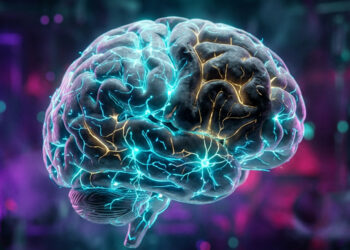
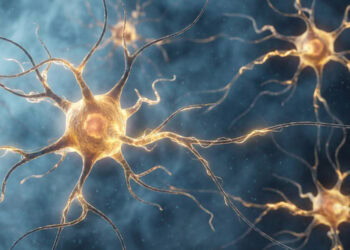
A neuroimaging study conducted in Germany found that individuals who like action movies show higher activity in the amygdala, a brain region involved in emotional processing, compared to those without such preferences. Similarly, those with a preference for comedies showed increased activity in both the amygdala and the nucleus accumbens, which is associated with the brain’s reward and pleasure systems. In contrast, people who preferred crime/thriller movies or documentaries displayed lower activity in these regions. The research was published in the Frontiers in Behavioral Neuroscience.
Since they were invented in the late 19th century, movies remained an important source of entertainment. Today, movie-making is an industry worth more than 100 billion USD. This is why many scientists ask themselves – what makes movies entertaining?
Early researchers believed that the central aspect of movies is that they incite emotions and that it is this capacity to elicit emotions that keeps viewers immersed and entertained. However, people do not react to movies equally. While a certain movie can make one person completely immersed in its contents and very entertained, other people might not even wish to watch the same movie.
People differ in their movie preferences. These preferences sometimes have to do with specific movies, but people also differ in the movie genres they like or dislike. What is even more important, movies that elicit negative emotions, emotions that most people do not like experiencing in real life, are extremely popular and attract broad audiences.
Study author Esther Zwiky and her colleagues wanted to investigate whether preferences for movies that elicit different emotions might have to do with interpersonal differences in brain activity. They hypothesized that differences in brain activity might be observed in regions of the brain that process emotions. They focused on the amygdala region, a small, almond-shaped structure in the brain that plays a key role in processing emotions, especially fear, threat detection, and emotional memory. They also included the nucleus accumbens in their analysis, given its role in processing pleasure and reward.
To explore this, the researchers recruited 257 adults from the ongoing Muenster Neuroimaging Cohort study, which examines the neurobiology of emotional disorders. The participants, who were around 40 years old on average and split roughly evenly between men and women, completed a questionnaire about their movie preferences. They were asked to select their favorite genres from options including action, comedy, crime/thriller, and documentary. The participants then underwent functional magnetic resonance imaging (fMRI), a technique that measures brain activity by detecting changes in blood flow, to observe how their brains responded to emotional stimuli.
During the fMRI scan, participants were shown a series of faces expressing fear or anger. Their task was to match each face with one that appeared identical on the screen, a task designed to engage the brain’s emotional processing circuits. The researchers focused on two key regions: the amygdala, which plays a crucial role in processing fear, anger, and emotional memories, and the nucleus accumbens, which is involved in the brain’s reward system and is central to feelings of pleasure and motivation.
Results showed that individuals who expressed a preference for action movies showed significantly higher activity in the amygdala when processing fearful or angry faces compared to those who did not prefer action films. This suggests that action movie fans may have a heightened emotional response to fear and anger, emotions that are frequently evoked in action films.
Similarly, individuals who preferred comedies exhibited increased activity not only in the amygdala but also in the nucleus accumbens. This heightened activation in the brain’s reward system may explain why these individuals find comedies particularly enjoyable, as their brains may be more sensitive to the pleasure associated with emotional stimuli.
On the other hand, people who preferred crime/thriller movies or documentaries exhibited the opposite pattern. They showed reduced activity in both the amygdala and the nucleus accumbens during the task. This finding is particularly interesting given that crime/thriller movies often feature intense scenes designed to evoke fear and suspense, much like action films.
However, the reduced brain activity in these individuals suggests that their enjoyment of these movies may not come from the emotional intensity itself but rather from other aspects, such as unraveling mysteries or piecing together complex plots. Similarly, documentary viewers may be less emotionally engaged and more focused on the factual content of the films they prefer.
“The study revealed associations between participants’ genre preferences and brain reactivity to negative affective stimuli. Interestingly, preferences for genres with similar emotion profiles (action, crime/thriller) were associated with oppositely directed neural activity,” the study authors concluded.
The study sheds light on the links between movie preferences and brain activity. However, it should be noted that the design of the study does not allow any cause-and-effect inferences to be drawn from the data. Additionally, it remains unknown whether these differences in brain activity would be seen when watching movies, as they were measured while participants were doing a relatively standard experimental task, not while they were watching movies.
The paper, “How movies move us – movie preferences are linked to differences in neuronal emotion processing of fear and anger: an fMRI study,” was authored by Esther Zwiky, Philine König, Rebekka Maria Herrmann, Antonia Küttner, Janine Selle, Lena Esther Ptasczynski, Konrad Schöniger, Mareike Rutenkröger, Verena Enneking, Tiana Borgers, Melissa Klug, Katharina Dohm, Elisabeth J Leehr, Jochen Bauer, Udo Dannlowski, and Ronny Redlich.