Subscribe
The latest psychology and neuroscience discoveries.
My Account
  • Mental Health
  • Social Psychology
  • Cognitive Science
  • Neuroscience
  • About
No Result
View All Result
PsyPost
PsyPost
No Result
View All Result
Home Exclusive Cognitive Science

Scientists reveal brain network for observed social threat interactions

by RIKEN
September 30, 2015
in Cognitive Science
(Photo credit: ZEISS Microscopy)

(Photo credit: ZEISS Microscopy)

Share on TwitterShare on Facebook

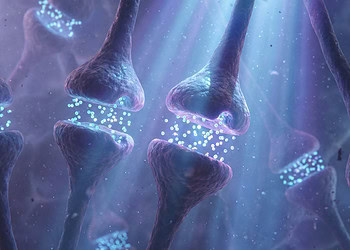
Observing one person threatening another is a commonplace event. Now, in research published in eLife, scientists have used large-scale neural recording and big data analysis in monkeys to enable a first glimpse of the brain remembering and recalling the memory of such negative social interactions. The research reveals the complex structure of a neural network for the observation of a negative social interaction and its retrieval from memory.

The research, conducted by Naotaka Fujii and colleagues at the RIKEN Brain Science Institute in Japan, answers the long-standing question of whether the memory of an observed social encounter can be formed and recalled via the same neural pathway. To test this idea, the authors overlaid a 128-channel large-scale recording array on a monkey cortex to record electrical activity while the subject watched videos of one monkey threatening another. In control studies, the videos showed non-threatening interactions.

The researchers recorded the brain activity data to a server and used Big Data analytical techniques to calculate a multidimensional value called ERC (Event Related Causality) that indexed the continuous evolution of brain activity in time, space, and the direction of communication between brain areas during the task. The ERC in turn was decomposed to identify hotspots of network activity the team called “modules” that pinpointed specific epochs in the observed social threat interactions.

The modules revealed a rich dynamic flow of information in the brain network at unprecedented resolution. One module encoded the formation of a memory of the observed social interaction revealing a flow of information from sensory perception areas to higher brain structures. Conversely, animals presented with the cues that were observed in the initial threat encounters, while the threatening monkey was hidden from view, showed the same network with reversed communication flow, suggesting that the same network was used for perceiving and recalling the event.

The results open a window into the structure of brain networks for cognitive processes such as observing the behavior of others. The methods used in the study are generalizable to other situations requiring mental processing. The findings also have implications for the mapping of brain activity by large federal brain projects including the US BRAIN initiative and EU Human Brain Project indicating that technologies that measure brain activity should aim to monitor not only large populations of neurons but also their network communication structures.

Google News Preferences Add PsyPost to your preferred sources
Previous Post

Placebo power: Depressed people who respond to fake drugs get the most help from real ones

Next Post

Study offers insight on how a new class of glutamate-based antidepressants works

RELATED

ChatGPT acts as a “cognitive crutch” that weakens memory, new research suggests
Artificial Intelligence

ChatGPT acts as a “cognitive crutch” that weakens memory, new research suggests

March 30, 2026
Verbal IQ predicts political participation and liberal attitudes twice as strongly as performance IQ
Cognitive Science

Trying harder on an intelligence test does not actually improve your score

March 27, 2026
Brain rot and the crisis of deep thought in the age of social media
Cognitive Science

Massive analysis of longitudinal data links social media to poorer youth mental health

March 27, 2026
High meat consumption may protect against cognitive decline in people with a specific Alzheimer’s gene
Cognitive Science

Asking complex questions improves creative project scores but hurts multiple-choice exam grades

March 26, 2026
Chronic medical conditions predict childhood depression more strongly than social or family hardships
Cognitive Science

What brain waves reveal about people who can solve a Rubik’s Cube in seconds

March 24, 2026
Shifting genetic tides: How early language skills forecast ADHD and literacy outcomes
Cognitive Science

The biological roots behind the chills you get from music and art

March 22, 2026
Machiavellianism most pronounced in students of politics and law, least pronounced in students of social work, nursing and education
Cognitive Science

Intelligence predicts progressive views, but only after college

March 21, 2026
Genetic factors likely confound the link between c-sections and offspring mental health
Cognitive Science

Neuroscientists just upended our understanding of Pavlovian learning

March 21, 2026

STAY CONNECTED

RSS Psychology of Selling

  • Emotional intelligence linked to better sales performance
  • When a goal-driven boss ignores relationships, manipulative employees may fight back
  • When salespeople fail to hit their targets, inner drive matters more than bonus checks
  • The “dark” personality traits that predict sales success — and when they backfire
  • What communication skills do B2B salespeople actually need in a digital-first era?

LATEST

How generative artificial intelligence is upending theories of political persuasion

Scientists use brain measurements to identify a video that significantly lowers racial bias

Brief mindfulness practice accelerates visual processing speeds in adults

Belief in the harmfulness of speech is linked to both progressive ideology and symptoms of depression

Better parent-child communication is linked to stronger soft skills and emotional stability in teens

Men who favor the tradwife lifestyle often view the women in it with derision

A diet based on ultra-processed foods impairs metabolic and reproductive health, study finds

Psychologists identify nine core habits associated with healthy non-monogamous partnerships

PsyPost is a psychology and neuroscience news website dedicated to reporting the latest research on human behavior, cognition, and society. (READ MORE...)

  • Mental Health
  • Neuroimaging
  • Personality Psychology
  • Social Psychology
  • Artificial Intelligence
  • Cognitive Science
  • Psychopharmacology
  • Contact us
  • Disclaimer
  • Privacy policy
  • Terms and conditions
  • Do not sell my personal information

(c) PsyPost Media Inc

Welcome Back!

Login to your account below

Forgotten Password?

Retrieve your password

Please enter your username or email address to reset your password.

Log In

Add New Playlist

Subscribe
  • My Account
  • Cognitive Science Research
  • Mental Health Research
  • Social Psychology Research
  • Drug Research
  • Relationship Research
  • About PsyPost
  • Contact
  • Privacy Policy

(c) PsyPost Media Inc