Recent research published in NeuroImage suggests that dream-like episodes might be more common during fainting than previously thought. By carefully monitoring brain activity in a group of healthy volunteers during induced fainting episodes, researchers discovered that certain slow-frequency brain waves, particularly in the delta and theta bands, seemed to be linked with the emergence of these extraordinary mental states, which were marked by visions of otherworldly places, a sense of detachment from the body, and intense euphoria.
The findings offer new insights into the neural mechanisms that might underlie near-death experiences, traditionally associated with life-threatening situations like cardiac arrest.
Fainting, or syncope, is a common occurrence that can happen to anyone, often triggered by a temporary reduction in blood flow to the brain. While the physical aspect of fainting is well-documented, the subjective experiences that sometimes accompany it have largely been overlooked in scientific literature. Reports of people experiencing vivid dreams, dissociative symptoms, or even out-of-body experiences during fainting have been rare and often dismissed due to their mystical nature.
The researchers behind this study aimed to fill this gap in knowledge. They wanted to explore whether these fainting episodes could induce experiences similar to near-death experiences and, more importantly, to identify the brain activity associated with these phenomena. By doing so, they hoped to gain a deeper understanding of the neurobiological processes that might contribute to the intense and often life-changing experiences reported by people who have been near death.
“It was purely by chance that I began working on this topic. I originally wanted to pursue research in human consciousness, and my thesis advisor proposed this intriguing subject,” said study author Charlotte Martial, a postdoctoral researcher at the Coma Science Group at the University of Liège. “I immediately fell in love with it and have been passionate about it ever since. At the start of my PhD a decade ago, a pivotal encounter with someone who had experienced a near-death experience sparked my deep interest in these fascinating and life-transforming episodes.”
For their study, the research team recruited 22 healthy volunteers, all of whom underwent a thorough medical examination to ensure they had no underlying health conditions that could affect the study’s outcomes. The participants were then asked to induce fainting using a method known as the Valsalva maneuver, a technique that involves trying to exhale forcefully with the nostrils and mouth closed, which temporarily reduces blood flow to the brain.
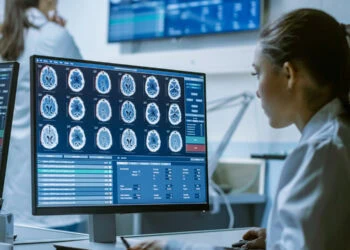
As the volunteers fainted, their brain activity was closely monitored using a high-density electroencephalogram (EEG), a tool that records electrical activity in the brain using 256 sensors placed across the scalp. This setup allowed the researchers to capture detailed information about the brain’s activity during the moments of induced syncope. After the participants regained consciousness, they were asked to recall and describe any memories or experiences they had during the fainting episode.
Over a third of the participants reported experiencing vivid, dream-like episodes during their fainting spell. These experiences included accelerated thoughts, out-of-body sensations, visions of past events, and a sense of entering a different, often extraterrestrial world. Some even reported auditory hallucinations and feelings of euphoria. These experiences closely resembled what are commonly referred to as near-death experiences.
“Our study reveals that it’s not uncommon for people who faint to report rich subjective experiences that may resemble near-death experiences,” Martial told PsyPost. “We demonstrated that dreamlike experiences, characterized by extraordinary and mystical aspects, can emerge during syncope episodes. More broadly, this is one of many states where a person might be considered ‘unconscious’ due to outward unresponsiveness, while in reality, they are experiencing vivid conscious experiences.”
On the neurological side, the EEG data revealed specific patterns of brain activity that appeared to be linked with these experiences. During the fainting episodes, the researchers observed surges in slow-frequency brain waves, particularly in the delta and theta bands. These types of brain waves are usually associated with deep sleep or meditation and are rarely prominent in a fully awake state. The presence of these waves suggested that the brain was in a state of disconnected consciousness—where the person is unresponsive to the external environment but may still be experiencing vivid internal sensations.
“I was quite amazed to discover the strong positive correlations we observed between cortical activity associated with theta and delta waves and the richness of subjective experience in specific regions of interest, such as the insula, temporoparietal junction, cingulate cortex, and parahippocampal gyrus — areas known to be crucial for self-awareness and the (sometimes distorted) perception of our body.”
Interestingly, the intensity of these experiences seemed to be predicted by the amount of delta activity observed during the fainting episode. This finding led the researchers to propose that delta waves could be a marker of the brain’s potential to generate such extraordinary conscious states, even when disconnected from the outside world.
“Our study is the first to explore the electrical brain activity of individuals using high-density EEG during syncope,” Martial explained. “We found that these dreamlike experiences, some of which may carry the hallmarks of near-death experiences, appear to be supported by surges in slow-frequency activity bands on EEG. While these findings should be interpreted with caution, they open up new avenues for understanding the neurobiological mechanisms underlying near-death-like experiences.”
The long-term goal of this research is to understand the brain mechanisms behind near-death experiences, with the aim of improving patient care and developing tools to detect consciousness in unresponsive individuals.
“From a scientific perspective, this line of research aims to demonstrate, across a comprehensive spectrum of physiological, pathological, and pharmacological conditions, that unresponsiveness cannot be considered a surrogate for unconsciousness,” Martial said.
“From a clinical perspective, my long-term goal is to search for markers of near-death and near-death-like experiences in different clinical conditions to develop a comprehensive neurophysiological model for these experiences. My ultimate objective is the improvement of patient outcomes. Indeed, we now understand that encountering such mystical and extraordinary experiences in unexpected situations can have significant implications.”
“I’m optimistic that our research could inform therapeutic follow-up for near-death experience patients and lay the groundwork for innovative strategies that use these markers for the automated detection of conscious experiences, without relying solely on memory, ultimately assisting medical management.”
The study, “EEG signature of near-death-like experiences during syncope-induced periods of unresponsiveness,” was authored by Charlotte Martial, Andrea Piarulli, Olivia Gosseries, Héléna Cassol, Didier Ledoux, Vanessa Charland-Verville, and Steven Laureys.