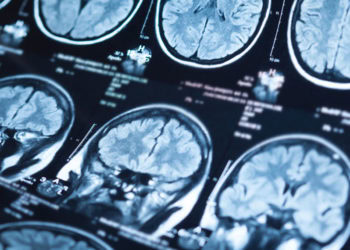
A 6-year longitudinal neuroimaging study in Germany found that social isolation contributes to brain atrophy (progressive loss of brain tissue) and cognitive decline in humans. More socially isolated individuals tended to have smaller volumes in the hippocampus, reduced cortical thickness, and poorer cognitive functioning. Results indicate that dementia risk might be reduced by promoting better social connectedness, particularly among older adults. The study was published in eLife.
As the average duration of human life increases, there are more and more individuals experiencing cognitive and brain changes associated with old age. These changes are multifaceted and can vary from person to person. With age, brain volume tends to shrink, particularly in regions associated with memory and learning, such as the hippocampus. This can result in mild cognitive decline, with some forgetfulness and slower processing speed being common. As the person ages, working memory, the ability to hold and manipulate information, may also decline.
Older adults often compensate for these cognitive changes by relying on accumulated knowledge and experience. However, the impairments sometimes become very severe indicating conditions like Alzheimer’s disease and other forms of dementia. Dementia is the collective name for a group of disorders characterized by a severe decline in cognitive function, affecting memory, thinking, and daily functioning.
Studies have indicated that social isolation, the objective lack of contact with other people, may be one of the factors accelerating the cognitive decline of older adults. Neuroimaging studies have found adverse changes in the microstructure of the brain and lower volumes of neural tissue in brain regions like the hippocampus in socially isolated adults. The data point to a clear adverse effect of social isolation on brain health. But previous studies often used small samples and did not observe changed over time.
Study author Laurenz Lammer and his colleagues wanted to examine how the volume of the neural tissue in the hippocampus region of the brain changes with age and whether it is associated with social isolation and its change over time. They also wanted to examine whether atrophy of specific regions of the brain, i.e., a progressive loss of brain tissue, the reduction in their volume and size, and Alzheimer’s disease symptoms are associated with social isolation. They hypothesized that more socially isolated individuals will have smaller volume of the hippocampus, thinner brain cortex and poorer cognitive functioning.
“Research on drugs targeting dementia development have not yet yielded any results with a clear clinical benefit, offering at most a minor alleviation of symptoms,” said Lammer, a MD student at University Hospital Leipzig and Max Planck Institute for Human Cognitive and Brain Sciences. “Therefore, preventative measures aimed at stopping or delaying the onset of the disease are of utmost importance, and identifying risk factors for developing the disease may be our most promising target.”
The researchers analyzed data from LIFE-Adult-Study run by the Leipzig Research Center for Civilization Diseases. This study includes over 10,000 adult participants, mainly between 40 and 79 years of age, from Leipzig, a large city in Germany. Data used in this study were collected between 2011 and 2014 and six years later – 2017-2020.
The researchers used data of 1,335 cognitively healthy participants over 50 years of age who completed magnetic resonance imaging scans at the start of the study. Of these, 912 completed magnetic resonance imaging scans and assessments 6 years later. The average age of participants at the start of the study was 67 years. It was 73 at the follow-up. For specific analyses, researchers included additional participants up to a total of 1,992 for the start of the study and 1,409 for the follow-up. 60% of participants had hypertension.
Participants also completed assessments of social isolation (the Lubben Social Network Scale), chronic stress (the Trierer Inventar zum chroniches Stress, TICS) and cognitive functions (assessments of executive functions, working memory, and processing speed). Cognitive testing was performed in the early part of the day, between 9:00 and 13:00.
The results showed that participants not living alone, married, employed, younger, with no migration background tended to feel less socially isolated. Participants who were more socially isolated at the start of the study and whose social isolation increased after 6 years (in the follow-up) had a smaller volume of the hippocampus region of the brain. These individuals also had poorer performance on the cognitive assessment, particularly on the assessment of the executive function.
“Simply put, assuming that everything else remains stable, the difference between having three or four close and supportive friends is comparable to a one-year difference in hippocampal ageing,” Lammer said in a news release.
Poorer memory was also associated with higher social isolation, but this link disappeared when researchers controlled for potential confounding factors. Processing speed was not associated with social isolation.
The researchers further identified eight clusters of neural cells in the brain associated with social isolation. More socially isolated participants tended to have thinner clusters of brain cells in the left precuneus, cuneus, precentral gyrus and posterior cingulate gyrus, right supramarginal gyrus and cuneus regions of the brain cortex. Increase in social isolation over time was linked with decreased cortical thickness in one cluster in the right superior frontal gyrus region of the brain.
“We showed a significant link between stronger baseline social isolation and increases in social isolation over the course of ~6 years and smaller hippocampal volumes. Both predictors had an effect size per point on the LSNS [measure of social isolation] comparable to a 2.5 months difference in baseline age in this age range. Simply put, assuming that if everything else remained stable, the difference between having 1 or 3–4 close and supportive friends is comparable to a 1-year difference in hippocampal ageing,” the study authors concluded.
The study sheds light on the links between social isolation and brain changes in older adults. However, study authors note that attrition during the 6-year period i.e., the fact that some participants dropped out of the study during the six-year period, might have affected the results. Additionally, all participants were from Germany. Studies on individuals from other cultures might not yield equal results.
“Our study adds support to the view that social isolation is associated with accelerated brain ageing and cognitive decline in mid- to late-life adults,” said senior author Veronica Witte. “Our findings further imply that social contact prevents detrimental processes and thereby preserves brain structure and function. Henceforth, targeting social isolation through tailored strategies might contribute to maintaining brain health into old age and preventing the onset of diseases such as Alzheimer’s dementia.”
The study, “Impact of social isolation on grey matter structure and cognitive functions: A population-based longitudinal neuroimaging study”, was authored by Laurenz Lammer, Frauke Beyer, Melanie Luppa, Christian Sanders, Ronny Baber, Christoph Engel, Kerstin Wirkner, Markus Loffler, Steffi G Riedel-Heller, Arno Villringer, and A Veronica Witte.