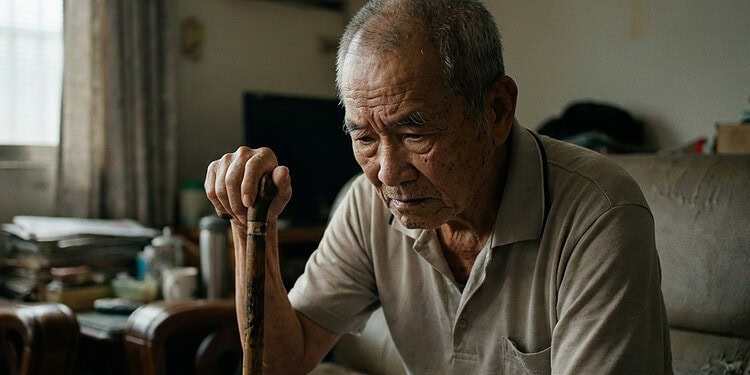

An analysis of longitudinal data from the Taiwan Social Environment and Biomarkers of Aging Study found that the relationship between disability and cognitive decline in older adults is bidirectional. The paper was published in BMC Geriatrics.
As people age, gradual changes occur in the body and brain that affect physical functioning and mental abilities. Mobility, sensory functioning, strength, and coordination become more and more limited and can, in time, result in serious disability. These limitations result from cumulative biological wear, chronic illnesses, and past injuries.
Cognitive abilities also decline with age. Mental processes such as memory, attention, processing speed, and executive functioning gradually worsen. In normal aging, these cognitive changes are usually mild and do not significantly interfere with daily independence. In some individuals, however, cognitive decline becomes more pronounced and progresses to conditions that impair everyday functioning.
Physical disability and cognitive decline are related but distinct processes that do not always occur together. A person may experience physical limitations without cognitive impairment, or cognitive decline without severe physical disability. Both conditions can increase dependence on others and reduce quality of life if they progress.
Study author Tsung-Hsuan Hung and his colleagues wanted to explore the longitudinal relationship between disability and cognitive decline in older individuals in Taiwan. They hypothesized that cognitive function and disability influence each other and that the influence of disability on cognitive decline is stronger than the influence of cognitive decline on disability.
Study authors analyzed data from the Social Environment and Biomarkers of Aging Study (SEBAS) conducted in 2000 and 2006. SEBAS is an extension of the Taiwan Longitudinal Study on Aging, which began in 1989 with periodic follow-up every 3-4 years. Participants were adults aged 60 and above.
The current analysis used data from 628 participants who participated in both 2000 and 2006 data collection waves. 59% of participants were male. Their average age in 2000 was 66 years.
Study authors used data on participants’ cognitive function (collected using the Short Portable Mental Status Questionnaire) and disability. Disability was assessed using indicators of mobility (e.g., “If no one helps you, and you do not use aids, would you have difficulty doing the following activities by yourself?”, followed by a list of activities that included standing continuously for 2 hours, squatting, lifting 11-12kg, climbing 2-3 flights of stairs, etc.), instrumental activities of daily living (e.g., paying bills, doing physical household work, performing light tasks at home, etc.), and activities of daily living (e.g., bathing, dressing, eating, getting out of bed/standing, etc.).
Results showed that cognitive impairment in 2000 predicted disability in 2006, and disability in 2000 predicted cognitive impairment in 2006. This indicates that cognitive impairment and disability likely influence each other, just like study authors expected. Further analysis also confirmed that the prediction of future cognitive impairment based on past disability was stronger than the prediction of future disability based on past cognitive impairment. This confirmed study authors’ second hypothesis.
“This longitudinal study suggested that disability and cognition change were bidirectional, with disability showing a stronger impact on future cognitive impairment,” study authors concluded.
The study contributes to the scientific understanding of the nature of associations between cognitive decline and disability in old age. However, study authors note that only approximately 75% of individuals who participated in the 2000 data collection wave also participated in 2006. This indicates that survivorship bias could have affected the results.
The paper, “Bidirectional relationships between disability and cognitive decline: a 6-year longitudinal study,” was authored by Tsung-Hsuan Hung, Tzu-Yun Wang, Hung-Chang Chou, Ching-Ju Chiu, Chia-Ning Lee, Huai-Hsuan Tseng, Kao Chin Chen, Yan-Jhu Su, Andrew Alberth, Yen Kuang Yang, and Tsung-Yu Tsai.