Subscribe
The latest psychology and neuroscience discoveries.
My Account
  • Mental Health
  • Social Psychology
  • Cognitive Science
  • Neuroscience
  • About
No Result
View All Result
PsyPost
PsyPost
No Result
View All Result
Home Exclusive Mental Health

Study examines prenatal exposure to tobacco smoke on inhibition control

by JAMA
May 14, 2014
in Mental Health
Photo credit: Dale Moore

Photo credit: Dale Moore

Share on TwitterShare on Facebook

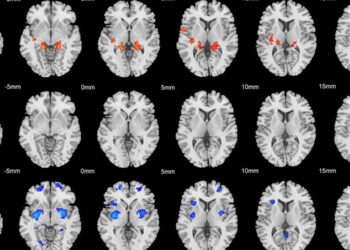
Individuals prenatally exposed to tobacco smoke exhibited weaker response in some regions of the brain while processing a task that measures inhibition control (the ability to control inappropriate responses).

Prenatal tobacco smoke exposure is a risk factor for adverse physical and mental outcomes in children. Growing evidence suggests that smoking during pregnancy may increase the risk of psychopathology such as attention-deficit/hyperactivity disorder (ADHD). Research on ADHD has suggested that individuals with the disorder may exhibit poor inhibitory control.

Functional magnetic resonance imaging was performed at age 25 years on young adults who had been followed since birth to examine the effect of prenatal tobacco smoke exposure on neural activity implicated in externalizing disorders, such as ADHD, with measures of inhibitory control. Lifetime ADHD symptoms were measured over a period of 13 years (from 2 to 15 years of age). The study included 178 mothers (140 of whom were nonsmokers) and 175 offspring for whom ADHD symptoms were measured throughout childhood.

Individuals prenatally exposed to tobacco smoke exhibited less activity in regions of the brain in response to a task that measured inhibitory control vs. neutral stimuli. The group prenatally exposed to tobacco smoke also exhibited more lifetime ADHD symptoms.

“Therefore, our findings strengthen the importance of smoking cessation programs for pregnant women, and women planning to become pregnant, to minimize prenatal exposure to tobacco smoke by the offspring.”

Google News Preferences Add PsyPost to your preferred sources
Previous Post

Reduction in volume in hippocampus region of brain seen in psychotic disorders

Next Post

Difference found in brain area linked to memory among college football players

RELATED

Scientists link common “forever chemical” to male-specific developmental abnormalities
Autism

Blocking a common brain gas reverses autism-like traits in mice

March 7, 2026
ADHD symptoms appear to influence women’s orgasms
ADHD Research News

Cognitive deficits underlying ADHD do not explain the link with problematic social media use

March 7, 2026
Scientists identify distinct neural dynamics linked to general intelligence
Borderline Personality Disorder

Scientists identify brain regions associated with auditory hallucinations in borderline personality disorder

March 7, 2026
Trigger warning sign comic style, caution alert notice, bold red and yellow warning graphic for sensitive content, online psychology news, mental health awareness, psychological triggers, PsyPost psychology news website, mental health topic warning, pop art warning sign, expressive warning graphic for psychological topics, relevant for mental health and psychology discussions, eye-catching digital poster.
Mental Health

How the wording of a trigger warning changes our psychological response

March 6, 2026
Emotion dysregulation helps explain the link between overprotective parenting and social anxiety
Mental Health

Dating and breakups take a heavy emotional toll on adolescent mental health

March 6, 2026
Brain scans reveal two distinct physical subtypes of ADHD
ADHD Research News

Brain scans reveal two distinct physical subtypes of ADHD

March 6, 2026
Stimulant medications normalize brain structure in children with ADHD, study suggests
ADHD Research News

Long-term ADHD medication use does not appear to permanently alter the developing brain

March 5, 2026
Language learning rates in autistic children decline exponentially after age two
Anxiety

New neuroscience study links visual brain network hyperactivity to social anxiety

March 5, 2026

STAY CONNECTED

LATEST

Apocalyptic views are surprisingly common among Americans and predict responses to existential hazards

A psychological need for certainty is associated with radical right voting

Blocking a common brain gas reverses autism-like traits in mice

New psychology research sheds light on why empathetic people end up with toxic partners

Cognitive deficits underlying ADHD do not explain the link with problematic social media use

Scientists identify brain regions associated with auditory hallucinations in borderline personality disorder

People with the least political knowledge tend to be the most overconfident in their grasp of facts

How the wording of a trigger warning changes our psychological response

PsyPost is a psychology and neuroscience news website dedicated to reporting the latest research on human behavior, cognition, and society. (READ MORE...)

  • Mental Health
  • Neuroimaging
  • Personality Psychology
  • Social Psychology
  • Artificial Intelligence
  • Cognitive Science
  • Psychopharmacology
  • Contact us
  • Disclaimer
  • Privacy policy
  • Terms and conditions
  • Do not sell my personal information

(c) PsyPost Media Inc

Welcome Back!

Login to your account below

Forgotten Password?

Retrieve your password

Please enter your username or email address to reset your password.

Log In

Add New Playlist

Subscribe
  • My Account
  • Cognitive Science Research
  • Mental Health Research
  • Social Psychology Research
  • Drug Research
  • Relationship Research
  • About PsyPost
  • Contact
  • Privacy Policy

(c) PsyPost Media Inc