Subscribe
The latest psychology and neuroscience discoveries.
My Account
  • Mental Health
  • Social Psychology
  • Cognitive Science
  • Psychopharmacology
  • Neuroscience
  • About
No Result
View All Result
PsyPost
PsyPost
No Result
View All Result
Home Exclusive Social Psychology Political Psychology Donald Trump

Donald Trump’s “Sleepy Joe” nickname for Biden was only effective among Trump’s supporters, study suggests

by Emily Manis
March 25, 2022
in Donald Trump
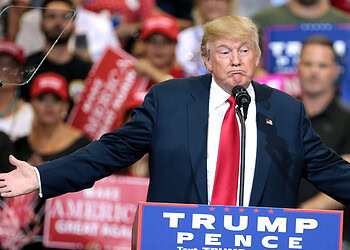
Donald Trump during  the first presidential debate of 2020.

Donald Trump during the first presidential debate of 2020.

Share on TwitterShare on Facebook

Donald Trump made headlines time and time again for making up insulting nicknames for any political rivals, but how effective of a campaign strategy was that? A study published in the Journal of Political Marketing aims to answer that question.

American politicians often fight dirty and insulting nicknames are nothing new to politics. Despite this, many people feel that Donald Trump took attacking his opponents to a new extreme. His infamous nicknaming started with “Crooked Hillary” during his first election, and he moved on to “Sleepy Joe” for the 2020 race. Despite the attention this political ploy garnered in the media, there is no research on the effectiveness of the strategy, which is what this study seeks to address.

Tyler Johnson conducted a survey experiment to explore this topic. He distributed the survey to 674 participants in the 48-hours after the Republican National Convention in 2020, in hopes that awareness of Trump’s strategies would be particularly high. Participants were randomly assigned to either the control or the treatment group. Control participants first answered questions about Biden while the treatment group first were introduced to material considering Trump’s effort to nickname Biden. All participants were asked to recall nicknames Trump had given to previous political rivals.

Results showed that only 37% of participants accurately remembered any of the nicknames Trump gave Biden throughout his campaign efforts. Participants who reported they were interested in politics or voted in the primaries were more likely to remember a nickname. Subject’s frequency of media consumption did not have a significant relationship with remembering, nor did political party.

The effectiveness of the “Sleepy Joe” nickname was evaluated by asking participants the extent to which they agree with it describing Biden. The most common answer was “not well at all” and participants who answered “very well” or “extremely well” were people who reported being Republicans and approving of the job Trump was doing as president. 53% of participants thought “Sleepy Joe” was a negative nickname, which is just over half, suggesting that the branding may not have been taken as negatively as Trump had meant it. The treatment group, who had been asked to consider the “Sleepy Joe” nickname, was no more likely to think Biden was old or unenergetic than the control group.

This research takes first steps into considering the effectiveness of Trump’s strategy of nicknaming his political opponents. Some limitations of this study include that it is impossible to tell with this design if the results we are seeing are a reflection of Trump’s strategy or on Biden as a politician. It is possible different results may have arisen had this focused on the “Crooked Hillary” nickname instead. Furthermore, while nicknaming has been a long-used political tool, Trump was a more divisive politician than most, and it is possible research in regard to him would not generalize to other politicians.

The study, “Sleepy Joe? Recalling and Considering Donald Trump’s Strategic Use of Nicknames“, was published June 15, 2021.
RELATED

Dark personalities in politicians may intensify partisan hatred—particularly among their biggest fans
Donald Trump

Researchers identify personality traits linked to Trump’s “cult-like” followership

January 14, 2026
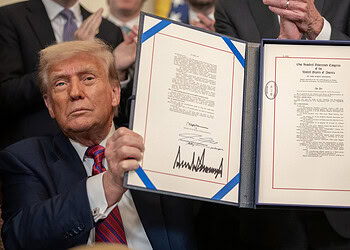
A psychologist spent 50 years studying egos. He has a lot to say about Trump’s signature.
Donald Trump

A psychologist spent 50 years studying egos. He has a lot to say about Trump’s signature.

November 13, 2025
What scientists found when they analyzed 187 of Donald Trump’s shrugs
Donald Trump

What scientists found when they analyzed 187 of Donald Trump’s shrugs

October 28, 2025
Victimhood and Trump’s Big Lie: New study links white grievance to election skepticism
Donald Trump

National prostalgia is associated with lower support for Donald Trump

October 21, 2025
Scientists analyzed 38 million obituaries and found a hidden story about American values
Authoritarianism

Trump supporters diverge from other gun owners on views of democracy, study finds

October 5, 2025
Both-sidesism debunked? Study finds conservatives more anti-democratic, driven by two psychological traits
Authoritarianism

New paper unpacks how Trump uses “strategic victimhood” to justify retaliation

September 15, 2025
New research on political animosity reveals an “ominous” trend
Donald Trump

Researchers rushed to study the aftermath of the Trump shooting. Here’s what they found

September 3, 2025
Trump’s speeches stump AI: Study reveals ChatGPT’s struggle with metaphors
Donald Trump

Trump shows signs of cognitive shift after 2024 shooting, study suggests

August 31, 2025

PsyPost Merch

STAY CONNECTED

LATEST

Study finds education level doesn’t stop narcissists from believing conspiracy theories

Frequent pornography use does not always indicate a problem, new study suggests

Psilocybin microdosing fails to boost cognitive performance in rigorous trials

New study identifies a “woke” counterpart on the political right characterized by white grievance

Common supplements, when combined, trigger surprising brain changes in mouse models of autism

Viewing nature pictures helps adolescents recover from social exclusion

Growing up near busy roads linked to higher risk of depression and anxiety

Negative facial expressions interfere with the perception of cause and effect

RSS Psychology of Selling

  • The science behind why accessibility drives revenue in the fashion sector
  • How AI and political ideology intersect in the market for sensitive products
  • Researchers track how online shopping is related to stress
  • New study reveals why some powerful leaders admit mistakes while others double down
  • Study reveals the cycle of guilt and sadness that follows a FOMO impulse buy
         
       
  • Contact us
  • Privacy policy
  • Terms and Conditions
[Do not sell my information]

Welcome Back!

Login to your account below

Forgotten Password?

Retrieve your password

Please enter your username or email address to reset your password.

Log In

Add New Playlist

Subscribe
  • My Account
  • Cognitive Science Research
  • Mental Health Research
  • Social Psychology Research
  • Drug Research
  • Relationship Research
  • About PsyPost
  • Contact
  • Privacy Policy