Subscribe
The latest psychology and neuroscience discoveries.
My Account
  • Mental Health
  • Social Psychology
  • Cognitive Science
  • Neuroscience
  • About
No Result
View All Result
PsyPost
PsyPost
No Result
View All Result
Home Exclusive Social Psychology Political Psychology

Study: Liberals cognitively suppress stereotypes about conservatives — but not vice versa

by Eric W. Dolan
March 25, 2018
in Political Psychology
Share on TwitterShare on Facebook

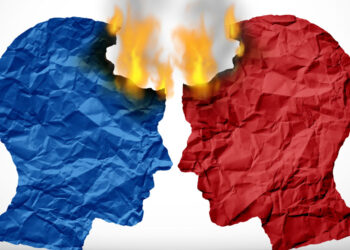
New research suggests that conservatives rely more on stereotypes to navigate social interactions with liberals than vice versa. The study, conducted in Turkey, found evidence that political stereotypes were more accessible in the minds of conservative individuals than in liberal individuals.

“Although we saw a tremendous increase in the research on political psychology in the last decade, still very little is known about people’s psychological experiences during inter-ideological interactions. This research was motivated by a desire to understand a potential psychological handicap in such interactions, that is reliance on stereotypical perceptions about others of opposing ideology,” said Irmak Olcaysoy Okten of Lehigh University, the corresponding author of the study.

We suggest that focusing on preconceived notions (as opposed to individuated, unique information) about people of opposing ideology would prevent smooth inter-ideological communication. Our study provides the first step towards a broader goal of understanding and addressing potential psychological issues that hinder healthy communication between parties that embrace different political ideologies.”

In the study, 101 conservative college students and 107 liberal college students were asked to develop resolutions for a political issue in Turkey. They were told that another participant, with either the same or the opposite political leanings, was doing the same in another room and that they would soon be required to collaborate. After this, the participants completed a lexical decision task, a test used to measure the cognitive accessibility of stereotypes.

“In our study we observed a clear pattern in terms of accessibility of stereotypes in mind when people were preparing for a political discussion; conservatives had stereotypes about liberals highly accessible in their minds whereas liberals tended to suppress stereotypes about conservatives,” Okten told PsyPost.

The findings were published in The Journal of Social Psychology.

“This result brings about the possibility that conservatives and liberals may navigate inter-ideological interactions differently. While conservatives seem to keep stereotypical thoughts that apply to the upcoming political interaction at bay, liberals seem to be motivated to suppress stereotypical thoughts about both ideologies,” Okten explained.

“Our results also suggested that this stereotype suppression tendency can be costly on behalf of liberals; liberals with low (vs. high) stereotype accessibility performed worse in an independent self-regulation task, suggesting that they may have used up their self-regulatory resources when suppressing stereotypical thoughts.

Google News Preferences Add PsyPost to your preferred sources

But it is unclear how well the results can be generalized to other countries.

“One caveat we should note here is that this study has been conducted in a non-Western context (Turkey),” Okten said. “Therefore, the examined stereotypes were determined through pilot studies with Turkish participants. To our knowledge, there is no other published study that examined ideological stereotypes to that extent within Western or non-Western context.”

“We believe that future studies that are to be conducted in other cultures should carefully determine the content of specific stereotypes regarding ideological groups,” she continued. “Also, in our study participants were told that they would engage in a political interaction soon, yet, such interaction never actually took place. Future studies should look at how stereotype utilization by conservatives and stereotype suppression (and related self-regulatory costs of suppression) by liberals affect the way liberals and conservatives actually interact.”

“We would like to bring attention to the dearth of research in the area of psychological experiences during inter-ideological interactions,” Okten added. “The implication of that line of work is very critical and relevant to today’s polarized political climate; therefore, we hope to see further research in that area.”

The study, “Stereotype activation and self-regulation by conservatives and liberals in political encounters“, was authored by Irmak Olcaysoy Okten and S. Adil Saribay.


Previous Post

People with certain personality traits are more likely to exhibit the ‘seven deadly sins’

Next Post

Brain activity study links social anxiety to a preoccupation with making errors

RELATED

Cognitive dissonance helps explain why Trump supporters remain loyal, new research suggests
Donald Trump

Cognitive dissonance helps explain why Trump supporters remain loyal, new research suggests

April 11, 2026
Too many choices at the ballot box has an unexpected effect on voters, study suggests
Political Psychology

Conservative 2024 campaigns reframed demographic shifts as an election integrity issue

April 10, 2026
Narcissism alignment between leaders and followers linked to higher creativity
Political Psychology

New data shows a relationship between subjective social standing and political activity

April 9, 2026
Study provides first evidence of a causal link between perceived moral division and support for authoritarian leaders
Political Psychology

Mathematical model sheds light on the hidden psychology behind authoritarian decision-making

April 9, 2026
Americans misperceive the true nature of political debates, contributing to a sense of hopelessness
Political Psychology

Social media analysis links polarized political language to distorted thought patterns

April 7, 2026
Scientists reveal the impact of conspiracy theories on personal relationships and dating success
Conspiracy Theories

The exact political location where conspiracy theories thrive

April 3, 2026
This psychological factor might help unite America or “destroy us from within”
Political Psychology

The psychological divide between Democrats and Republicans during democratic backsliding

April 2, 2026
Study links phubbing sensitivity to attachment patterns in romantic couples
Artificial Intelligence

How generative artificial intelligence is upending theories of political persuasion

April 1, 2026

STAY CONNECTED

RSS Psychology of Selling

  • Correcting fake news about brands does not backfire, five-study experiment finds
  • Should your marketing tell a story or state the facts? A massive meta-analysis has answers
  • When brands embrace diversity, some customers pull away — and new research explains why
  • Smaller influencers drive engagement while bigger ones drive purchases, meta-analysis finds
  • Political conservatives are more drawn to baby-faced product designs, and purity values explain why

LATEST

Disrupted sleep is the primary pathway linking problematic social media use to reduced wellbeing

Bladder toxicity risk appears low for psychiatric ketamine patients, though data is limited

Low doses of LSD alter emotional brain responses in people with mild depression

Narcissistic traits are linked to a brain area governing emotional control

Can video games make kids feel better about their bodies?

Reduced gray matter and altered brain connectivity are linked to problematic smartphone use

Your breathing pattern is as unique as a fingerprint

Extreme athletes just helped scientists unlock a deep evolutionary secret about human survival

PsyPost is a psychology and neuroscience news website dedicated to reporting the latest research on human behavior, cognition, and society. (READ MORE...)

  • Mental Health
  • Neuroimaging
  • Personality Psychology
  • Social Psychology
  • Artificial Intelligence
  • Cognitive Science
  • Psychopharmacology
  • Contact us
  • Disclaimer
  • Privacy policy
  • Terms and conditions
  • Do not sell my personal information

(c) PsyPost Media Inc

Welcome Back!

Login to your account below

Forgotten Password?

Retrieve your password

Please enter your username or email address to reset your password.

Log In

Add New Playlist

Subscribe
  • My Account
  • Cognitive Science Research
  • Mental Health Research
  • Social Psychology Research
  • Drug Research
  • Relationship Research
  • About PsyPost
  • Contact
  • Privacy Policy

(c) PsyPost Media Inc