Humans have a natural tendency to seek out reward and stray away from punishments. This association of reward with action and punishment with avoidance is known as a Pavlovian bias.
New research published in the journal Psychological Medicine has found evidence that this Pavlovian bias is amplified in survivors of traumatic events and influences their decision-making.
“An important question in psychology relates to how adverse experiences like traumas influence the brain and thereby alter the risk of mental illness,” explained study author Olga Therese Ousdal of Haukeland University Hospital.
“Although we know quite a lot about how adverse experiences affect the brain, less is known regarding how traumas may affect decision-making. This is an important topic, as many stress-related mental illnesses are known to affect decision-making, suggesting that traumas may predispose to illness by influencing how we make decisions.”
The study examined survivors of the 2011 Norwegian terror attack, in which a right-wing extremist killed eight people in a bomb attack outside a government building in Oslo. He then gunned down another 69 people, most of them teenagers, at a Labour Youth camp.
The researchers recruited 25 survivors of the attack (ages 16-25) and matched them with 23 control subjects. A modified Go/No-go task was used to test the behavioral reactions and decision-making abilities of the participants.
The task required participants to either respond (by pressing a button) or withhold a response depending on whether a “go” stimulus or a “no-go” stimulus was shown on a computer screen. The participants could either win or lose 1 Norwegian Krone depending on their response. They had to learn that symbols displayed on the screen indicated whether their response would result in a reward or punishment.
The researchers found that performance on the task was reduced in the trauma survivor group, which appeared to be due to a Pavlovian bias. They learned to respond to the stimulus to obtain a reward and withhold a response to avoid punishment. But had more trouble when they were required to learn to respond to avoid punishment and withhold a response to obtain a reward.
“Our key finding in this study was that traumas may have long-term influences on how we make decisions,” Ousdal told PsyPost. “One key determinant of our decisions is the Pavlovian system, which intrinsically couple rewards to behavioural approach and punishments to behavioural inhibition.”
“Compared to a group of non-traumatized individuals, survivors of the Norwegian terror attack showed less flexibility when making decisions, and this was due to a greater Pavlovian influence of their choices.”
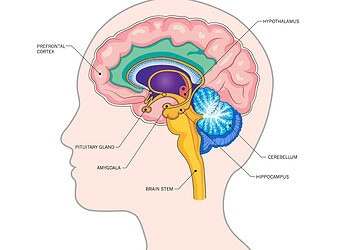
The researchers also found that the increased Pavlovian bias was associated with less glutamatergic activity in the prefrontal cortex of the brain. Glutamate is the major excitatory neurotransmitter in the nervous system.
But the study has some caveats.
“Two important limitations of this study were the modest size of the trauma group and the notion that the trauma group was relatively heterogeneous,” Ousdal explained. “While some of the survivors did not experience major post-traumatic reactions, some had developed mental illness. Such heterogeneity is difficult to avoid in these types of studies due to the great variability in how people respond to traumas. Future studies should try to replicate our finding in a larger group of trauma survivors, including groups of trauma-survivors without mental illness.”
“As a continuation of the above study, we are currently investigating whether these changes in decision-making can be linked to specific brain circuits. Of particular interest is the prefrontal cortex and the amygdala, based on their importance for Pavlovian behaviours and their sensitivity to stress,” Ousdal added.
“Stress and trauma may precipitate a number of mental illnesses, thus understanding how it impacts various aspects of cognition, including decision-making, may help bridge the gap between trauma exposure and later risk of mental illness.”