PsyPost
  • Mental Health
  • Social Psychology
  • Cognitive Science
  • Neuroscience
  • About
No Result
View All Result
Join
My Account
PsyPost
No Result
View All Result
Home Exclusive Neuroimaging

Surprising new findings force scientists to rethink decades of brain-plasticity theories

by Malgorzata Szymanska and Hunter Schone
September 12, 2025
Reading Time: 3 mins read
Share on TwitterShare on Facebook

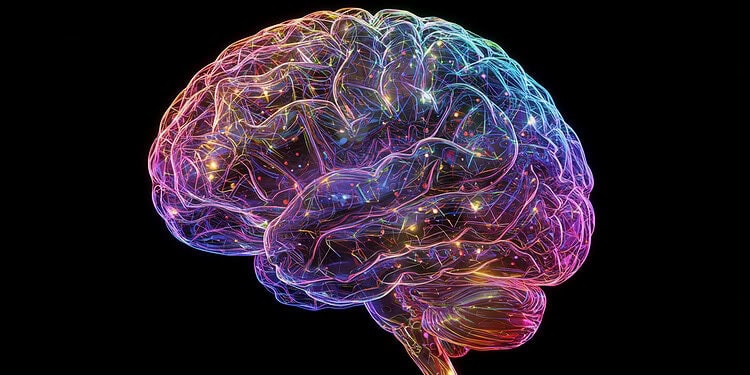
Inside every human brain lies a detailed map of the body, with different regions dedicated to different body parts – the hands, lips, feet and more. But what happens to this map when a body part is removed?

For decades, scientists believed that when a body part is amputated, the brain’s body map dramatically reorganises itself, with neighbouring body parts taking over the area once represented by the missing limb.

This idea of large-scale brain reorganisation became a central pillar of what neuroscientists call adult brain plasticity: the ability of the brain to change its structure and function in response to injuries, new experiences or training.

Our new study, published in Nature Neuroscience, shows the opposite is true: the brain’s body map remains strikingly stable, even years after amputation.
To test what happens in the brain after a person loses a body part, we took a unique approach.

Working with NHS surgeons, we followed three adult patients who were preparing to undergo lifesaving arm amputations for medical reasons, such as cancer or severe problems with blood supply. We scanned their brains with functional magnetic resonance imaging (MRI) before the amputation and repeatedly afterwards – in some cases for as long as five years.

During the MRI scans, we asked patients to move different body parts: tapping their individual fingers, curling their toes or pursing their lips. This allowed us to map brain activity and to construct the brain’s body map.

After the surgery, we repeated the scans, this time asking them to move their missing (phantom) fingers. Phantom movements are not imaginary: most amputees continue to feel vivid sensations of their missing limbs, even though they are physically no longer there. Doing so gave us a rare opportunity to directly compare the brain’s hand map before and after amputation in the same person.

We discovered that, across all three patients, the map of the hand in the brain remained remarkably unchanged and did not get overwritten by other body parts, such as the face. This neural stability helps explain why so many amputees continue to feel their missing limbs so vividly.

Google News Preferences Add PsyPost to your preferred sources

For most amputees, however, phantom sensations are not neutral sensations; they are painful and described as burning, stabbing or itching. For years, the dominant explanation for these painful sensations came from the idea that the brain’s body map has reorganised itself. In turn, this theory inspired therapies such as mirror box therapy, virtual reality training, or sensory-discrimination exercises, all aimed at fixing supposedly broken maps.

Our findings show the brain’s body map is not broken. This helps explain why these therapies consistently fail to outperform placebo treatments in clinical trials. If the map remains intact, trying to fix it is a dead end.

The real culprit

Instead, our results suggest we should look elsewhere, for example, in the nerves that are cut during surgery. Severed nerves can form tangled clusters that misfire signals back to the brain. New amputation surgical techniques are being developed to preserve nerve signalling and maintain stable connections to the brain.

Our findings have important implications for developing prosthetic limbs and brain-computer interfaces. Invasive next-generation brain-computer interfaces can tap directly into the preserved map of the amputated body part to decode what movements are being attempted or even deliver electrical stimulation to the map to enable amputees to feel their missing limb.

These technologies are in development and could, one day, restore natural and intuitive control and sensations of a prosthetic limb, by using the preserved body map.

Our results show that our brains have a resilient model of the body that maintains the representations, even when the sensory input is lost. For amputees, this means that the missing limb lives on in the brain, sometimes as a source of discomfort, but also as a resource for future technologies to use.The Conversation


This article is republished from The Conversation under a Creative Commons license. Read the original article.

RELATED

A surprising body part might provide key insights into schizophrenia risk
Neuroimaging

Brain scans of 800 incarcerated men link psychopathy to an expanded cortical surface area

May 2, 2026
Democrats dislike Republicans more than Republicans dislike Democrats, studies find
Addiction

Combining alcohol with cocaine rewires the brain’s relapse pathways differently than cocaine alone

May 2, 2026
New psychology research finds romantic cues reduce self-control and increase risky behavior
ADHD Research News

Scientists link daytime sleep-like brain waves to attention lapses in ADHD

May 2, 2026
New psychology research flips the script on happiness and self-control
Music

Shared music listening synchronizes brain activity

April 29, 2026
Fantastical content, not editing speed, depletes children’s cognitive resources
Mental Health

Scientists discover how local brain cells hijack serotonin signaling

April 28, 2026
Scientists discover a pet’s fascinating “afterglow effect” on romantic couples
Early Life Adversity and Childhood Maltreatment

Scientists reveal the biological pathways linking childhood trauma to chronic gut pain

April 27, 2026
Live music causes brain waves to synchronize more strongly with rhythm than recorded music
Neuroimaging

New neuroscience research shows how slowing your breathing alters your perception of the people around you

April 24, 2026
In shock discovery, scientists link mother’s childhood trauma to specific molecules in her breast milk
Alcohol

Even light drinking combined with aging is linked to reduced brain blood flow and thinner tissue

April 23, 2026

Follow PsyPost

The latest research, however you prefer to read it.

Daily newsletter

One email a day. The newest research, nothing else.

Google News

Get PsyPost stories in your Google News feed.

Add PsyPost to Google News
RSS feed

Use your favorite reader. We also syndicate to Apple News.

Copy RSS URL
Social media
Support independent science journalism

Ad-free reading, full archives, and weekly deep dives for members.

Become a member

Trending

  • Both men and women view a partner’s financial investment in a rival as a major relationship threat
  • The gender friendship gap is driven primarily by white men, not a universal difference across groups
  • General intelligence explains the link between math and music skills
  • New study reveals a striking gap between sexual pleasure and overall satisfaction in the U.S.
  • Fascinating new research suggests artificial neurodivergence could help solve the AI alignment problem

Psychology of Selling

  • Can AI shopping assistants make consumers less willing to choose eco-friendly options?
  • Relying on financial bonuses might actually be driving your sales team away, new research suggests
  • Why the most emotionally skilled salespeople still underperform without one key ingredient
  • Why cramped spaces sometimes make customers happier: The surprising science of “spatial captivity”
  • Seven seller skills that drive B2B sales performance, according to a Norwegian study

PsyPost is a psychology and neuroscience news website dedicated to reporting the latest research on human behavior, cognition, and society. (READ MORE...)

  • Mental Health
  • Neuroimaging
  • Personality Psychology
  • Social Psychology
  • Artificial Intelligence
  • Cognitive Science
  • Psychopharmacology
  • Contact us
  • Disclaimer
  • Privacy policy
  • Terms and conditions
  • Do not sell my personal information

(c) PsyPost Media Inc

Welcome Back!

Login to your account below

Forgotten Password?

Retrieve your password

Please enter your username or email address to reset your password.

Log In

Add New Playlist

Subscribe
  • My Account
  • Cognitive Science Research
  • Mental Health Research
  • Social Psychology Research
  • Drug Research
  • Relationship Research
  • About PsyPost
  • Contact
  • Privacy Policy

(c) PsyPost Media Inc