Subscribe
The latest psychology and neuroscience discoveries.
My Account
  • Mental Health
  • Social Psychology
  • Cognitive Science
  • Neuroscience
  • About
No Result
View All Result
PsyPost
PsyPost
No Result
View All Result
Home Exclusive Social Psychology

The collective action problem helps explain lack of revolts on America-bound slave ships

by Eric W. Dolan
April 22, 2014
in Social Psychology
Share on TwitterShare on Facebook

The Atlantic slave trade forcibly relocated approximately 12 million people from Africa to America between 1515 and 1866. Despite this unprecedented forced migration, slave revolts upon America-bound ships were relatively rare. According to the most reliable estimate, slave revolts only occurred on about 2 percent of voyages.

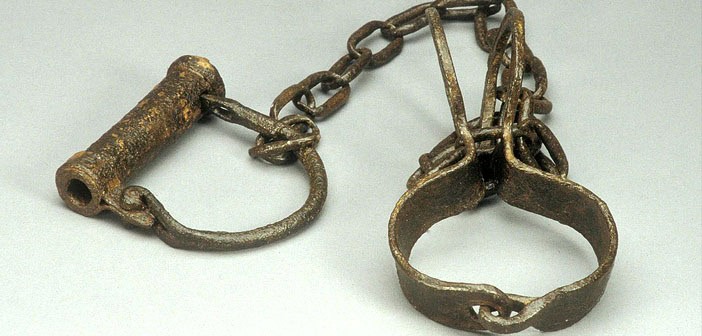
Why didn’t more enslaved Africans try to rise up and free themselves? Physical restraints were one obstacle. The slaves were shackled and chained. Though they often outnumbered the crew, they were unarmed. Another obstacle, however, was not physical, but psychological: the classic dilemma known as the problem of collective action.

New research published in Rationality & Society utilized rational choice theory to show that although all the slaves would benefit from a successful insurrection, the associated cost made it implausible in most cases that any one slave would start a revolt. A failed insurrection resulted in grisly torture and death.

“All of the slaves on a ship enjoy the benefits of overthrowing the crew and regaining their freedom,” Andrew Marcum of Duke University and David Skarbek of King’s College London wrote in their study. “However, accomplishing this task requires each individual to take risky actions that often result in torture and death. Each slave prefers to enjoy the benefits of freedom without bearing the substantial cost of helping to obtain it. As a result, each slave rationally chooses to free ride and no one is freed.”

The collective action problem and free riders are not specific to slavery. The problem occurs whenever a group works towards a goal that benefits everyone in the group, regardless of individual members participation.

By examining data on 5946 trans-Atlantic voyages from 1750 to 1775, the researchers found that slave revolts were actually more common on ships with a smaller number of slaves.

The finding is counterintuitive — a greater number of slaves would make it easier to overthrow the crew — but it accords with rational choice theory. In larger groups, a single slave has less to contribute, and can avoid the brutal punishments meted out if the revolt fails, but still reap the rewards if the revolt succeeds. He or she has little incentive to participate.

“Slave ships with fewer slaves and fewer male slaves were more likely to revolt because they could monitor against free riding and induce greater participation,” Marcum and Skarbek wrote. “Our finding suggests that explanations that rely entirely on ‘African-based’ causes for revolt, such as social, religious, and political conditions peculiar to certain regions, are less important for revolt than slaves’ ability to overcome the collective action problem.”

Google News Preferences Add PsyPost to your preferred sources

They also found that slave revolts were more common when the slaves shared the same language and culture.

“Relying on historical and archival materials, we also argue that a greater degree of homogeneity facilitated revolt,” Marcum and Skarbek noted. “Ship captains therefore actively sought to diversify their purchases with slaves from different regions so that collective action would be more difficult.”

Previous Post

Molecular tweezers: Physicists push new Parkinson’s treatment toward clinical trials

Next Post

Brain size matters when it comes to animal self-control

RELATED

Schemas help older adults compensate for age-related memory decline, study finds
Cognitive Science

Your body exhibits subtle physiological changes when you engage in self-deception

April 3, 2026
Scientists reveal the impact of conspiracy theories on personal relationships and dating success
Conspiracy Theories

The exact political location where conspiracy theories thrive

April 3, 2026
ChatGPT acts as a “cognitive crutch” that weakens memory, new research suggests
Psychopathy

When made to feel sad, men with psychopathic traits shift their visual focus to anger

April 3, 2026
Psychotic delusions are evolving to incorporate smartphones and social media algorithms
Cognitive Science

Brain scans shed light on how short videos impair memory and alter neural pathways

April 3, 2026
AI autocomplete suggestions covertly change how users think about important topics
Narcissism

Vulnerable narcissism is linked to intense celebrity worship via parasocial relationships

April 2, 2026
Scientists identify distinct neural dynamics linked to general intelligence
Dark Triad

Brain scans reveal the neural fingerprints of dark personality traits

April 2, 2026
This psychological factor might help unite America or “destroy us from within”
Political Psychology

The psychological divide between Democrats and Republicans during democratic backsliding

April 2, 2026
Study links phubbing sensitivity to attachment patterns in romantic couples
Artificial Intelligence

How generative artificial intelligence is upending theories of political persuasion

April 1, 2026

STAY CONNECTED

RSS Psychology of Selling

  • The salesperson who competes against themselves may outperform the one trying to beat everyone else
  • When sales managers serve first, salespeople stay longer and sell more confidently
  • Emotional intelligence linked to better sales performance
  • When a goal-driven boss ignores relationships, manipulative employees may fight back
  • When salespeople fail to hit their targets, inner drive matters more than bonus checks

LATEST

Job seekers mask their emotions and act more analytical when evaluated by artificial intelligence

Your body exhibits subtle physiological changes when you engage in self-deception

The exact political location where conspiracy theories thrive

When made to feel sad, men with psychopathic traits shift their visual focus to anger

Different types of childhood maltreatment appear to uniquely shape human brain development

Brain scans shed light on how short videos impair memory and alter neural pathways

Cannabis intoxication broadly impairs multiple memory types, new study shows

Autism risk genes are shared across human ancestries, large genome study reveals

PsyPost is a psychology and neuroscience news website dedicated to reporting the latest research on human behavior, cognition, and society. (READ MORE...)

  • Mental Health
  • Neuroimaging
  • Personality Psychology
  • Social Psychology
  • Artificial Intelligence
  • Cognitive Science
  • Psychopharmacology
  • Contact us
  • Disclaimer
  • Privacy policy
  • Terms and conditions
  • Do not sell my personal information

(c) PsyPost Media Inc

Welcome Back!

Login to your account below

Forgotten Password?

Retrieve your password

Please enter your username or email address to reset your password.

Log In

Add New Playlist

Subscribe
  • My Account
  • Cognitive Science Research
  • Mental Health Research
  • Social Psychology Research
  • Drug Research
  • Relationship Research
  • About PsyPost
  • Contact
  • Privacy Policy

(c) PsyPost Media Inc