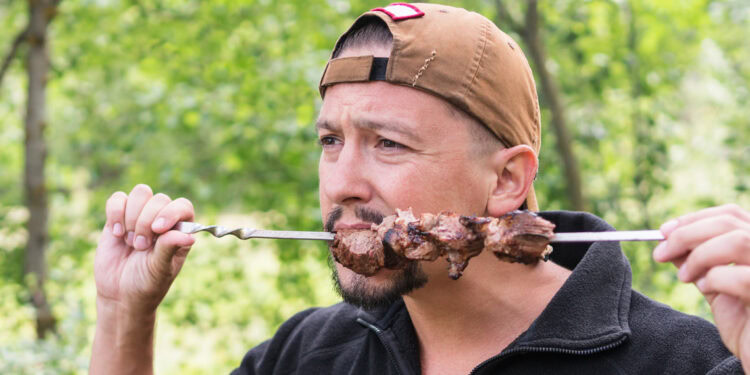

New research published in Sex Roles revealed that men who identify as more masculine are less likely to reduce meat consumption or consider a plant-based diet. Additionally, the findings indicate that men tend to have a stronger belief that eating meat is the norm.
Individuals with more gender-conforming self-ratings perceive meat as more natural, necessary, and enjoyable. These findings suggest that strategies encouraging low- or no-meat diets may be more effective if they account for how Australian dietary practices intersect with gender and identity.
Meat consumption has important implications for the environment, human health, and animal welfare, and reducing meat consumption is considered a strategy to mitigate these issues. Despite this, gender has consistently been linked to meat consumption, with men consuming more meat than women. Blah and colleagues sought to broaden the scope of analysis to the Australian setting, where meat consumption is notably high and linked with masculinity.
Australia is known as the leading nation in meat consumption, with meat being perceived as a food choice for men. According to a recent survey, most male participants preferred to lose ten years of their lifespan rather than give up eating meat. Therefore, comprehending the psychological aspects that drive meat consumption among Australians is imperative for tackling emissions and health issues.
The study aims to identify gender norms and identities that influence meat consumption habits and attitudes in Australia by comparing meat-eating patterns within genders. The results of this research can be used to develop policies and interventions aimed at promoting sustainable and healthy dietary choices while reducing meat consumption. Understanding the complex relationship between gender, identity, and meat consumption is essential to address the environmental, health, and animal welfare issues associated with meat consumption in Australia and beyond.
The survey conducted in Australia involved 5,244 participants, out of which 4,897 were meat-eaters (862 being flexitarians and 4,035 being omnivores). The sample included men and women (48.3% and 51.2%, respectively) aged between 18 and 92 years. Participants filled out measures of their femininity/masculinity, desire to reduce meat consumption, and if they would consider vegetarianism or veganism.
The study indicates that meat consumption habits are linked to gender identity and self-rated gender typicality. In contrast to earlier research, being male alone was not a significant predictor of higher meat consumption habits. Instead, the study found that levels of masculinity were related to resistance to decreasing meat intake among men.
This indicates that men who perceive themselves as more masculine consume more meat. The study also discovered that femininity among women was similarly linked to attitudes related to meat consumption, implying that gender identity influences meat consumption behaviors for both men and women.
Men who identified as more traditionally masculine were less likely to consider reducing meat intake or adopting a vegetarian/vegan diet and were more likely to view meat consumption as normal. However, the same was not found to be true for women.
These results indicate that gender identity and gender typicality may have a more significant impact on meat consumption habits in countries with higher meat consumption rates, like the United States and Australia, and less of an impact in countries where meat reduction or abstinence is more common, emphasizing the need for further research.
In addition, the study indicated that conservative beliefs about gender roles and political orientation could also affect meat consumption patterns. Participants who identified as more gender-conforming were more likely to align themselves with right-wing political views, while those who identified as more liberal were less likely to conform to traditional gender roles.
This suggests that political conservatism may require more conformity to gender norms, and future research could explore the relationship between political ideology, gender identity, and meat consumption.
In addition, the research suggested that specific personality characteristics, such as openness, may influence the connection between gender identity and meat consumption habits.
These findings emphasize the need for further research to comprehend this complex relationship between gender and meat consumption in diverse cultural and social contexts.
The study, “Masculinity matters for meat consumption: An examination of self‐rated gender typicality, meat consumption, and veg*nism in Australian men and women“, was authored by Samantha K. Stanley, Cameron Day, Patricia M. Brown.