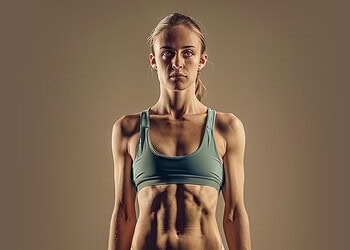
A new study published in Psychology of Popular Media suggests that how young women engage with TikTok may shape the way they feel about their bodies and their attitudes toward cosmetic surgery. The findings indicate that certain behaviors, such as commenting on others’ appearances or following health and celebrity accounts, are linked to both body image and the acceptance of cosmetic procedures. The study provides evidence that appearance-based activity on TikTok can have both potentially positive and negative effects on self-perception.
Social media platforms have long been scrutinized for how they influence body image. Previous research has mostly focused on Instagram and Facebook, where idealized photos are common and appearance-based comparisons are easy to make. But TikTok has become especially popular among young women, many of whom spend hours scrolling through videos that often highlight physical appearance, fitness routines, or celebrity lifestyles.
Unlike photo-based platforms, TikTok relies entirely on short videos that are selected and recommended by an algorithm designed to maximize user engagement. Researchers were interested in whether the ways young women interact with these videos — particularly when it comes to appearance-focused content — might shape their feelings about their bodies and their openness to cosmetic surgery. They aimed to examine not just time spent on the app, but specific types of engagement.
“My own experiences as a young woman on TikTok inspired me to consider how certain accounts might impact users’ body image-related perceptions. At the time, I was also working with a team at the University of Arizona who were also experiencing some of the same things on TikTok, and it was a great opportunity to collaborate on this emerging research area,” said study author Leah Dajches, an assistant professor at New Mexico State University and co-editor of Fandom in Marginalized Communities.
For their study, the researchers surveyed 424 U.S. women between the ages of 18 and 32. Participants had to be active TikTok users and were recruited through various channels, including a university pool, Reddit, and an online platform for study participation.
The researchers focused on three types of appearance-related engagement on TikTok: how often participants left comments on others’ appearances, how many celebrity accounts they followed, and how many health and fitness accounts they followed. They then measured participants’ body image using two concepts: body appreciation, which reflects a positive view of one’s own body, and body dissatisfaction, which reflects discontent with one’s appearance. They also assessed how open participants were to undergoing cosmetic surgery.
One key finding was that young women who reported frequently leaving appearance-related comments on TikTok also reported higher levels of body appreciation. This suggests that engaging with others in appearance-based ways, possibly through compliments or encouragement, may provide a sense of connection or affirmation that supports a more positive body image.
“I was surprised that leaving appearance-related comments was associated with body appreciation,” Dajches told PsyPost. “We theorized that this finding could be due to the valence of comments on the platform. Positive feedback and comments are more prevalent on social media than negative comments. We thought that making positive comments on others’ TikTok videos may be a way some users create and maintain social connections, as well as fulfill their need for social bonds.”
“We also suggest that such comments may be a form of social support, which is shown to be rewarding and stress reducing. Thus, in the context of TikTok, complimenting others’ appearance might allow the commenter to feel that their own appearance is or would be similarly supported.”
However, this same group also showed higher acceptance of cosmetic surgery. This may indicate that even positive engagement with appearance can be tied to a heightened focus on physical looks, which could in turn lead to greater openness to altering appearance through surgical means.
“Leaving appearance-related comments was also associated with higher levels of cosmetic surgery acceptance,” Dajches explained. “Essentially, this means that commenting on how other users look was correlated with young women’s positive perception of their own body, as well as their openness/acceptance of cosmetic surgery procedures.”
The researchers also found that following celebrity accounts was indirectly linked to cosmetic surgery acceptance. Specifically, following more celebrity accounts was related to greater body dissatisfaction. That dissatisfaction, in turn, was linked to more favorable views of cosmetic surgery. This provides evidence for the idea that watching celebrities, who often present highly curated or edited versions of their appearance, might lead viewers to feel worse about themselves. In this case, that dissatisfaction seems to encourage more openness to altering appearance to better match those ideals.
A similar pattern emerged for following health and fitness accounts. Participants who followed more of these accounts were more likely to accept cosmetic surgery. But unlike the celebrity accounts, this link was not explained by either body appreciation or dissatisfaction. This suggests that following health and fitness influencers may shape attitudes about surgery in ways that are not entirely captured by how someone feels about their body. For example, viewers might be drawn to cosmetic surgery as part of a broader pursuit of “self-improvement” or appearance enhancement promoted by these influencers.
The researchers tested these relationships using a statistical technique that allowed them to assess both direct and indirect effects. Their model showed a good fit to the data, suggesting that the relationships they identified were consistent with the patterns in the sample. But there are still some limitations.
“Our study was a cross-sectional survey, which means that we can look at associations between concepts or variables; however, we cannot draw definitive causal claims about the direction of the relationships,” Dajches noted. “Our sample is also less generalizable to groups other than young women. This means that the associations may not occur in other demographics, such as young men.”
The study, “‘I Made You Look’… and Comment: Exploring the Role of TikTok on Body Image and Acceptance of Cosmetic Surgery,” was authored by Leah Dajches, Heather Gahler, Larissa Terán, Kun Yan, Jiaqi Zeng, and Jennifer Stevens Aubrey.