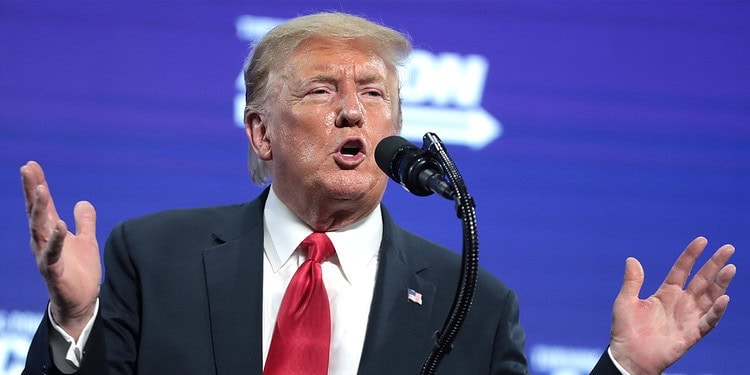

New research published in the journal Political Behavior provides evidence that high-profile claims of electoral fraud, like those made by Donald Trump after the 2020 presidential election, can discourage voter participation—but only temporarily. The study examined Georgia’s 2021 Senate runoff elections and found a modest drop in turnout among Trump supporters. These effects, however, were short-lived, with turnout returning to normal in subsequent elections.
The researchers aimed to explore whether claims of electoral fraud and misconduct, especially those made by political elites, can influence voter turnout. This question has gained importance following the 2020 U.S. presidential election, where Trump and his allies mounted an extensive and well-publicized campaign alleging fraud, despite a lack of evidence.
These claims raised concerns about the potential for such misinformation to undermine public confidence in elections and, ultimately, democratic participation. The viability of democracy relies on shared trust in election integrity, and this study sought to understand whether elite claims of fraud might discourage voters from participating in elections.
The researchers were specifically interested in how these allegations impacted the 2021 Senate runoff elections in Georgia, which followed closely after the contentious 2020 presidential election. The Senate races were significant, as they would determine the balance of power in the U.S. Senate. Given the high stakes and the intense focus on election integrity, Georgia provided a unique opportunity to study how such claims might affect voter behavior.
The study was conducted using a combination of aggregate and individual-level data from Georgia’s voter file, which includes information on voters’ demographics, voting history, and turnout in various elections for over 7.6 million registered voters. This large dataset allowed them to track changes in turnout at the precinct level, as well as estimate individual voter behavior based on factors like race, gender, age, and previous voting patterns.
In analyzing voter turnout between the November 2020 general election and the January 2021 Senate runoff, the study found a small but notable decline in turnout in areas where Trump was more popular. On average, precincts with higher levels of Trump support saw turnout decline by 0.7 to 1.3 percentage points.
When looking at individual voters, those who were predicted to be strong Trump supporters showed a larger decrease in turnout, about 1.7 percentage points, compared to non-Trump supporters. This finding supports the idea that Trump’s fraud claims, amplified by widespread media coverage, may have discouraged some of his supporters from voting in the runoff.
“Our findings illustrate the potential for exposure to conspiracy theories and misinformation to erode not only attitudes toward the electoral system, but also participation in democratic politics,” the researchers wrote.
However, the study also found that this demobilizing effect was temporary. By the time of the 2022 Georgia Senate runoff, turnout among Trump supporters had largely returned to pre-2021 levels. In that election, the turnout decline among Trump supporters was less than one percentage point compared to non-Trump supporters, suggesting that the impact of the fraud allegations was short-lived.
“Our quantitative case study takes place in an admittedly extreme context,” the researchers explained. “The sustained allegations of electoral fraud by the highest-profile politician in the United States in the months leading up to the runoff received enormous attention. When we expand our analysis to examine persistence across multiple election cycles, we find smaller turnout effects in the 2022 runoff. Absent a steady stream of high-profile claims and the attendant media coverage they receive, specious allegations of electoral fraud are unlikely to have long-term demobilizing effects.”
The methodology used in the study allowed the researchers to control for various factors that could influence turnout, such as voters’ historical voting behavior and demographic characteristics. This gave them confidence that the observed declines in turnout were likely linked to the fraud allegations, rather than other campaign factors or natural variations in voter behavior.
But as with any study, there are some some limitations to consider. First, the researchers were unable to completely disentangle the effects of fraud allegations from other factors that might have influenced turnout in the 2021 runoff, such as changes in campaign strategies, voter fatigue, or the outcome of the 2020 general election itself. The analysis can only measure the net effect of these various factors combined.
Another limitation is that the study focuses on a specific electoral context—the 2021 Georgia runoff elections—and the findings may not be generalizable to other elections or contexts. The high-profile nature of the fraud allegations and the extensive media coverage surrounding the 2020 election make it a unique case. It is unclear whether similar claims of fraud would have the same effect in a different setting or if they were made by a less prominent figure.
The study opens the door for further research on the effects of elite rhetoric on voter turnout and democratic participation. Future studies could explore how different types of fraud allegations—such as claims of widespread fraud versus more localized or procedural misconduct—affect voter behavior. Researchers could also investigate whether the effects of fraud claims vary depending on the source of the allegations, the media environment, or the partisan composition of the electorate.
Additionally, experimental studies could help clarify how voters respond to different types of misinformation about elections and whether such claims have different effects depending on the political context or timing of the election. As misinformation continues to be a concern in democratic societies, understanding its potential to erode not only trust in elections but also voter participation will remain an important area of study.
The study, “Can Elite Allegations of Election Fraud Demobilize Supporters?“, was authored by Bernard L. Fraga, Zachary Peskowitz, and James Szewczyk.