
Recent research published in the journal Neurology suggests that people who consume more ultra-processed foods may indeed face higher risks of cognitive impairment and stroke compared to those who eat fewer processed foods. The findings shed light on the relationship between diet and brain health.
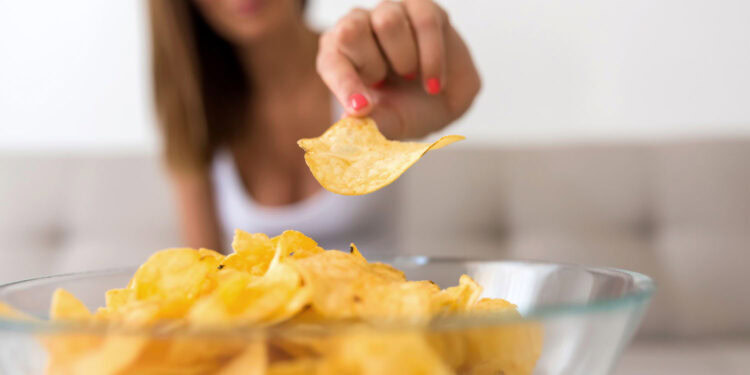
Ultra-processed foods are characterized by their extensive industrial processing and often contain ingredients not commonly used in home cooking, such as artificial additives, preservatives, and emulsifiers. Examples of ultra-processed foods include soft drinks, chips, cookies, instant noodles, packaged snacks, processed meats like hot dogs and sausages, sugary breakfast cereals, and pre-packaged frozen meals.
Previous research has linked these foods to various health issues, including obesity, cardiovascular disease, and metabolic syndrome. However, the specific effects of ultra-processed foods on brain health and stroke risk have not been as thoroughly explored. Understanding these effects could inform dietary recommendations and public health policies aimed at reducing the prevalence of these conditions.
“There is substantial evidence to show that consumption of certain types of food is healthy and associated with better brain health outcomes. These include green, leafy vegetables, fruits, nuts and minimizing red meat,” said study author W. Taylor Kimberly, chief of the Division of Neurocritical Care at Massachusetts General Hospital and an associate professor at Harvard Medical School.
“However, there has been less known about how processing of food types is associated with brain health. Emerging evidence suggests that highly processed foods, generated in industrialized settings, is associated with metabolic, cardiovascular health outcomes. In our study, we were interested in the study the relationship between ultra-processed food intake and risk of stroke and cognitive impairment, while also taking into account the type of food intake.”
The researchers utilized data from the REasons for Geographic and Racial Differences in Stroke (REGARDS) project, a large, ongoing study that examines stroke risk factors in a diverse cohort of Black and White adults aged 45 years or older in the United States. Participants were enrolled between 2003 and 2007, and those included in the analysis had no history of stroke or cognitive impairment at the study’s onset.
Participants provided detailed information about their diet using a Food Frequency Questionnaire, which categorized their food intake according to the NOVA classification system. This system divides foods into four categories based on the level of processing: unprocessed or minimally processed foods (NOVA1), processed culinary ingredients (NOVA2), processed foods (NOVA3), and ultra-processed foods (NOVA4).
To assess cognitive impairment, participants underwent memory and fluency tests, including Word List Learning, Delayed Recall, Animal Fluency, and Letter F Fluency. A participant was considered cognitively impaired if their scores were significantly lower than predicted based on a normative sample. Stroke incidents were tracked through self-reports and confirmed by reviewing medical records and neuroimaging.
The researchers also collected data on various demographic, clinical, and lifestyle factors, including age, sex, race, smoking status, hypertension, diabetes, cardiovascular disease, physical activity, body mass index, alcohol use, and depressive symptoms. These factors were included in the analysis to control for potential confounding variables.
The study found that higher consumption of ultra-processed foods was significantly associated with an increased risk of both stroke and cognitive impairment. Specifically, each 10% increase in the proportion of ultra-processed foods in the diet was linked to a 10% increase in the risk of stroke and a 16% increase in the risk of cognitive impairment. These associations remained significant even after adjusting for various demographic and clinical factors, as well as overall dietary patterns.
Interestingly, the study also found that greater adherence to healthier dietary patterns, such as the Mediterranean, DASH, and MIND diets, was associated with a reduced risk of stroke and cognitive impairment. These diets emphasize the consumption of fruits, vegetables, whole grains, nuts, and lean proteins while limiting the intake of processed and sugary foods.
The researchers noted that the adverse effects of ultra-processed foods on brain health were independent of these healthier dietary patterns. In other words, even among individuals who generally followed a healthy diet, higher consumption of ultra-processed foods still posed a significant risk.
“When thinking about brain health outcomes such as stroke and cognitive impairment, it’s important to think about what you eat and also how that food is prepared,” Kimberly told PsyPost.
While the findings of this study are compelling, there are several limitations to consider. First, the study relied on self-reported dietary data, which can be subject to inaccuracies and biases. Participants may underreport or overreport their intake of certain foods, leading to potential measurement errors.
Additionally, the observational nature of the study means that it cannot establish causality. While the study found strong associations between ultra-processed food consumption and brain health outcomes, it cannot definitively prove that ultra-processed foods cause these adverse effects.
Another important direction for future research is to investigate the potential impact of ultra-processed foods on the gut microbiome. The gut microbiome is a diverse community of trillions of microorganisms living in the digestive tract that play a crucial role in digestion, immune function, and overall health.
“We’re interested in understanding how food intake impacts our gut microbiome, and in turn, how that may impact brain health,” Kimberly said.
The study, “Associations Between Ultra-Processed Food Consumption and Adverse Brain Health Outcomes,” was authored by Varun M. Bhave, Carol R. Oladele, Zsuzsanna Ament, Naruchorn Kijpaisalratana, Alana C. Jones, Catharine A. Couch, Amit Patki, Ana-Lucia Garcia Guarniz, Aleena Bennett, Michael Crowe, Marguerite R. Irvin, and W. Taylor Kimberly.