PsyPost
  • Mental Health
  • Social Psychology
  • Cognitive Science
  • Neuroscience
  • About
No Result
View All Result
Join
My Account
PsyPost
No Result
View All Result
Home Exclusive Social Psychology

Lesbian, gay and bisexual individuals have less contact with and live geographically farther from their siblings

by Eric W. Dolan
May 17, 2020
Reading Time: 2 mins read
Share on TwitterShare on Facebook

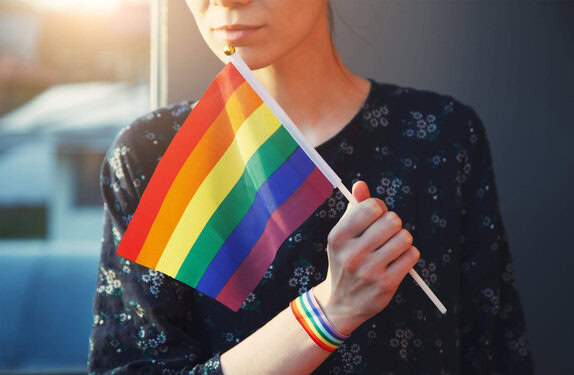
Lesbian, gay and bisexual people tend to have less frequent contact with and live geographically farther away from their brothers and sisters, according to new research from Australia. The findings, which appear in the Journal of Marriage and Family, suggest that sexual stigma can harm family relationships.

“We know that people who identify as lesbian, gay or bisexual (LGB) tend to experience poorer outcomes across life domains than heterosexual people,” said study author Francisco (Paco) Perales, an associate professor at The University of Queensland.

“The dominant explanation for this is that these individuals receive lower levels of social support from their family and the broader community. This is because non-heterosexuality remains a stigmatised and not fully accepted social status. While we know this is the case for parent-child relationships, in this study, we used a large-scale social survey to examine whether or not adult LGB people had also less close relationships with their siblings.”

For their study, the researchers analyzed data from 13,252 individuals who participated in the Household, Income and Labour Dynamics in Australia (HILDA) Survey, a nationally representative longitudinal study. In 2012, the study collected information on the participants’ sexual identity and sibling relations.

Individuals who identified as lesbian, gay, or bisexual tended to report less frequent face-to-face contact with their siblings compared to heterosexual individuals. They also reported less contact via telephone, letter, email, or other form of electronic communication and tended to live a farther distance away from their siblings.

“We found that, compared with heterosexual people, LGB people had less frequent contact with and lived geographically farther from their siblings — particularly male LGB people. These findings suggest that barriers to socioeconomic inclusion experienced by individuals from sexual minorities begin within the nuclear family,” Perales told PsyPost.

The study controlled for a number of variables, including gender, age, education, partnership status, and sibling type (full, half, adoptive, etc.) But like all research, the study includes some limitations.

“We need similar studies examining the sibling relations of individuals from other minority gender-identity and sexual-orientation groups (e.g., gender nonbinary, transgender, and pansexual individuals). We also need studies that can ascertain how the more distant sibling relations observed for LGB than people come to be,” Perales said.

Google News Preferences Add PsyPost to your preferred sources

The study, “Sexual Orientation, Geographic Proximity, and Contact Frequency Between Adult Siblings“, was authored by Francisco Perales and Stefanie Plage.

RELATED

Authoritarian attitudes are linked to MAGA support—except among women of color, researchers find
Political Psychology

Trump’s 2024 victory flipped the psychological differences between liberals and conservatives

April 29, 2026
High meat consumption may protect against cognitive decline in people with a specific Alzheimer’s gene
Narcissism

Narcissism runs in the family, but not because of parenting

April 28, 2026
A simple “blank screen” test revealed a key fact about the psychology of neuroticism
Evolutionary Psychology

What computer simulations reveal about the evolutionary purpose of gaming

April 28, 2026
Artificial intelligence flatters users into bad behavior
Moral Psychology

Young men use moral outrage to claim status in political debates

April 26, 2026
Artificial intelligence flatters users into bad behavior
Political Psychology

Public support for transgender women in sports dropped significantly between 2019 and 2024

April 26, 2026
Self-interest, not spontaneous generosity, drives equality among Hadza hunter-gatherers
Divorce

Fathers who fear divorce are more likely to develop distrust in political institutions

April 26, 2026
People view the term “sex worker” much more positively than “prostitute” or “hooker”
Relationships and Sexual Health

People view the term “sex worker” much more positively than “prostitute” or “hooker”

April 25, 2026
New study identifies another key difference between religious “nones” and religious “dones”
Political Psychology

Former Christians express more progressive political views than lifelong nonbelievers

April 25, 2026

Follow PsyPost

The latest research, however you prefer to read it.

Daily newsletter

One email a day. The newest research, nothing else.

Google News

Get PsyPost stories in your Google News feed.

Add PsyPost to Google News
RSS feed

Use your favorite reader. We also syndicate to Apple News.

Copy RSS URL
Social media
Support independent science journalism

Ad-free reading, full archives, and weekly deep dives for members.

Become a member

Trending

  • Narcissism runs in the family, but not because of parenting
  • How cognitive ability and logical intuition evolve during middle and high school
  • Former Christians express more progressive political views than lifelong nonbelievers
  • New psychology research reveals your face might determine how easily people remember your name
  • Certainty in your feelings toward your partner predicts relationship happiness and mental well-being

Psychology of Selling

  • Seven seller skills that drive B2B sales performance, according to a Norwegian study
  • What makes customers stick with a salesperson? A study traces the path from trust to long-term commitment
  • When company shakeups breed envy, salespeople may cut corners and eye the exit
  • Study finds Instagram micro-celebrities can shift brand attitudes and buying intent through direct engagement
  • Salespeople who feel they’re making a difference may outperform those chasing commissions

PsyPost is a psychology and neuroscience news website dedicated to reporting the latest research on human behavior, cognition, and society. (READ MORE...)

  • Mental Health
  • Neuroimaging
  • Personality Psychology
  • Social Psychology
  • Artificial Intelligence
  • Cognitive Science
  • Psychopharmacology
  • Contact us
  • Disclaimer
  • Privacy policy
  • Terms and conditions
  • Do not sell my personal information

(c) PsyPost Media Inc

Welcome Back!

Login to your account below

Forgotten Password?

Retrieve your password

Please enter your username or email address to reset your password.

Log In

Add New Playlist

Subscribe
  • My Account
  • Cognitive Science Research
  • Mental Health Research
  • Social Psychology Research
  • Drug Research
  • Relationship Research
  • About PsyPost
  • Contact
  • Privacy Policy

(c) PsyPost Media Inc