Subscribe
The latest psychology and neuroscience discoveries.
My Account
  • Mental Health
  • Social Psychology
  • Cognitive Science
  • Neuroscience
  • About
No Result
View All Result
PsyPost
PsyPost
No Result
View All Result
Home Exclusive Mental Health

Competitive bodybuilding does not appear to be linked to heightened psychopathology

by Beth Ellwood
November 7, 2020
in Mental Health
(Image by fvasallo from Pixabay)

(Image by fvasallo from Pixabay)

Share on TwitterShare on Facebook

A study published in BMJ Open Sport and Exercise Medicine suggests that competitive bodybuilders are no more pathological than recreational bodybuilders. They are, however, more likely to consume anabolic–androgenic steroids and other performance-enhancing drugs.

“Despite the rigours of preparation and the dangers of drug use, competitive body-building has grown increasingly popular. For example, one of many body-building organisations, the International Federation of Body-building and Fitness, sponsors about 2500 body-building events annually around the world, some involving hundreds of competitors,” study authors Ian Steele and associates say.

“However,” the authors add, “the sport has a peculiar reputation; in both scientific publications and in popular belief, competitive bodybuilders are sometimes portrayed as prone to psychopathology, or even as participating in a freak show.”

While this unfavorable reputation persists, the scientific literature on the subject is limited and has been inconclusive. Steele and his team conducted a study in attempt to uncover whether or not competitive bodybuilders really are pathologically different than their recreational counterparts.

The researchers analyzed data from a larger 2009 internet survey of strength trainers. Their analysis involved a sample of 96 male competitive bodybuilders and 888 men who classified themselves as recreational strength-trainers. All participants answered a plethora of questions about their exercise habits, body-image attitudes, psychiatric diagnoses, and use of drugs, alcohol, and tobacco. They also reported any use of anabolic-androgenic steroids (AAS) or other appearance or performance-enhancing drugs (APEDs).

The study found that competitive bodybuilders were more likely than recreational strength-trainers to report using AAS or APEDs. However, there were no significant differences between the groups when it came to nearly any other measure.

Body image concerns were prevalent among respondents — 40% of the total sample reported being ‘preoccupied with an imagined defect or slight physical anomaly’ in their appearance, and 20% said such a preoccupation was causing ‘significant distress or impairment in social, occupational, or other important areas of functioning.’ However, there were no significant differences in the way competitive bodybuilders versus recreational exercisers responded to either of these items.

In short, body image concerns were high but did not differ between the two groups. “Thus,” Steele and colleagues discuss, “although body image and body weight appear to represent widespread concerns among strength-training men, these concerns are by no means confined to competitors.”

Google News Preferences Add PsyPost to your preferred sources

Further, the two groups did not differ in self-reported psychiatric diagnoses, with both groups reporting low incidences. As Steele and colleagues report, there was little evidence to suggest that competitive bodybuilders were at higher risk for pathology than recreational trainers.

“Indeed,” the researchers infer, “setting aside their high levels of AAS and other APED use, one might even argue that the competitors were slightly more ‘responsible’ or health-conscious than recreationals in certain ways, in that they reported a markedly lower lifetime prevalence of marijuana use and were less likely to consider themselves as overweight. . .”

The authors address the limitation that the survey they relied on did not include many items about eating disorders and had no items on exercise addiction. The study also did not differentiate between the different categories of competitive bodybuilding, which likely vary in the extent of sacrifice involved.

The study, “Is competitive body-building pathological? Survey of 984 male strength trainers”, was authored by Ian Steele, Harrison Pope, Eric J Ip, Mitchell J Barnett, and Gen Kanayama.


(Image by fvasallo from Pixabay)

Previous Post

Exercise might be a key factor in maintaining working mothers’ quality of life during the COVID-19 pandemic

Next Post

Natural changes in hormone levels are linked to changes in women’s sexual psychology — except among women on hormonal contraceptives

RELATED

Lower creatine intake associated with greater depression and anxiety
Mental Health

Neurological risks rise as vaccination rates fall and measles returns

February 22, 2026
The psychology behind society’s fixation on incels
Mental Health

New research suggests the “lying flat” lifestyle actively decreases long-term happiness

February 22, 2026
Socially anxious individuals show weaker adaptation to angry faces, study finds
Anxiety

A one-month behavioral treatment for social anxiety lowers hostile interpretations of others

February 22, 2026
The surprising relationship between vaccinations and Alzheimer’s disease
Dementia

Shingles vaccine linked to slower biological aging, but brain markers show no change

February 21, 2026
Asian workers hit hard by job losses, wage cuts as anti-Asian sentiment rose under Trump, new study shows
Anxiety

Psychological capital mitigates the impact of interpersonal sensitivity on anxiety in future nurses

February 21, 2026
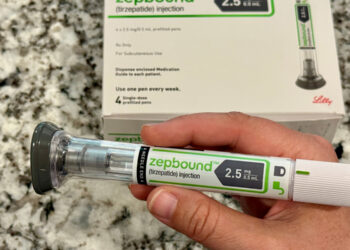
A popular weight loss drug shows promise for treating alcohol addiction
Addiction

A popular weight loss drug shows promise for treating alcohol addiction

February 21, 2026
Incels misperceive societal views, overestimating blame and underestimating sympathy
Depression

Persistent depression linked to resistance in processing positive information about treatment

February 20, 2026
Shifting genetic tides: How early language skills forecast ADHD and literacy outcomes
Depression

Genetic analysis reveals shared biology between testosterone and depression

February 20, 2026

STAY CONNECTED

LATEST

Neurological risks rise as vaccination rates fall and measles returns

New research suggests the “lying flat” lifestyle actively decreases long-term happiness

A one-month behavioral treatment for social anxiety lowers hostile interpretations of others

Caffeine might ease anxiety and depression by calming brain inflammation

People with synesthesia experience distinct thematic patterns in their dreams

Scientists map the brain waves behind the intense effects of ayahuasca

The psychology behind society’s fixation on incels

What is the highest IQ ever recorded? The truth behind the numbers

PsyPost is a psychology and neuroscience news website dedicated to reporting the latest research on human behavior, cognition, and society. (READ MORE...)

  • Mental Health
  • Neuroimaging
  • Personality Psychology
  • Social Psychology
  • Artificial Intelligence
  • Cognitive Science
  • Psychopharmacology
  • Contact us
  • Disclaimer
  • Privacy policy
  • Terms and conditions
  • Do not sell my personal information

(c) PsyPost Media Inc

Welcome Back!

Login to your account below

Forgotten Password?

Retrieve your password

Please enter your username or email address to reset your password.

Log In

Add New Playlist

Subscribe
  • My Account
  • Cognitive Science Research
  • Mental Health Research
  • Social Psychology Research
  • Drug Research
  • Relationship Research
  • About PsyPost
  • Contact
  • Privacy Policy

(c) PsyPost Media Inc