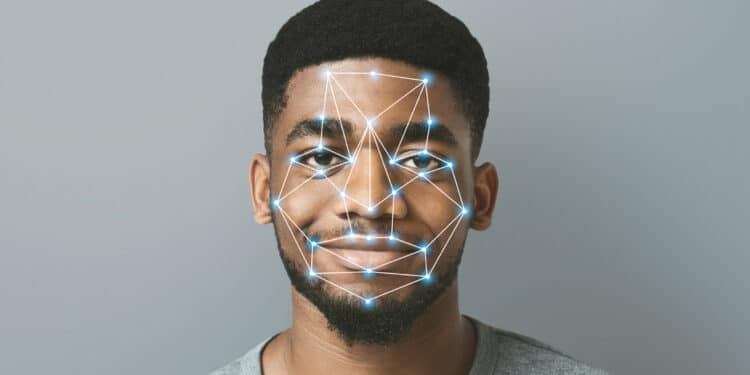

According to a new study published in Scientific Reports, facial recognition technology can accurately predict someone’s political stance from their Facebook profile photo. Remarkably, the algorithm shows greater accuracy in deducing a person’s political orientation than either human judgment or a personality test.
As facial recognition technology rapidly advances, the software is becoming increasingly skilled at identifying and tracking individuals. While some have expressed privacy concerns over these new surveillance capabilities, the author of the new study says these concerns represent only the tip of the iceberg.
“For over a decade now, I have been studying the privacy risks brought about by algorithms and big data,” said researcher Michal Kosinski, an associate professor at Stanford University.
“Companies collect data and develop algorithms aimed at extracting insights from such data, but are reluctant to reveal how accurate such models are. Back in 2012, for example, Facebook patented an algorithm aimed at extracting psychological traits from Facebook Likes. I have examined their approach and demonstrated that it can accurately expose traits ranging from sexual orientation to personality.”
“More recently, I switched my attention to facial recognition algorithms developed by companies and computer scientists. My most recent study confirms their claims: Unfortunately, it is possible to accurately predict political orientation from facial images,” Kosinski explained.
Kosinski’s study applied a facial recognition algorithm to 1,085,795 faces obtain from online social media profiles. Of this dataset, 977,777 came from dating website users in the U.S., UK, and Canada who had self-reported their political orientation. The other 108,018 faces were from Facebook users in the U.S. who also self-reported their political orientation and additionally completed a 100-item personality test.
The algorithm compared each participant’s facial features to the average facial features of liberals and conservatives. The technology used these similarity measurements to determine the likelihood that a participant was either a conservative or a liberal.
The results showed that the algorithm was able to predict political orientation alarmingly well and with similar accuracy across countries and social media platforms. Among U.S. Facebook users, this accuracy hit 73%. Among U.S. dating website users, accuracy was 72%. Among dating website users in the UK and Canada, accuracy reached 70% and 71%, respectively.
Kosinski notes that the algorithm performed substantially better than humans, who are only able to distinguish between a liberal and a conservative with 55% accuracy, just a little better than chance. “Algorithms excel at recognizing patterns in huge datasets that no human could ever process,” the author says, noting that this technology continues to outperform humans in visual tasks.
Political orientation is linked to certain demographic traits that can be easily observed in the face. For example, in the U.S., conservatives are more likely to be white, older, and male. To examine whether these demographic traits were driving the algorithm’s accuracy, Kosinski recomputed the analysis comparing only pairs of faces with the same gender, age, and ethnicity. Accuracy only dropped by around 3.5% — suggesting that many facial features beyond demographic traits were providing cues to political orientation.
Moreover, the facial recognition technology predicted political orientation better than the personality tests completed by the Facebook users. “Combined, five personality factors predicted political orientation with 66% accuracy—significantly less than what was achieved by the face-based classifier in the same sample (73%),” Kosinski reports. “In other words, a single facial image reveals more about a person’s political orientation than their responses to a fairly long personality questionnaire, including many items ostensibly related to political orientation (e.g., “I treat all people equally” or “I believe that too much tax money goes to support artists”).”
Finally, the researcher explored whether certain facial features were tied to political orientation, including facial expression, eyewear, facial hair, and head pose. Kosinski found that head orientation showed 58% predictive power, with Liberals being more likely to face the camera directly. Emotional expression had 57% predictive power, with Liberals being more likely to show surprise and less likely to show disgust.
Kosinski says that his findings likely underestimate the intelligence of such technology, saying that a higher accuracy would likely be revealed with higher resolution images, multiple images per person, or an algorithm specifically built for identifying political orientation. “Even modestly accurate predictions can have tremendous impact when applied to large populations in high stakes contexts, such as elections,” the author cautions. “For example, even a crude estimate of an audience’s psychological traits can drastically boost the efficiency of mass persuasion. We hope that scholars, policymakers, engineers, and citizens will take notice.”
The study, “Facial recognition technology can expose political orientation from naturalistic facial images“, was published January 11, 2021.