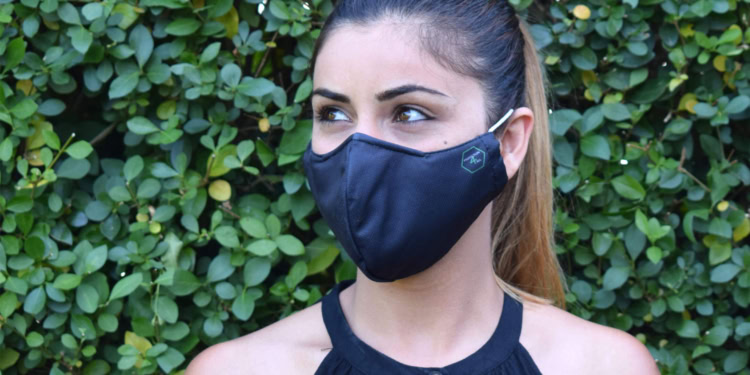

New research published in the journal Applied Psychology suggests that wearing a face mask can boost an influencer’s credibility. A series of studies revealed that when influencers wear face masks, they elicit thoughts of healthcare professionals. People then perceive the masked influencers as more competent than non-masked influencers and are more willing to follow their advice and recommend them to friends.
“This research was inspired by current events. When people started wearing masks in response to COVID-19, I began to wonder how such mask wearing might affect inferences others make about mask wearers’ abilities,” said study author Sona Klucarova, a postdoctoral researcher at Montpellier Business School.
Klucarova came up with her hypothesis for the study based on a theory called product symbolism. The theory suggests that products can take on a symbolic meaning based on the people who use them. This meaning can then “rub off” onto new users who begin associating with the products.
For example, before the coronavirus pandemic, face masks were rarely worn in the Western world except in healthcare settings. Klucarova theorized that face masks should therefore be associated with healthcare professionals and carry a symbol of competence. The researcher conducted three experiments to test whether wearing a face mask would boost the credibility of a social media influencer — a profession that tends to be perceived as rather incompetent.
In July 2020, a sample of 99 U.S. residents was recruited to partake in an experiment. The participants were shown a description of a fictitious female social media influencer accompanied by a photo of the influencer either wearing a disposable face mask or not. Participants were asked to rate the extent that the influencer’s photo reminded them of nurses, medical doctors, and healthcare professionals.
In line with the theory of product symbolism, the results revealed that the masked photo reminded participants of healthcare workers to a significantly greater extent than did the unmasked photo. This was true regardless of participants’ attitudes toward mask-wearing or reported likelihood of wearing a face mask.
A next study in January 2021 replicated this effect using a photo of a male influencer and further found that the mask-wearing influencer was perceived as more competent than the non-mask wearing influencer. Moreover, mediation analysis suggested that this effect was driven by the extent that the mask-wearing photo reminded participants of healthcare professionals.
Another study that was conducted in April 2020 found evidence that competence perceptions can influence consumers’ intentions toward mask-wearing influencers. The results showed that when a fictitious female influencer named Mary was shown wearing a face mask, she was perceived as more competent, and in turn, participants held more positive intentions toward her — being more likely to say they would recommend her to a friend, would like to receive her advice, and would follow her advice.
The findings further suggested that this effect is unique to social media influencers. When Mary was described as a salesperson, a news anchor, a politician, or a medical doctor, mask-wearing was no longer associated with higher competence perceptions or more positive intentions toward her.
Klucarova found that Mary received the lowest competence ratings when she was portrayed as an unmasked social media influencer compared to when she was described as a salesperson, news anchor, politician, or medical doctor. This is in line with previous findings suggesting that influencers are generally perceived as lacking competence. The results suggest that face masks may help influencers boost their credibility, and in turn, increase consumers’ positive intentions toward them.
“In terms of nonverbal communication, mask wearing goes beyond producing inferences regarding mask wearers’ intention to protect themselves and others from COVID-19. Mask wearing can influence what others think about our abilities,” Klucarova told PsyPost.
“Mask wearing is a form of nonverbal communication that can be used in marketing and other applied settings. It can be especially effective when used by relatively newer and seemingly incompetent groups of marketers, such as social media influencers.”
Klucarova says that it would be interesting to study this effect among real influencers and when using different types of face masks. She also notes that as mask-wearing persists and becomes more commonplace, their symbolic meaning may change.
“This research was conducted in the early stages of the COVID-19 pandemic when mask wearing by the general public was still a very new trend, particularly in Western societies. We cannot exclude the possibility that inferences about mask wearers might change as the pandemic progresses,” Klucarova explained. “This research focused on increased competence inferences that can emerge as a result of mask wearing. Inferences about other abilities that might be affected by mask wearing warrant further examination.”
The study, “Do masks matter? Consumer perceptions of social media influencers who wear face masks amid the COVID-19 pandemic”, was authored by Sona Klucarova.