
Psilocybin therapy shows promise for easing anxiety and improving daily life in veterans with severe depression
A small study of military veterans found that a single dose of psilocybin, paired with psychological support, may help relieve anxiety and improve daily functioning alongside reductions in severe depressive symptoms.
Read moreDetails
Understanding emotion-focused coping: What decades of psychology research reveal
Managing stressful feelings is part of most coping. Science shows what helps and when.
Read moreDetails
New psychiatry review finds little consensus on which conditions count as “neurodivergent”
A new JAMA Psychiatry review of 134 studies finds scientists apply "neurodivergent" to 24 distinct diagnoses, from autism and ADHD to anxiety and stroke, raising concerns that broad umbrella labels can mask specific clinical needs.
Read moreDetails
Childhood emotional abuse linked to adult mental health struggles more strongly than physical or sexual abuse
Childhood emotional abuse leaves no bruises, so it is often dismissed as less harmful than physical or sexual mistreatment. A 104-study analysis in Psychological Bulletin indicates its link to adult mental illness is actually stronger.
Read moreDetails
Problematic smartphone use predicts a rebound in attention issues during late adolescence
A new study tracking thousands of teenagers found that attention-related symptoms tend to decline in early adolescence before rebounding as adulthood approaches. Researchers discovered that struggling to control smartphone use reliably predicts worse behavioral issues over time.
Read moreDetails
Cynical hostility and lack of assertiveness both predict depression decades later
Tracking 1,017 Swedish twin pairs across 23 years, researchers found that cynical hostility and difficulty saying no both predict worse depression later in life, even between identical twins who share 100 percent of their DNA.
Read moreDetails
Breathwork can induce altered states comparable to moderate psychedelic doses, study finds
A session of prolonged, rapid breathing produced feelings of bliss and unity comparable to moderate doses of psychedelic drugs, according to mental health professionals who tried it and then evaluated its clinical uses.
Read moreDetails
How brain cell networks expand and shrink as cocaine habits form
As mice learn to self-administer cocaine, the brain networks driving the habit undergo constant remodeling. A new study reveals that the brain continually swaps out individual neurons to maintain the addictive behavior.
Read moreDetails
College students who spend more time in intense physical activity report slightly fewer depressive symptoms
In a survey of more than 2,600 university students in Italy, those who spent more of their day in moderate-to-vigorous physical activity reported slightly fewer depressive symptoms and better health.
Read moreDetails
People judge larger bodies as more forgiving, study suggests
In a series of psychological experiments, researchers found that people tend to view heavier individuals as warmer and more forgiving than thinner individuals. The findings highlight how physical appearance shapes snap judgments about moral character.
Read moreDetails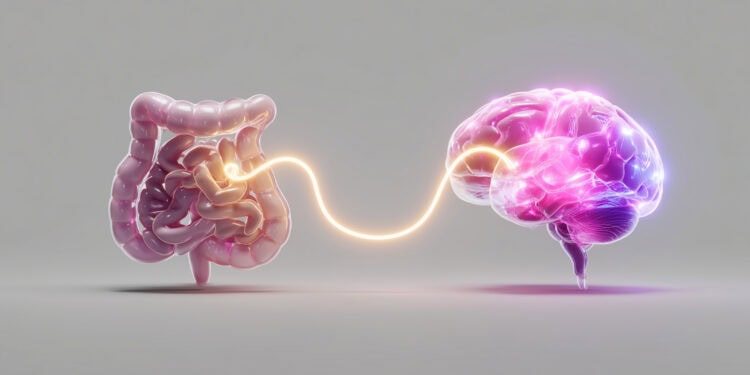
People with ADHD have higher odds of a wide range of gut symptoms, study finds
A meta-analysis of 23 studies involving more than 1.9 million people found that those with ADHD had higher odds of every gastrointestinal symptom examined, from constipation and diarrhea to irritable bowel syndrome.
Read moreDetails
Psychiatrists reveal unusual case in which 71-year-old farmer asked to be tied with ropes to calm his severe anxiety
Doctors in New Delhi describe an elderly patient whose anxiety episodes drove him to seek physical restraint for relief. A literature search turned up no comparable case in older adults.
Read moreDetails
Acceptance and commitment therapy linked to neural shifts in the depressed brain
An eight-week therapeutic program aimed at improving psychological flexibility helped patients with depression reduce obsessive rumination. Brain scans show the therapy strengthened neural connectivity in regions responsible for emotional regulation.
Read moreDetails
Common classroom accommodations for ADHD fail to improve student behavior or schoolwork in clinical trial
In a clinical trial of elementary students with ADHD, extra time, frequent breaks, standing desks, and low-distraction workspaces failed to improve behavior or schoolwork. Meanwhile, structured behavioral supports and stimulant medication substantially reduced classroom rule-breaking.
Read moreDetails
Why stopping SSRIs can cause anxiety: A rebound in serotonin neuron activity may play a role
Stopping an SSRI may release serotonin neurons from the restraint they experience during treatment, triggering a rebound in activity. A mouse study links this rebound, along with hippocampal activation, to anxiety after discontinuation.
Read moreDetails