A new study published in Psychological Medicine has found that a specific type of cognitive training can reduce biological markers of stress. The training, focused on modifying memory biases, appeared to lower daytime cortisol levels and reduce the tendency to recall negative self-relevant information. These findings suggest that targeting how the brain retrieves memories could offer a preventative strategy for individuals prone to anxiety and depression.
Mental health conditions like depression and anxiety are often characterized by a cognitive pattern known as negative memory bias. This involves a tendency for individuals to preferentially remember negative information about themselves while forgetting or overlooking positive experiences.
For example, a person might dwell on a single criticism received at work while failing to recall several compliments received the same day. While therapies aimed at shifting attention away from negative stimuli exist, interventions specifically targeting memory retrieval remain understudied.
The authors of the current study aimed to fill this gap by developing a comprehensive training program. They sought to determine if explicitly practicing the recall of positive autobiographical memories could alter both psychological symptoms and biological stress responses.
“This study was motivated by an unaddressed issue in the clinical setting: no intervention directly targets the automated information- processing framework underpinning distorted memory. Our goal was to address it to break vicious cycles of lingering anxiety and depression,” said study author Yuko Hakamata, a professor at Toyama University School of Medicine and certified clinician at The Beck Institute for Cognitive Behavior Therapy.
Additionally, they intended to observe changes in brain connectivity associated with these improvements. The researchers hypothesized that modifying these memory habits could lead to measurable changes in how the body and brain handle stress.
To test this hypothesis, the research team recruited fifty-eight participants from the Tokyo area. All participants exhibited elevated levels of anxious or depressive personality traits. These elevated traits placed the participants at a higher risk for developing mood disorders in the future. The researchers utilized a randomized controlled trial design, which is considered a high standard for experimental evidence.
Participants were randomly assigned to one of two groups. The first group received Cognitive Bias Modification for Memory, or CBM-M. The second group received a sham training program to serve as a control. Both groups were unaware of which condition they were assigned to, ensuring a double-blind procedure. The intervention consisted of eight web-based sessions completed over the course of one month.
The training tasks were designed to look similar but functioned differently. In the CBM-M group, participants memorized lists containing positive, negative, and neutral words. Specifically, when they encountered positive words, they were instructed to vividly recall a specific personal memory related to that word. For instance, if the word was “competent,” they might recall a time they successfully completed a difficult project.
The sham group performed similar memorization tasks with the same lists of words. However, they did not receive the instruction to link positive words to personal memories. This distinction allowed the researchers to isolate the effect of actively engaging with positive autobiographical memories. The researchers monitored compliance to ensure all participants stayed engaged with the web-based program.
Before and after the one-month period, the researchers administered a battery of psychological and biological tests. They assessed personality traits using the NEO Personality Inventory and measured symptoms of psychological distress.
To gauge physiological stress, they collected saliva samples at five different times across two days. This allowed them to measure cortisol levels throughout the day, providing a comprehensive picture of the body’s stress response.
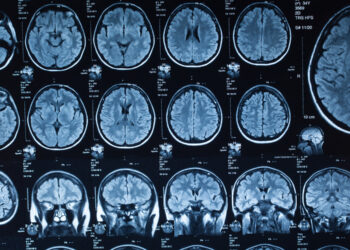
In addition to surveys and saliva samples, the team utilized functional magnetic resonance imaging. This brain scanning technique allowed them to observe changes in intrinsic functional connectivity. They were specifically interested in how different regions of the brain communicated with one another while the participants were at rest.
The study yielded several distinct findings regarding psychological changes. Both the active training group and the sham group reported reductions in general anxiety and depressive traits after the one-month period. This suggests that the act of engaging in a structured daily task may have some general beneficial effects, or it may reflect a placebo response.
However, specific differences emerged between the groups that highlight the unique effects of the CBM-M training. Participants in the CBM-M group showed a significant reduction in explicit memory bias. This means they became less likely to recall negative words describing themselves compared to the control group. This shift suggests that the training successfully altered their cognitive processing of self-relevant information.
The CBM-M group also demonstrated a significant decrease in scores for fatigability. In the context of this study, fatigability refers to a trait associated with tiring easily and recovering slowly from stress or illness. A reduction in this score implies an improved resilience or capacity to handle daily demands.
Most notably, physiological data showed a specific reduction in daytime cortisol levels for the CBM-M group. Cortisol is often referred to as the stress hormone, and chronically high levels are associated with various negative health outcomes.
The analysis indicated that the reduction in negative memory bias was statistically correlated with the reductions in both fatigability and cortisol. This link provides evidence that changing how one remembers information can have direct biological consequences.
Brain imaging revealed changes in neural connectivity for those who underwent the active training. The researchers observed increased connectivity between the right amygdala and the anteromedial orbitofrontal cortex. The amygdala is a region central to emotional processing and the detection of threats. The orbitofrontal cortex is often associated with decision-making and the processing of social rewards.
The strengthening of the connection between these two areas suggests improved regulation or processing of emotional memories. Previous research has linked these circuits to the retrieval of positive autobiographical memories. The authors propose that this neural change may underlie the observed behavioral and physiological improvements.
Despite the positive outcomes, the study has some limitations that affect how the results should be interpreted. The sample size was relatively small, which limits the statistical power to detect smaller effects. The study relied on a comparison with a sham training group rather than a waitlist control group. While this controls for the activity itself, it makes it harder to rule out general placebo effects entirely.
The researchers also noted a complex result regarding autobiographical memory specificity. While individuals with high anxiety traits maintained their ability to recall specific positive memories, those with high depressive traits showed a decrease in this ability after training. This suggests that the intervention might need to be tailored differently for individuals with severe depression. It appears that simply prompting positive recall may not be sufficient for everyone.
Future research is needed to identify which personality profiles respond best to this type of training. It would be beneficial to investigate whether these effects persist over a period longer than one month.
Larger studies are also necessary to confirm the neurobiological mechanisms underlying the observed changes. Understanding the precise brain circuits involved could help refine the training to be more effective.
The study provides a promising step toward non-pharmaceutical interventions for stress and mood vulnerability. By showing that a computerized memory task can lower stress hormones, the research highlights the deep connection between cognitive habits and physical health. It suggests that training the brain to focus on positive personal history can build resilience against stress.
“We can have non-conscious information-processing patterns that distort reality in the processes of perception and memory, which trap us in anxiety and depression,” Hakamata told PsyPost. “Although challenging, we can still change these automated processing patterns by viewing and approaching them from new perspectives beyond imagination.”
The study, “The effectiveness and neurobiological actions of memory bias modification: a randomized controlled trial,” was authored by Yuko Hakamata, Shinya Mizukami, Shuhei Izawa, Mie Matsui, Yoshiya Moriguchi, Takashi Hanakawa, Hiroaki Hori, Yusuke Inoue, and Hirokuni Tagaya.