As organisms grow older, changes in the bacteria living inside the digestive system can directly cause the memory loss commonly associated with aging. By reversing these microbial shifts or stimulating the nerves that connect the digestive tract to the brain, researchers found that memory function could be entirely restored in aging mice. These results were recently published in the journal Nature.
Timothy O. Cox, a graduate researcher at the University of Pennsylvania, led the research team. Christoph A. Thaiss and Maayan Levy, both pathology researchers at Stanford Medicine and the Arc Institute, served as senior authors on the paper. The team wanted to understand the biological mechanisms that dictate how memory changes over a lifespan. They focused on a concept called interoception, which is the way the brain senses the internal state of the body.
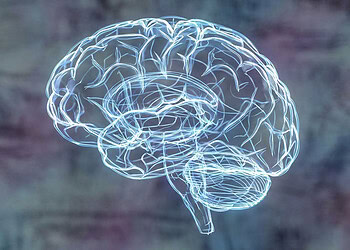
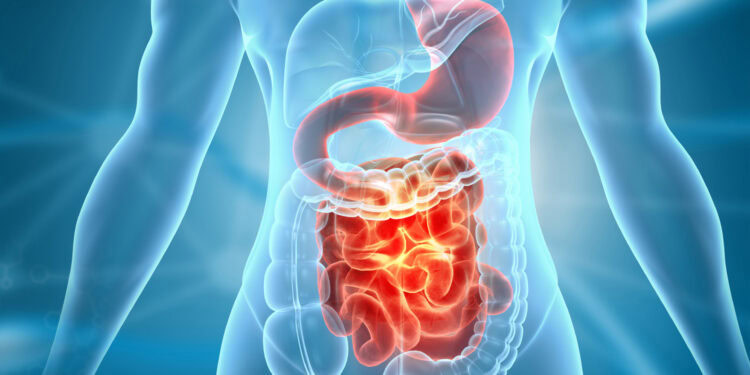
Unlike external senses like sight or hearing, interoception relies on internal pathways like the vagus nerve. This long bundle of nerve fibers acts as a high-speed communication line between the internal organs and the brain. It transmits continuous updates from the stomach and intestines to a brain region called the hippocampus. The hippocampus is the primary center for forming and storing new memories.
The researchers suspected that the gut microbiome, which consists of hundreds of species of bacteria living in the digestive tract, might influence this internal communication. As animals age, the specific types of bacteria residing in their intestines naturally shift. The team sought to determine if these bacterial changes could alter the signals sent along the vagus nerve.
If the gut microbiome affects nerve signaling, it could explain why cognitive abilities falter over time. “Our study emphasizes that processes in the brain can be modulated through peripheral intervention,” Levy said in a press release. She noted that because the digestive system is easy to reach with oral treatments, altering the chemicals produced by gut bacteria offers an appealing way to control brain function.
To test the relationship between gut bacteria and memory, the researchers housed young mice in the same cages as older mice. Because mice naturally consume feces found in their environment, the young animals quickly acquired the intestinal bacteria of the older animals. After a month of living together, the microbial populations in the young mice closely resembled those of the aged mice. The researchers then tested the cognitive abilities of the young animals.
The team used a novel object recognition test, which evaluates a mouse’s natural curiosity and ability to remember familiar items. They also placed the mice in a specialized maze that requires spatial memory to find an exit. Young mice that possessed an older microbiome performed poorly on both tasks. They showed little curiosity about unfamiliar objects and struggled to navigate the maze, behaving much like the older mice.
To isolate the effect of the bacteria from the social stress of living with older animals, the team performed a transplant experiment. They collected fecal matter from older mice and transferred it into the stomachs of young mice that had been raised in a completely sterile environment. These young, previously germ-free mice also lost their ability to form memories after receiving the older bacteria. Older mice raised in sterile environments without any gut bacteria maintained sharp memories well into old age.
The team then administered broad-spectrum antibiotics to the young mice that had acquired older microbiomes. The antibiotics wiped out the newly introduced bacteria. Following this treatment, the young mice regained their memory and easily completed the maze and object recognition tests. Surprisingly, older mice treated with the same antibiotics also experienced a restoration of their memory functions.
Next, the researchers worked to identify the specific bacteria responsible for the cognitive decline. By cataloging the microbial changes that occur over a mouse’s lifespan, they noticed a steady increase in a bacterial species called Parabacteroides goldsteinii. When the researchers introduced only this specific bacterium into the digestive tracts of young mice, the animals developed memory deficits. Other types of bacteria did not produce this effect.
The team analyzed the chemical byproducts created by Parabacteroides goldsteinii to understand how it affects the body. They found that these bacteria produce large amounts of medium-chain fatty acids, which are specific types of fat molecules. When the researchers fed these isolated fat molecules to young mice, the animals immediately showed signs of memory loss. The molecules were acting as a signal that altered the local environment of the intestines.
In the digestive tract, these fat molecules interact with myeloid cells, a type of white blood cell that patrols the gut for threats. The fatty acids attach to a specific receptor on the outside of the white blood cells. Once attached, they trigger the white blood cells to release inflammatory chemicals. The researchers noted that this inflammatory response was localized to the gut and nearby fat deposits, rather than spreading throughout the entire bloodstream.
This local inflammation directly impacted the nearby vagus nerve. Using advanced imaging techniques, the team monitored the electrical activity of the vagus nerve in real time. They observed that the inflammatory chemicals blunted the nerve’s ability to fire electrical signals to the brain. Because the vagus nerve was sending fewer signals, the hippocampus became less active and failed to properly encode new memories.
To prove that this blocked nerve pathway was the root of the problem, the researchers attempted to bypass the inflammation. They gave the older mice capsaicin, the chemical that makes chili peppers spicy, which naturally stimulates the sensory fibers of the vagus nerve. They also tested gut hormones that are known to activate the same nerve pathways. When the vagus nerve was artificially stimulated, the older mice performed just as well on memory tests as the younger animals.
The team also used genetic techniques to remove the fatty acid receptors from the white blood cells of certain mice. Without these receptors, the white blood cells could not detect the bacterial fat molecules and did not trigger an inflammatory response. These genetically modified mice maintained their sharp memories even when their intestines were colonized by the older bacteria. Blocking the inflammation successfully protected the vagus nerve from damage.
While these results offer a new perspective on aging, the experiments were entirely conducted in animal models. The researchers note that it remains unclear if the exact same bacterial species and fatty acids drive memory loss in humans. The exact biological chain of events connecting chronic gut inflammation to decreased nerve excitability also requires further investigation. The anatomical pathways linking the brainstem to the hippocampus are not yet fully mapped.
Future research will explore how these mechanisms translate to the human body and whether targeted therapies can help people experiencing cognitive decline. Scientists are particularly interested in seeing if altering diet or administering specific bacterial treatments could safely reduce gut inflammation in older adults.
“Our hope is that ultimately these findings can be translated into the clinic to combat age-related cognitive decline in people,” Thaiss said in the press release. Additionally, devices that electrically stimulate the vagus nerve are already approved for conditions like epilepsy and might hold promise for protecting memory in the future.
The study, “Intestinal interoceptive dysfunction drives age-associated cognitive decline,” was authored by Timothy O. Cox, Ashwarya S. Devason, Alan de Araujo, Sydney Mason, Madhav Subramanian, Andrea F. M. Salvador, Hélène C. Descamps, Junwon Kim, Yixuan Zhu, Lev Litichevskiy, Sunhee Jung, Won-Suk Song, Adrián Cortés-Martín, Nathan T. Henderson, Kuei-Pin Huang, Thao Nguyen, Wisath Sae-Lee, Iboro C. Umana, Maria Sacta, Ryan J. Rahman, Stephen Wisser, J. Andrew D. Nelson, Ilona Golynker, Alana M. McSween, Eric F. Hohmann, Shaan Patel, Anna L. Bub, Clara Soekler, Niklas Blank, Kevt’her Hoxha, Lavinia Boccia, Andrea C. Wong, Klaas Bahnsen, Jihee Kim, Natalie Biderman, Dina Abbasian, Clarissa Shoffler, Christopher Petucci, Fiona E. McAllister, Amber L. Alhadeff, Marc V. Fuccillo, Colin Hill, Cholsoon Jang, J. Nicholas Betley, Guillaume de Lartigue, Virginia Y.-M. Lee, Maayan Levy & Christoph A. Thaiss.