![[Adobe Stock]](https://sp-ao.shortpixel.ai/client/to_webp,q_glossy,ret_img,w_750,h_375/https://www.psypost.org/wp-content/uploads/2026/03/brain-scans-neuroscientist-750x375.jpg)
Scientists have identified the brain networks that work together when people generate creative scientific ideas, according to a new study published in Psychology of Aesthetics, Creativity, and the Arts.
Creativity is often associated with the arts, but scientists rely on it just as much, especially when forming new hypotheses or explanations for puzzling phenomena. Despite this, scientific creativity has received far less attention than artistic creativity, or general creative thinking that does not require expert knowledge in a particular field.
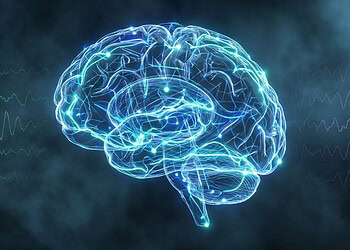
Previous studies have demonstrated that creative thinking in general tends to involve three major brain networks. The first is the default mode network, which helps people draw on memory and imagination. The second is the executive control network, which helps evaluate ideas, inhibit obvious responses, and maintain goals. The third is the salience network, which helps the brain switch between different modes of thinking (i.e., the default mode network and executive control network).
These networks are known to interact during tasks like brainstorming unusual uses for everyday objects, but researchers were unclear if scientific creativity uses the same or different systems.
To address this gap in the literature, a research team led by Roger E. Beaty from Pennsylvania State University scanned the brains of 47 undergraduate STEM majors (28 females, 16 males, 3 unreported; average age 19 years old).
These participants completed two tasks. In the main task, students were shown a scientific scenario—such as an island where all flowers are the same color—and asked to think of a novel, scientifically plausible hypothesis to explain it. In a comparison task, they were shown a scientific sentence and asked to come up with a synonym for a highlighted verb. Both tasks required generating a response, but only the hypothesis task required creative thinking.
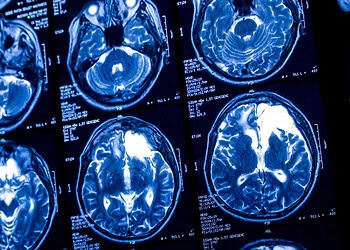
The team used functional magnetic resonance imaging (fMRI) to record brain activity, and then applied a data-driven method called multivariate pattern analysis (MVPA) to identify clusters of brain tissue that behaved differently between the two tasks. This revealed key hubs in three networks: the default mode network (specifically the posterior cingulate cortex), the salience network (the right anterior insula), and a semantic control region in the left inferior frontal gyrus.
Next, the researchers examined how these hubs connected with the rest of the brain during hypothesis generation. They found that the networks communicated more with each other during creative thinking. For example, the left inferior frontal gyrus showed stronger connections with memory-related regions in the default network. The right anterior insula also showed increased communication with default-network regions. At the same time, communication within each individual network decreased, suggesting the networks were coordinating across boundaries rather than working in isolation.
“The findings suggest that scientific creative thinking recruits similar brain systems as [general] creative thinking, potentially reflecting a coordination between generative and evaluative cognitive processes to construct original explanations for scientific phenomena,” Beaty and colleagues concluded. In other words, forming a scientific hypothesis requires both imagination and control—drawing on memories and mental simulations while also steering thinking toward original, plausible explanations.
It must be noted that the study does have limitations. For example, the researchers grouped all STEM students together and did not compare participants from different subfields (e.g., chemistry vs. biology). Furthermore, the authors noted that the study featured an unbalanced gender ratio, which is relevant given known minor differences in how male and female brains network.
Ultimately, the researchers hope these findings will pave the way for “educational neuroscience.” By understanding the brain mechanisms behind scientific creativity, future researchers can track whether specific teaching methods and STEM curricula successfully strengthen these creative brain networks in students over time.
The study, “Brain Networks Supporting Scientific Creative Thinking,” was authored by Roger E. Beaty, Robert A. Cortes, Hannah M. Merseal, Mariale M. Hardiman, and Adam E. Green.