People with personality traits associated with narcissism, Machiavellianism, and psychopathy exhibit distinct patterns of brain activity even while resting. A recent analysis of brain scans shows these individuals have heightened baseline activity in areas linked to strategic planning and reduced activity in regions responsible for empathy and self-reflection. The research was published in Cognitive, Affective, & Behavioral Neuroscience.
Psychologists group three overlapping personality types under a single umbrella known as the dark triad. Narcissism involves a blend of grandiosity, a sense of deep entitlement, and underlying emotional vulnerability. Machiavellianism is characterized by cold, calculating manipulation and a general lack of empathy toward others. Psychopathy is defined by emotional callousness combined with highly impulsive or antisocial behavior.
While these traits are often studied in people with clinical diagnoses or criminal histories, they exist on a continuum across the general population. Elevated levels of these characteristics often correlate with antisocial actions, prejudice, and aggression in everyday settings. Researchers have heavily concentrated on the psychological and behavioral outcomes of these antagonistic personalities. The biological foundations of this triarchic model have received far less attention in clinical science.
Richard Bakiaj, a researcher at the University of Trento in Italy, led a team to investigate the core neural architecture shared by these three traits. Most previous neuroimaging studies on this topic relied on small groups of participants or analyzed predetermined individual regions of the brain. Bakiaj and his colleagues aimed to observe the whole brain organically to see how large-scale networks operate in individuals who score higher on dark personality tests. The team wanted to determine if these personality dimensions share common neurobiological roots.
The research team obtained cognitive and neuroimaging data from an existing database of two hundred German adults. Every participant in the database had taken a standardized questionnaire designed to measure the three dark traits. The individuals in the sample scored within normative ranges, meaning they represented the typical public rather than a clinical or incarcerated population. Along with the survey data, the researchers obtained functional magnetic resonance imaging scans for each participant.
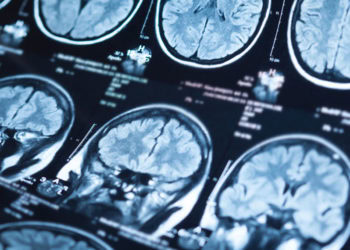
Functional magnetic resonance imaging works by detecting changes in blood flow and oxygenation, which operate as proxies for actual neural activity. The scans analyzed in this study were captured during a resting state, rather than during a specific cognitive test. Participants simply lay awake in the scanner looking at a low-contrast crosshair to minimize visual stimulation. This protocol allowed the researchers to capture authentic, spontaneous brain network activity in its baseline state.
To process the massive amount of imaging data, the researchers used a type of unsupervised machine learning. They fed the brain scans into an algorithm that blindly separated the signals into twenty distinct neurobiological networks. Because the algorithm was not given predefined anatomical regions to look for, it provided a data-driven map of how the brains were functioning across the whole sample. This prevented the researchers from introducing their subjective geographical biases into the analysis.
The team focused specifically on the low-frequency spectral power within these isolated networks. This measurement acts as an index of intrinsic neural excitability, showing how active a brain region remains by default when a person is physically resting. Low-frequency power is highly associated with tonic arousal, which governs how an individual passively monitors their environment. The team mapped these network activity levels against the participants’ scores on the personality questionnaire to look for correlations.
Two specific brain networks effectively predicted overall dark triad scores in the sample. The first was the central executive network, a system that governs goal maintenance, focused attention, and flexible problem solving. People who scored higher on the dark personality traits exhibited increased baseline activity in this cognitive network.
The researchers suggest that this higher baseline power reflects a chronically primed cognitive state. Such heightened environmental vigilance and strategic cognitive control help a person successfully manipulate social situations. Deception requires continuous mental effort to maintain lies and properly evaluate the emotional reactions of the target. Supporting this theory, the researchers found a specific positive correlation between elevated activity in the central executive network and scoring high on the Machiavellianism scale.
The second predictive circuit was a posterior segment of the default mode network. This network traditionally activates when the brain is at rest, managing self-referential thinking, memory processing, and social cognition. The default mode network handles our ability to understand the inner lives of other people, a psychological skill known as theory of mind. Reduced function in this area correlates heavily with deficits in moral reasoning.
In contrast to the central executive network, activity in the default mode network was reduced in participants with elevated dark personality scores. The researchers associate this dampened spontaneous activity with blunted introspection and lower empathy, which are common hallmarks of both narcissism and psychopathy. Reduced activity in these specific regions could make it incredibly difficult for an individual to form deep social connections. Impaired emotional regulation in narcissism may manifest as hypersensitivity to criticism, driven by a lack of introspective capacity.
The exact regions showing reduced activity included the parieto-occipital area, a segment previously implicated in clinical impulsivity. Decreased baseline activity here aligns closely with the impulsive and risk-taking behaviors commonly seen in individuals with high psychopathic traits. A dampened network might hinder an individual’s ability to engage in future-oriented thinking. This lack of foresight often leads to reckless decisions without concern for long-term consequences.
Together, these opposing patterns indicate that elevated dark personality features rely on enhanced goal-directed vigilance combined with dampened introspective activity. The brain appears physically wired to prioritize instrumental manipulation over emotional connection in these individuals. These results represent a network-level signature of dark personality features, advancing the idea that whole-brain dynamics parallel antagonistic behaviors.
The study does contain several limiting factors holding back broader generalizations. The research relied entirely on self-reported surveys to measure personality traits, which may fail to capture the full nuance of a person’s psychological profile. People who score high in deception might not report their own behaviors accurately, even though the questionnaire accounts for basic self-presentation bias. To verify these findings, subsequent studies will need to incorporate multiple distinct behavioral assessment tools.
Because the study pulled observational data from a single time period, it cannot determine causality. It remains entirely unclear whether these brain patterns cause dark personality traits or if practicing antisocial traits slowly shapes the brain over the adult lifespan. The open-access data set also lacked detailed demographic information, such as socioeconomic status and racial identity. Such missing variables prevented the team from examining how environmental or cultural factors might relate to personality development.
Future longitudinal research would be needed to track individuals over time and observe how these neural networks mature. Such studies could determine if the neural patterns are permanent biological traits or if they change in response to age and experience. Understanding the temporal dynamics of these brain correlations could eventually help scientists develop interventions for extreme antisocial behaviors. Modifying pathological personality traits through targeted therapies would require a firm grasp on how the adult brain changes.
The study, “Neural fingerprint of the dark triad: Resting state BOLD power (fALFF) alterations in executive and default mode networks,” was authored by Richard Bakiaj, Clara Isabel Pantoja Muñoz, and Alessandro Grecucci.