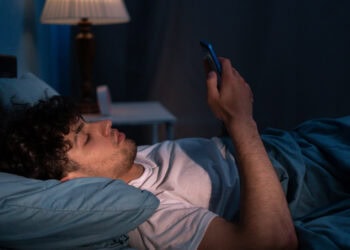
Spending excessive amounts of time watching short videos on social media is associated with a sequence of psychological shifts that predict lower overall life satisfaction. A new study published The Journal of Psychology provides evidence that problematic use of short video platforms is linked to higher feelings of loneliness, which subsequently relate to elevated anxiety and a decrease in a person’s contentment with their life.
Researchers Tuğba Türk Kurtça and Muhammet Can Doğru conducted the study to understand the psychological mechanisms connecting short video consumption to subjective well-being. Platforms like TikTok, Instagram Reels, and YouTube Shorts provide a continuous feed of highly personalized content. Algorithms deliver this media in rapid, random sequences, creating a reward structure that makes it difficult for users to exercise self-control.
Over time, this loss of control can develop into short video addiction. This specific type of digital habit is defined by a person spending excessive time watching brief clips despite negative consequences in their daily life. The researchers noted that empirical research exploring the long-term effects of this specific addiction on life satisfaction remains limited.
“Short video platforms have grown very rapidly, yet we noticed that most research focused on general social media or cross-sectional data. There was a clear gap in understanding how short video addiction affects well-being over time. We wanted to examine not just whether there is an effect, but the psychological process behind it—particularly the roles of loneliness and anxiety,” explained Kurtça, an associate professor at Trakya University.
To address this gap, the researchers framed their inquiry around two established psychological concepts. The first is the displacement hypothesis, which suggests that time spent online directly replaces time that would otherwise be spent on meaningful offline activities and face-to-face interactions. When a screen consumes a person’s temporal and cognitive resources, they miss out on real-world emotional support.
The second concept is self-determination theory, which posits that humans require a sense of autonomy, competence, and social connection to function optimally. The scientists suspected that addictive short video consumption interferes with these basic psychological needs. They designed their study to see if a sequence of psychological distress could explain how digital habits erode life satisfaction.
Many prior studies on digital habits relied on cross-sectional surveys, which only capture a single snapshot in time. By collecting data at two distinct points, the researchers could better determine the directional sequence of these psychological changes. This half-longitudinal approach helps scientists clarify which emotional states precede others.
The scientists utilized a two-wave design to track changes over time. This approach allowed them to observe the direction of psychological shifts across a standard three-month university semester. They recruited an initial group of participants in February 2025 and followed up with them in May 2025.
The final sample included 234 participants, consisting of 183 women and 51 men with an average age of 22 years. Most of the participants were currently enrolled university students. On average, the group reported spending roughly two and a half hours each day watching short videos, primarily on platforms like Instagram Reels and TikTok.
The researchers used established questionnaires to measure four specific variables at both time points. To evaluate short video addiction, they asked participants to rate statements about losing track of time or failing to reduce their usage. They assessed loneliness by asking participants to evaluate their feelings of social rejection and emotional isolation.
Anxiety levels were measured using a specific emotional stress scale that gauges feelings of lost control and threat anticipation. Finally, the researchers evaluated life satisfaction, which is defined as how harmoniously a person’s current reality matches their expectations. Participants rated their overall contentment with their life circumstances.
By analyzing the data across the three-month interval, the researchers identified a sequential psychological pathway. They found that high levels of short video addiction at the start of the study predicted an increase in loneliness three months later. The quick, superficial entertainment offered by short videos tends to replace deep, trusting relationships with superficial online networks.
This initial isolation then cascaded into further emotional difficulties. Participants who experienced higher loneliness at the beginning of the study reported elevated anxiety by the second measurement. Feeling disconnected deprives individuals of social support, making them feel excluded and heightening their sensitivity to environmental stressors.
Finally, the researchers found that increased anxiety was linked to a noticeable drop in subsequent life satisfaction. Elevated anxiety disrupts daily functioning and prevents people from developing positive expectations for the future. As a result, individuals struggle to view their lives holistically and positively.
“What stood out was the sequential pattern: loneliness and anxiety did not act independently but formed a chain linking short video use to lower life satisfaction,” Kurtça told PsyPost. “Even though each effect was modest, together they created a meaningful pathway. What makes this finding important is not just that short video use relates to well-being, but how it does so—through a step-by-step psychological process that unfolds over time.”
The findings suggest that short video addiction does not simply harm well-being in a direct or isolated manner. Instead, the addiction operates through a sequential chain of social and emotional consequences. The continuous displacement of offline interactions initiates a cascading effect of psychological distress.
“The key takeaway is that excessive short video use may gradually reduce life satisfaction—not directly, but by increasing feelings of loneliness and then anxiety over time,” Kurtça said. “These effects are small individually, but they accumulate. So, it’s not just about screen time, but how that time may be replacing meaningful social connections.”
As with all research,, the findings come with a few limitations. Because the research relied entirely on self-reported questionnaires, the data might be influenced by personal biases. Participants may not always accurately estimate or report their actual daily screen time.
The participant pool also consisted mostly of female university students. This demographic concentration means the findings might not fully apply to older adults, adolescents, or individuals from different educational backgrounds. University students often face unique academic pressures and social transitions that could amplify feelings of loneliness and anxiety.
The three-month study period only captures short-term psychological shifts. The scientists note that this brief window cannot account for long-term developmental changes or the cumulative effects of years of social media use. Future research should involve longer observation periods to better understand the stability of these emotional pathways.
Future studies could also utilize objective screen time trackers instead of relying on subjective estimates. Doing so would provide a more precise measure of actual digital consumption. Incorporating multi-method approaches would help reduce potential reporting errors.
Finally, future research could explore bidirectional relationships within these psychological pathways. It is highly possible that individuals who already feel lonely and anxious turn to short videos as a coping mechanism. This behavior could create a mutually reinforcing cycle where emotional distress and short video addiction continuously amplify one another.
The study, “Short Video Addiction and Life Satisfaction: Sequential Longitudinal Pathways via Loneliness and Anxiety,” was authored by Tuğba Türk Kurtça and Muhammet Can Doğru.