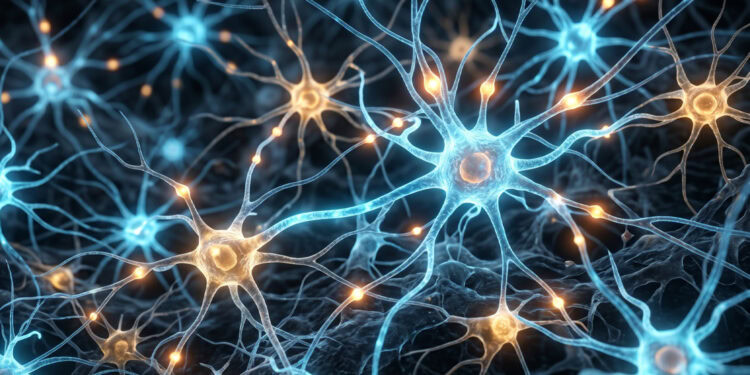
The assembly of a healthy brain requires new cells to travel incredibly long distances to arrive at their correct final destinations. A recent laboratory mouse study reveals that dopamine receptors located on stationary support cells act remarkably like traffic signals, slowing down migrating neurons so they settle in the correct areas. These findings, published in the European Journal of Neuroscience, suggest that early disruptions to dopamine signaling could permanently alter brain wiring and network connectivity.
Lead investigator Anne-Gaëlle Toutain, a neurobiology researcher at the Fer à Moulin Institute in Paris, conducted the study alongside corresponding author Christine Métin and several other academic collaborators. The team focused their efforts on analyzing the cerebral cortex, the wrinkled outer blanket of the brain responsible for higher cognitive functions. The cellular makeup of this cortical region must be perfectly balanced for the brain as a whole to function properly.
Most individual cells in the cortex are excitatory neurons, which routinely send active signaling impulses to other parts of the mammalian brain. To prevent the brain from becoming hyperactive or overwhelmed, the cortex also heavily relies on inhibitory cells known as interneurons. These smaller interneurons act as a vital cellular braking system, periodically releasing chemicals that calm overall network activity.
Excitatory neurons are born locally in the developing cortex, but the inhibitory interneurons face a much harder and more demanding physical journey. They originally emerge deep inside the core of the embryonic brain in a structure known to developmental biologists as the medial ganglionic eminence. From there, they must migrate great distances outward and upward to populate the developing outer cortex.
Neuroscientists have recognized for years that this brain cell migration is a highly choreographed and delicate biological process. To arrive safely at the correct destination, migrating interneurons must continuously read chemical cues dispersed across their cellular environment. Among these developmental cues is dopamine, a common brain chemical mostly famous for driving feelings of reward and motivation in adult brains.
Biologists possess evidence showing that dopamine is actually present very early in fetal development, arising long before the brain is fully wired or functional. Developing embryonic cells detect this chemical using specific surface proteins commonly called D1 dopamine receptors. Toutain and her entire research team wanted to find out exactly how these sensory receptors physically guide the long-distance journey of migrating interneurons.
Research into fetal dopamine signaling carries a wide range of tangible public health implications. For instance, human babies exposed to illicit drugs like cocaine in the womb fairly often suffer from smaller head sizes and a heightened biological risk of seizures. Because addictive substances directly bombard the dopamine system, they alter the delicate chemical balance needed to correctly wire the vulnerable embryonic brain.
To accurately map the cellular terrain, the researchers engineered laboratory mice to produce a glowing fluorescent protein wherever a D1 receptor was actively operating. This built-in visual marker allowed the scientists to directly map the precise physical locations of the dopamine-sensing cells in the fetal brain. They quickly observed a strangely heavy concentration of D1 receptors clustered tight in the deepest layers of the newly developing cortex.
These unique receptor-heavy cells formed a noticeably dense, continuous cellular layer right along the physical path that the migrating interneurons usually take toward the surface. The team also used analytical chemistry techniques to quantitatively confirm that raw dopamine was floating freely in these exact regions. This verified that the deeply layered cortical cells were actively responding to the chemical while the interneurons traveled aggressively past them.
To see precisely how the D1 receptor influences this cellular movement, the researchers set up isolated cell cultures in flat laboratory dishes. They extracted migrating interneurons and placed them on top of an artificial base layer composed entirely of stationary cortex cells. The research team also deployed highly targeted genetic tools to selectively delete the D1 receptor from the different tissues before ultimately combining them.
This mixing and matching allowed the researchers to watch exactly what happened when the receptor was entirely missing from the migrating cell, the stationary cell, or both cells simultaneously. They tracked the tiny movements of the cells over twenty consecutive hours using advanced time-lapse video microscopy. The resulting footage of this specific biological experiment defied initial scientific expectations about how the brain cells normally behave.
Genetically removing the D1 receptor from the migrating interneurons themselves barely changed their typical travel habits. However, when the researchers deleted the sensory receptor from the stationary cortex cells, the migrating interneurons suddenly began moving at incredibly fast speeds. The migrating cells took noticeably shorter rest pauses and dashed rapidly forward with much greater frequency than their completely unmodified counterparts.
This type of strange phenomenon is known in developmental biology as a non-cell-autonomous effect. A specific genetic alteration in one individual support cell essentially dictates the physical movement behavior of a completely different brain cell. The active D1 receptors on the stationary cortex cells normally act exactly like a textured terrain, heavily slowing down the migrating neurons to a far more manageable physiological pace.
To see if this fast-paced embryonic migration permanently altered the functional anatomy of the brain, the team closely examined fully grown adult mice. They engineered a dedicated group of test mice to lack D1 receptors exclusively in their stationary cortex cells. Because the migrating interneurons in these mice retained completely normal genetics, any subsequent structural changes would absolutely have to stem from the altered cellular terrain.
The researchers counted two distinct biological populations of interneurons to see where they eventually settled across the mature brain. One population consisted of somatostatin-producing cells, which usually migrate very early in the general timeline of embryonic development. The other group was made up of parvalbumin-producing cells, which generally migrate a few days later in the normal fetal maturation schedule.
Because they moved entirely too fast across the slippery cellular terrain, both subsets of cells severely overshot their originally intended marks. The early somatostatin cells piled up in abnormally high numbers at the extreme front and middle edges of the fully formed cortex. The later parvalbumin cells essentially accumulated in the dense sensory regions at the remote back of the completed brain.
Finally, the researchers evaluated mice missing the key D1 receptor entirely, possessing genetic instructions where absolutely no cells in their bodies could ever detect targeted dopamine signals. This profound genetic model closely resembles the biological reality of a severe organism-wide mutation. Without the primary D1 receptor guiding early cortical growth, the overall physical volume of the cerebral cortex shrank dramatically by roughly a full quarter.
Despite experiencing this massive reduction in total brain volume, the interneurons still clustered in the exact same abnormal architectural patterns at the outer edges of the cortex. This conclusive phase of the study showed that the physical environment created by the cortex cells overwhelmingly dominates the cellular migration process. Even in a stunted biological brain, the missing cellular speed bumps sent the migrating cells flying blindly toward the outermost boundaries.
There are still a few missing experimental pieces to this fascinating neurobiological puzzle. The exact biological mechanism that the stationary cortex cells use to slow down the sweeping interneurons remains unknown to the scientific community at large. The active dopamine receptors might alter the overall physical shape of the support cells, or they might subtly change how sticky or slippery the cellular surfaces eventually become.
Future researchers will definitively need to untangle the hidden physical and chemical interactions occurring at the exact microscopic locations where these two cell types frequently touch. Uncovering these hidden mechanisms could eventually shed bright light on a wide variety of poorly understood developmental disorders. Unusually high or low densities of local interneurons are an established feature in the brains of some patients diagnosed medically with schizophrenia and autism.
If fetal dopamine signaling becomes disturbed by inherited genetic traits or external environmental factors, it could eventually lead to these permanent, lifelong structural shifts. The latest findings illustrate how such a seemingly tiny molecular event can ripple outward to reshape the entire physical brain architecture. Understanding this early cellular journey acts as a foundational jumping-off point toward ultimately treating broader neurodevelopmental disorders down the line.
The study, “Ablation of the D1 Dopamine Receptor Alters the Migration and the Cortical Distribution of MGE-Derived Inhibitory Interneurons by a Preponderant Non–Cell-Autonomous Effect,” was authored by Anne-Gaëlle Toutain, Sophie Scotto-Lomassese, Aude Muzerelle, Julien Puech, Ariane Fayad, Anne Roumier, Denis Hervé, and Christine Métin.