
A new scientific paper suggests that a common, unconscious mental shortcut may partly explain why many people believe in election fraud. The research indicates that the order in which votes are reported can bias perceptions, making a legitimate late comeback by a candidate seem suspicious. This work was published in the journal Psychological Science.
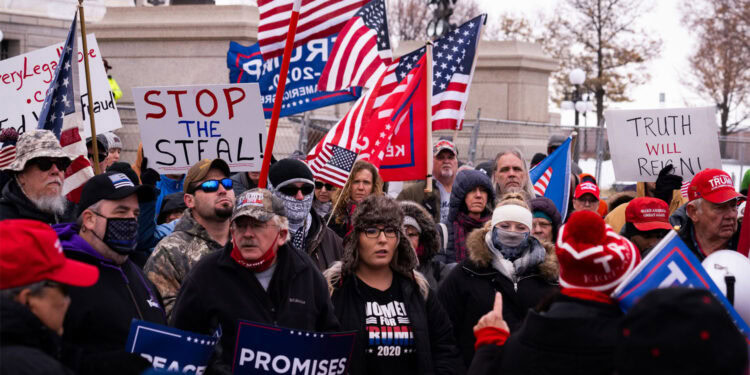
The research was motivated by the false allegations of fraud that followed the 2020 United States presidential election. Previous work by political scientists and psychologists has identified several factors that contribute to these beliefs. For example, messages from political leaders can influence the views of their supporters. Another explanation is the “winner effect,” which suggests people are more likely to see an election as illegitimate if their preferred party loses.
Similarly, research on motivated reasoning highlights how a person’s desire to maintain a positive view of their political party can lead them to question an unfavorable outcome. Personality differences may also play a part, as some individuals are more predisposed to viewing events as the result of a conspiracy.
Against this backdrop, a team of researchers led by André Vaz of Ruhr University Bochum proposed that a more fundamental cognitive mechanism could also be at play. They investigated whether the sequential reporting of partial vote counts, a standard practice in news media, could inadvertently sow distrust. They theorized that beliefs in fraud might be fueled by a phenomenon known as the cumulative redundancy bias.
This bias describes how our impressions are shaped by the progression of a competition. When we repeatedly see one competitor in the lead, it creates a strong mental impression of their dominance. This has been observed in various contexts, including judgments of sports teams and stock market performance. The core idea is that the repeated observation of a competitor being ahead leaves a lasting impression on observers that is not entirely erased even when the final result shows they have lost. The human mind seems to struggle with discounting information once it has been processed.
The order in which information is presented can be arbitrary, like the order in which votes are counted, yet it can leave a lasting, skewed perception of the competitors. This was evident in the 2020 election in states like Georgia, where early-counted ballots often favored Donald Trump. This occurred in part because his supporters were more likely to vote in person, and those votes were often tallied first.
In contrast, ballots counted later tended to favor Joe Biden, as his voters made greater use of mail-in voting, and many counties counted those mail-in ballots last. Additionally, populous urban counties, which tend to be more Democratic, were often slower to report their results than more rural counties. This created a dramatic late shift in the lead, which the study’s authors suggest is a prime scenario for the cumulative redundancy bias to take effect.
To test this hypothesis, the scientists conducted a series of seven studies with participants from the United States and the United Kingdom. The first study tested whether the cumulative redundancy bias would appear in a simulated election. Participants watched the vote count for a school representative election between two fictional candidates, “Peter” and “Robert.” In both scenarios, Peter won by the same final margin. The only difference was the order of the count. In an “early-lead” condition, Peter took the lead from the beginning. In a “late-lead” condition, he trailed Robert until the very last ballots were counted.
The results showed that participants rated Peter more favorably and predicted he would be more successful in the future when he had an early lead. When Peter won with a late lead, participants actually rated the loser, Robert, as the better candidate.
The second study used the same setup but tested for perceptions of fraud. After the simulated vote count, participants were told that rumors of a rigged election had emerged. When the winner had secured a late lead, participants found it significantly more likely that the vote count had been manipulated and that the wrong candidate had won compared to when the winner had an early lead.
To make the simulation more realistic, a third study presented the vote counts as percentages, similar to how news outlets report them, instead of raw vote totals. The researchers found the same results. Observing a candidate come from behind to win late in the count made participants more suspicious of fraud.
The fourth study brought the experiment even closer to reality. The researchers used the actual vote-count progression from the 2020 presidential election in the state of Georgia, which showed a candidate trailing for most of the count before winning at the end. To avoid partisan bias, participants were told they were observing a recent election in an unnamed Eastern European country. One group saw the actual vote progression, where the eventual winner took the lead late. The other group saw the same data but in a reversed order, creating a scenario where the winner led from the start. Once again, participants who saw the candidate come from behind were more likely to believe the election was manipulated.
Building on this, the fifth study investigated if these fraud suspicions could arise even before the election was decided. Participants watched a vote count that stopped just before completion, at a point when one candidate had just overtaken the longtime leader. Participants were then asked how likely it was that the vote was being manipulated in favor of either candidate. In the scenario mirroring the 2020 Georgia count, people found it more likely that the election was being manipulated in favor of the candidate who just took the lead. In the reversed scenario, they found it more likely that the election was being manipulated in favor of the candidate who was losing their early lead.
During the actual 2020 election, officials and news commentators provided explanations for the shifting vote counts, such as differences in when urban and rural counties reported their results. The sixth study tested if such explanations could reduce the bias. All participants saw the late-lead scenario, but one group was given an explanation for why the lead changed. The results showed that while the explanation did reduce the belief in fraud, it did not eliminate it. People were still significantly more suspicious of a late comeback than would be expected.
The final study addressed partisanship directly. American participants who identified as either Democrats or Republicans were shown a vote count explicitly labeled as being from the 2020 presidential election between Joe Biden and Donald Trump. As expected, political affiliation had a strong effect, with Republicans being more likely to suspect fraud in favor of Biden and Democrats being more likely to suspect fraud in favor of Trump.
However, the cumulative redundancy bias still had a clear impact. For both Republicans and Democrats, seeing Biden take a late lead increased suspicions of a pro-Biden manipulation compared to seeing a scenario where he led from the start. This suggests the cognitive bias operates independently of, and in addition to, partisan motivations.
The researchers note that their findings are based on participants recruited from an online platform and may not represent all populations. The studies also focus on the perception of vote counting, not on other potential election issues like voter registration or suppression. However, the consistent results across seven different experiments provide strong evidence that the way election results are communicated can unintentionally create distrust.
The authors suggest that the sequential reporting of vote counts could be revised to mitigate these effects. While simply waiting until all votes are counted could be one solution, they acknowledge that a lack of information might also breed suspicion. Better public education about vote counting procedures or the use of more advanced forecasting models that provide context beyond live totals could be alternative ways to present results without fueling false perceptions of fraud.
The study, “‘Stop the Count!’—How Reporting Partial Election Results Fuels Beliefs in Election Fraud,” was authored by André Vaz, Moritz Ingendahl, André Mata, and Hans Alves.