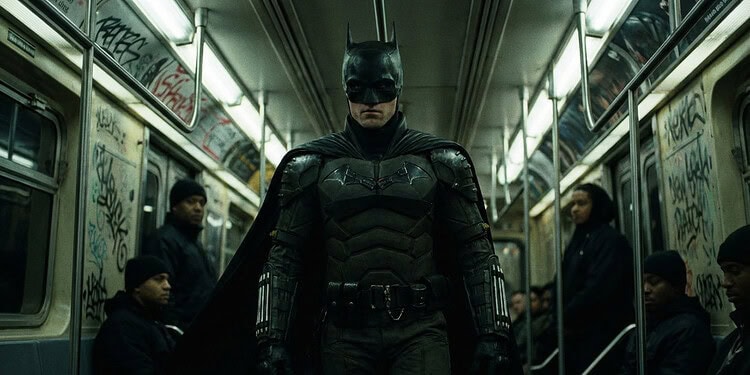

A recent experiment conducted in the Milan subway system suggests that the presence of a costumed superhero can significantly increase the willingness of commuters to help a stranger. The findings indicate that unexpected visual stimuli in public spaces may disrupt the psychological “autopilot” that governs daily routines, making individuals more aware of their surroundings and the needs of others. The research was published in npj Mental Health Research.
Commuting often induces a state of mental detachment where individuals navigate familiar environments with minimal cognitive effort. This state allows people to conserve mental energy during repetitive tasks. Researchers from the Università Cattolica del Sacro Cuore in Milan sought to understand how breaking this monotony affects social interactions. Their primary focus was prosocial behavior, which encompasses voluntary actions designed to benefit other people.
Previous psychological literature establishes that helping behaviors stem from various motivations, including empathy, social norms, or the alleviation of personal guilt. While internal motivations are well-studied, the external environmental factors that trigger these impulses are less understood. The research team hypothesized that a surprising event could jolt commuters out of their internal focus. They proposed that this shift in attention might mimic the effects of mindfulness.
Mindfulness is defined as a non-judgmental awareness of the present moment. It is typically cultivated through active practice and meditation. However, the investigators theorized that situational interruptions could force a similar state of awareness without voluntary effort. By disrupting the script of a daily commute, an unexpected event might make passengers more sensitive to social cues they would otherwise ignore.
To test this hypothesis, the authors designed a field experiment in a real-world setting. “We conducted an experimental field study on the Milan subway,” Professor Pagnini explains, “observing the behavior of 138 passengers.” The researchers utilized two different scenarios to measure the helpfulness of the commuters.
In the first scenario, which served as the control condition, a female experimenter boarded a subway car. She wore a prosthetic belly to appear pregnant. An observer accompanied her but did not interact with her. This observer quietly recorded whether any seated passengers offered their seats to the woman. This baseline measurement allowed the team to assess standard levels of courtesy on the Milan metro.
The second scenario introduced a significant disruption to the standard subway environment. The same researcher posing as a pregnant woman entered the train car. Simultaneously, another researcher dressed in a Batman costume entered through a different door approximately three meters away. The costume included the character’s iconic cape, logo, and a cowl with pointed ears.
To ensure ethical standards were met, the mask did not cover the actor’s entire face. This decision was made to prevent the costume from appearing threatening or frightening to the passengers. The researchers ensured there was no interaction between the pregnant woman and the person dressed as Batman. They acted as strangers to one another.
The results showed a substantial difference in behavior between the two groups. In the control condition where no superhero was present, 37.66 percent of passengers offered their seats. This aligns with general expectations of public transport etiquette where many remain seated.
However, the introduction of the unexpected element changed the dynamic in the train car. “Faced with this unexpected encounter,” the authors report, “passengers were significantly more likely to offer their seats: 67.21% of passengers offered their seats in the presence of Batman, or more than two out of three.” The likelihood of a passenger standing up nearly doubled when the environment contained a novelty.
The researchers also collected demographic data on the helpful passengers. In both the control and the experimental conditions, the majority of those who offered their seats were women. The average age of the helpers was approximately 41 years old. This consistency suggests that the presence of Batman did not appeal to a specific demographic but rather influenced the general population in the car.
A particularly revealing aspect of the study emerged during follow-up interviews. Researchers approached the individuals who gave up their seats to ask about their motivations. “Furthermore,” the professor notes, “44% of those who offered their seats in the experimental condition reported not having seen Batman.” This statistic presents a counterintuitive finding regarding the mechanism of the effect.
It suggests that the prosocial behavior was not necessarily a direct reaction to seeing the costume. Instead, the disruption caused by the character’s entrance may have altered the atmosphere of the train car. If some passengers noticed the superhero and shifted their attention, that shift may have rippled through the crowd. This phenomenon aligns with theories of social contagion, where changes in gaze or posture spread rapidly among a group.
The researchers interpret this through the lens of attention and awareness. “Our findings,” Pagnini explains, “are similar to those of previous research linking present-moment awareness (mindfulness) to greater prosociality; this may create a context in which individuals become more attuned to social cues.” The disruption forces the brain to assess the immediate environment. Once the brain is engaged with the “here and now,” the passenger is more likely to process the visual cue of the pregnant woman.
“Unlike traditional mindfulness interventions that require active engagement, this study highlights how situational interruptions alone may be sufficient to produce similar effects,” Pagnini adds. This supports the concept of the “pique technique” in psychology. This technique relies on using atypical requests or stimuli to break a refusal script. By piquing curiosity, the stimulus engages cognitive processing that overrides automatic dismissal.
There is an alternative explanation rooted in the symbolism of the character. Batman is a cultural icon associated with justice, protection, and heroism. It is possible that the costume acted as a “prime.” Priming occurs when exposure to one stimulus influences a response to a subsequent stimulus. Seeing a symbol of justice might subconsciously activate norms of chivalry or moral duty.
“The figure of Batman,” Pagnini concludes, “could therefore play a prosocial priming role.” However, the authors note that priming studies have faced challenges with replication in recent years. The fact that nearly half of the helpers did not report seeing the character weakens the argument for direct visual priming. The generalized increase in awareness remains a strong competing theory.
The study does have limitations that affect the breadth of its conclusions. The experiment took place in a specific cultural setting in Italy. Social norms regarding public transportation and courtesy vary significantly across different regions and cultures. What holds true in Milan may not apply in Tokyo or New York City.
Additionally, the experiment relied on a character with positive associations. Batman is generally viewed as a hero. It remains unclear if a neutral oddity or a character with negative connotations would produce the same result. If the effect is purely about disrupting routine, a villain might also increase seat-offering. If the effect relies on the positive symbolism of the hero, a villain might decrease helping behavior.
The demographic data was estimated by observers rather than self-reported by every passenger. This introduces a possibility of error regarding the age and gender of the participants. Future research would need to control for these variables more strictly.
Despite these caveats, the implications for urban design and public policy are noteworthy. The study suggests that introducing “positive disruptions” into public spaces could foster a more cooperative environment. “This suggests a potential mechanism through which novelty and unpredictability promote prosocial behavior,” the authors write.
Cities often strive to make transit as predictable and efficient as possible. However, this efficiency may encourage the social isolation of the autopilot state. Introducing art installations, performances, or unexpected visual elements could serve a functional social purpose. By momentarily engaging commuters, these elements might lower social barriers and increase awareness of collective needs.
Future research will need to disentangle the specific mechanisms at play. Investigators must determine whether the effect is driven by the emotional valence of the surprise or the mere fact of the surprise itself. Controlled laboratory experiments could help isolate these variables. For now, the data indicates that a break in the mundane can serve as a catalyst for kindness.
The study, “Unexpected events and prosocial behavior: the Batman effect,” was authored by Francesco Pagnini, Francesca Grosso, Cesare Cavalera, Valentina Poletti, Giacomo Andrea Minazzi, Anna Missoni, Laura Bogani, and Mauro Bertolotti.