![[Adobe Stock]](https://sp-ao.shortpixel.ai/client/to_webp,q_glossy,ret_img,w_750,h_375/https://www.psypost.org/wp-content/uploads/2024/11/DNA-750x375.jpg)
An analysis of the U.K. Biobank data found that a higher genetic risk for Alzheimer’s disease was associated with lower social isolation and greater satisfaction with family relationships. This led the study authors to suggest that very early, subtle changes preceding the onset of Alzheimer’s disease may be linked to stronger family and social connections. The paper was published in the American Journal of Epidemiology.
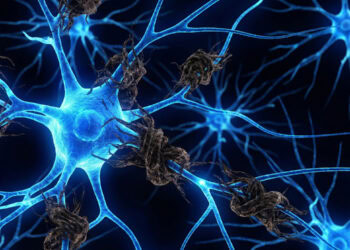
Alzheimer’s disease is a progressive neurodegenerative disorder and the most common cause of dementia in older adults. It develops when abnormal protein deposits, primarily amyloid plaques and tau tangles, accumulate in the brain, leading to neuronal death and brain tissue loss.
The disease typically begins in brain regions involved in memory, such as the hippocampus, and gradually spreads to other areas. One of the earliest signs is increasing forgetfulness, especially of recent events, while long-term memories may remain intact during the early stages. As the disease progresses, it affects language, problem-solving, and judgment, making daily tasks more difficult. Personality and mood changes often emerge, with some individuals becoming anxious, depressed, or irritable.
Over time, orientation to time and place deteriorates, and individuals may become disoriented even in familiar environments. Social relationships can be strained as communication abilities decline and independence diminishes. In the advanced stages, people with Alzheimer’s may lose the ability to recognize loved ones, control movement, or perform basic self-care. While there is currently no cure, some treatments may temporarily slow the disease’s progression and improve quality of life.
Study author Scott C. Zimmerman and his colleagues aimed to estimate the effect of genetic risk for Alzheimer’s disease on self-reported measures of social connectedness. They also examined whether these associations changed with age. While prior studies have suggested that social connectedness might protect against Alzheimer’s disease, the authors of this study explored the possibility of reverse causation — that early, preclinical symptoms of Alzheimer’s might influence a person’s social behaviors and relationships.
The researchers analyzed data from the U.K. Biobank, a large cohort study with genetic, physical, and health data collected from over 500,000 individuals across the United Kingdom. They included participants aged 40 and older with available genetic data, resulting in a sample of 487,194 participants. The average age of participants was approximately 56 to 57 years.
The researchers used genetic data to calculate an Alzheimer’s disease genetic risk score, which was based on 26 single-nucleotide polymorphisms (SNPs). These are small genetic variations involving a change in a single DNA base pair, and they are common markers used in genetic research. The genetic risk score provides an estimate of an individual’s inherited likelihood of developing Alzheimer’s disease based on these known genetic variants.
Importantly, this score represents only a risk estimate. A person with a high genetic risk score may never develop Alzheimer’s, while someone with a low score might still be diagnosed with the disease. The score does not indicate current disease status or future certainty of diagnosis.
The researchers also assessed five self-reported measures of social connectedness: social isolation, loneliness, emotional support, satisfaction with relationships (both family and friendships), and engagement in diverse social activities.
The results showed that individuals with higher genetic risk scores were less likely to be socially isolated, and this association became stronger with increasing age. Those with higher genetic risk also tended to report greater satisfaction with family relationships, though this association weakened as participants aged. Additionally, higher genetic risk was associated with participation in a broader range of social activities. However, there were no significant associations between genetic risk and loneliness, friendship satisfaction, or perceived emotional support.
“Overall, we did not find evidence that higher risk of AD [Alzheimer’s disease] is associated with reduced social connectedness. Instead, preclinical AD symptoms may lead to stronger family relationships and lower social isolation,” the study authors concluded.
The study offers new insight into how genetic predisposition to Alzheimer’s disease may relate to social behaviors in middle-aged and older adults. However, the authors note that participants in the U.K. Biobank are generally healthier than the broader U.K. population, which may limit the generalizability of the findings. Results could differ in more representative samples or in non-U.K. populations.
The paper, “The Association of Alzheimer’s Disease Genetic Risk with Social Connectedness in Middle- And Older-Ages,” was authored by Scott C Zimmerman, Ruijia Chen, Mary Thoma, Lucia Pacca, Jillian Hebert, Alicia Riley, Min Hee Kim, Annie Pederson, Yulin Yang, Peter Buto, Willa D Brenowitz, M Maria Glymour, Ashwin Kotwal, and Jacqueline M. Torres.