Subscribe
The latest psychology and neuroscience discoveries.
My Account
  • Mental Health
  • Social Psychology
  • Cognitive Science
  • Neuroscience
  • About
No Result
View All Result
PsyPost
PsyPost
No Result
View All Result
Home Exclusive Mental Health

Anxious children have bigger ‘fear centers’ in the brain

by Elsevier
June 17, 2014
in Mental Health
Photo credit: NIMH

Photo credit: NIMH

Share on TwitterShare on Facebook

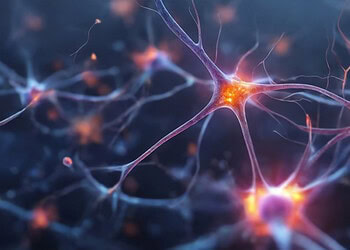
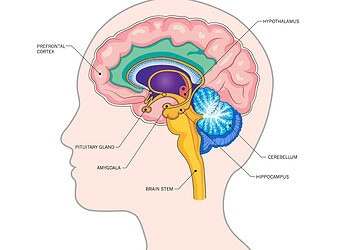
The amygdala is a key “fear center” in the brain. Alterations in the development of the amygdala during childhood may have an important influence on the development of anxiety problems, reports a new study in the current issue of Biological Psychiatry.

Researchers at the Stanford University School of Medicine recruited 76 children, 7 to 9 years of age, a period when anxiety-related traits and symptoms can first be reliably identified. The children’s parents completed assessments designed to measure the anxiety levels of the children, and the children then underwent non-invasive magnetic resonance imaging (MRI) scans of brain structure and function.

The researchers found that children with high levels of anxiety had enlarged amygdala volume and increased connectivity with other brain regions responsible for attention, emotion perception, and regulation, compared to children with low levels of anxiety. They also developed an equation that reliably predicted the children’s anxiety level from the MRI measurements of amygdala volume and amygdala functional connectivity.

The most affected region was the basolateral portion of the amygdala, a subregion of the amygdala implicated in fear learning and the processing of emotion-related information.

“It is a bit surprising that alterations to the structure and connectivity of the amygdala were so significant in children with higher levels of anxiety, given both the young age of the children and the fact that their anxiety levels were too low to be observed clinically,” commented Dr. Shaozheng Qin, first author on this study.

Dr. John Krystal, Editor of Biological Psychiatry, commented, “It is critical that we move from these interesting cross-sectional observations to longitudinal studies, so that we can separate the extent to which larger and better connected amygdalae are risk factors or consequences of increased childhood anxiety.”

“However, our study represents an important step in characterizing altered brain systems and developing predictive biomarkers in the identification for young children at risk for anxiety disorders,” Qin added. “Understanding the influence of childhood anxiety on specific amygdala circuits, as identified in our study, will provide important new insights into the neurodevelopmental origins of anxiety in humans.”

Google News Preferences Add PsyPost to your preferred sources
Previous Post

Study finds decline in union strength plays key role growing income inequality

Next Post

In managing boundaries between work and home, technology can be both ‘friend’ and ‘foe’

RELATED

ADHD symptoms appear to influence women’s orgasms
ADHD Research News

Cognitive deficits underlying ADHD do not explain the link with problematic social media use

March 7, 2026
Scientists identify distinct neural dynamics linked to general intelligence
Borderline Personality Disorder

Scientists identify brain regions associated with auditory hallucinations in borderline personality disorder

March 7, 2026
Trigger warning sign comic style, caution alert notice, bold red and yellow warning graphic for sensitive content, online psychology news, mental health awareness, psychological triggers, PsyPost psychology news website, mental health topic warning, pop art warning sign, expressive warning graphic for psychological topics, relevant for mental health and psychology discussions, eye-catching digital poster.
Mental Health

How the wording of a trigger warning changes our psychological response

March 6, 2026
Emotion dysregulation helps explain the link between overprotective parenting and social anxiety
Mental Health

Dating and breakups take a heavy emotional toll on adolescent mental health

March 6, 2026
Brain scans reveal two distinct physical subtypes of ADHD
ADHD Research News

Brain scans reveal two distinct physical subtypes of ADHD

March 6, 2026
Stimulant medications normalize brain structure in children with ADHD, study suggests
ADHD Research News

Long-term ADHD medication use does not appear to permanently alter the developing brain

March 5, 2026
Language learning rates in autistic children decline exponentially after age two
Anxiety

New neuroscience study links visual brain network hyperactivity to social anxiety

March 5, 2026
Narcissistic students perceive student-professor flirting as less morally troubling
Alzheimer's Disease

Simple blood tests can detect dementia in underrepresented Latin American populations

March 4, 2026

STAY CONNECTED

LATEST

Cognitive deficits underlying ADHD do not explain the link with problematic social media use

Scientists identify brain regions associated with auditory hallucinations in borderline personality disorder

People with the least political knowledge tend to be the most overconfident in their grasp of facts

How the wording of a trigger warning changes our psychological response

Dating and breakups take a heavy emotional toll on adolescent mental health

Abortion stigma persists at moderate levels in high-income countries

Brain scans reveal two distinct physical subtypes of ADHD

Employees who feel attractive are more likely to share ideas at work

PsyPost is a psychology and neuroscience news website dedicated to reporting the latest research on human behavior, cognition, and society. (READ MORE...)

  • Mental Health
  • Neuroimaging
  • Personality Psychology
  • Social Psychology
  • Artificial Intelligence
  • Cognitive Science
  • Psychopharmacology
  • Contact us
  • Disclaimer
  • Privacy policy
  • Terms and conditions
  • Do not sell my personal information

(c) PsyPost Media Inc

Welcome Back!

Login to your account below

Forgotten Password?

Retrieve your password

Please enter your username or email address to reset your password.

Log In

Add New Playlist

Subscribe
  • My Account
  • Cognitive Science Research
  • Mental Health Research
  • Social Psychology Research
  • Drug Research
  • Relationship Research
  • About PsyPost
  • Contact
  • Privacy Policy

(c) PsyPost Media Inc