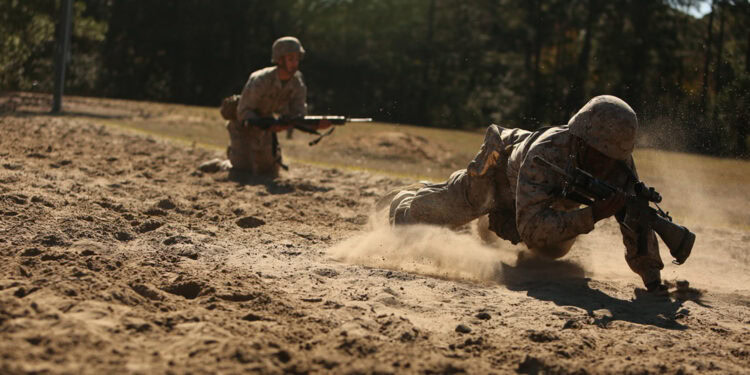

A new study published in Biological Psychiatry: Cognitive Neuroscience and Neuroimaging suggests that stress experienced during basic combat training may dampen the brain’s ability to respond to rewarding outcomes. Researchers found that Army National Guard recruits showed a measurable decline in neural signals linked to reward processing after completing a physically and emotionally demanding 10-week training program. The findings suggest that real-world stressors can influence how the brain processes both positive and negative feedback, with potential implications for resilience and mental health.
The ability to respond to rewards is considered an important aspect of healthy emotional functioning. Previous research has shown that greater neural responsiveness to rewards is associated with positive outcomes such as well-being, motivation, and resilience to stress. On the other hand, reduced responsiveness has been linked to symptoms of anhedonia, which refers to the loss of interest or pleasure in typically enjoyable activities. Anhedonia is a symptom seen across many psychiatric disorders, including depression.
Laboratory studies have demonstrated that acute or chronic stress can reduce the brain’s responsiveness to rewards, possibly by disrupting dopamine signaling. However, much of this prior research has either relied on artificial stress manipulations in lab settings or retrospective self-reports of stress that may be biased.
Few studies have assessed how real-world, naturally occurring stressors affect neural reward processing over time. The authors of the current study sought to fill this gap by using a longitudinal design to examine how stress during a real-world challenge — basic combat training — might influence brain function.
The researchers drew on data from the ARMOR study, a large, ongoing project that investigates resilience and stress responses in military service members. From the broader sample, a subset of 123 Army National Guard recruits participated in a neuroimaging substudy. These participants were assessed before and after completing a 10-week basic combat training program. The training is designed to prepare civilians for military service and is widely recognized as a stressful experience due to its intense physical, psychological, and social demands.
Participants completed a computerized gambling task while their brain activity was recorded using electroencephalography, a method that tracks electrical signals from the scalp. The task involved choosing between two options to either win or lose points, with the outcome determined at random. This setup allowed the researchers to measure how the brain responded to positive (gain) or negative (loss) feedback. A particular brain signal, known as the reward positivity (or RewP), was used as a marker of reward processing. The RewP typically occurs between 175 and 325 milliseconds after feedback is received.
In addition to recording brain activity, the researchers also assessed each participant’s experience of stress during training using the Basic Training Stressors Scale. This self-report measure captures both the frequency and perceived impact of various stressors related to performance, interpersonal dynamics, and living conditions. The stress survey was completed about two weeks after the end of basic training, prior to the follow-up brain scan.
The researchers also examined brain activity in specific frequency bands—delta and theta oscillations—associated with reward and loss processing, respectively. These time-frequency analyses provide an additional window into the dynamics of neural responses and may tap into different mechanisms than the traditional event-related potentials like the RewP.
The main finding was that neural responses to both rewards and losses were significantly reduced after the recruits completed basic training. This decrease was observed in the RewP time window and was not explained by the length of time between study visits. Interestingly, the difference between reward and loss responses did not change significantly, indicating that the decline occurred across both types of feedback rather than being specific to one.
The researchers then looked at whether self-reported stress during basic training was related to these changes in brain activity. They found that higher levels of perceived stress were associated with a smaller neural response to rewards, although this relationship weakened when additional variables were included in the model. This suggests that the subjective impact of stress, more than just the number of stressors, might influence how the brain adapts to stressful situations.
While the time-domain measures of brain activity showed a clear decline, analyses of delta and theta oscillations did not show consistent changes following training. This distinction may reflect differences in the neural processes captured by each approach. Time-domain signals like the RewP are typically phase-locked to feedback and reflect a more synchronized response, while time-frequency measures capture a broader and more variable range of neural activity. The researchers suggest that stress might reduce the consistency of brain responses rather than their amplitude, which could explain the discrepancy.
Participants who had stronger delta-band power before training were more likely to report lower levels of stress afterward. This finding hints at the possibility that some individuals may have a form of neural resilience, where their brains are better equipped to maintain reward sensitivity in the face of stress. These individuals may perceive stressful experiences as less overwhelming or disruptive, possibly buffering them from negative psychological outcomes.
While the study provides new evidence linking real-world stress to reduced reward responsiveness, the authors acknowledge some limitations. Most notably, there was no control group of recruits who completed the same assessments but did not undergo basic training. Without such a comparison, it is not possible to definitively conclude that the observed changes were caused by the stress of training rather than other factors, such as natural brain development or repeated exposure to the task.
Additionally, while participants reported on their stress shortly after completing training, the follow-up brain assessments occurred several months later. This introduces uncertainty about the timing of changes in reward processing relative to stress exposure. The study also cannot determine whether the observed neural changes have any lasting behavioral or psychological effects. Participants were generally high-functioning and did not show elevated levels of depression or anxiety, so the long-term impact of reduced reward responsiveness remains unclear.
The study raises important questions about whether these changes are temporary or long-lasting, and whether they might predict vulnerability to future mental health problems. It also suggests that individuals who enter stressful situations with higher reward sensitivity may be more resilient, but further research is needed to explore this possibility.
The study, “Neural Response to Reward and Loss Following Basic Combat Training,” was authored by Clara Freeman, Eric Rawls, Collin D. Teich, Scott R. Sponheim, Melissa A. Polusny, and Craig Marquardt.