Findings from a controlled experiment suggest that musical training can lead to cognitive benefits that extend to nonmusical tasks. After eight weeks of musical rhythm training, older adults showed significant improvements in short-term memory on a facial recognition task. The study was published in the Proceedings of the National Academy of Sciences.
When a person plays a musical instrument, their brain engages in all kinds of mental processes. A notable example is that playing music engages short-term memory, which helps musicians remember and maintain musical sequences. Unsurprisingly, studies suggest that musical training can improve short-term memory.
But study author Theodore P. Zanto and his team say it is unclear whether these short-term memory improvements translate to tasks outside of music performance. For example, musicians exhibit enhanced memory for tonal structures, but do they also exhibit stronger visual and verbal short-term memory? And if they do, what is the neural mechanism that allows this transfer to occur? Zanto and his colleagues conducted a controlled experiment to try to answer these questions.
“I’ve spent years studying how ‘healthy’ aging is associated with numerous cognitive declines. I am now more interested in ways that could help reverse this process – or least slow the decline,” explained Zanto, an associate professor at the Weill Institute for Neurosciences and director of the neuroscience division at Neuroscape.
The researchers recruited a sample of 47 nonmusicians to participate in their experiment. To avoid ceiling effects, the researchers recruited older adults between the ages of 60 and 79 — an age group known to experience declines in cognitive abilities. The participants were randomly assigned to receive musical rhythm training (experimental condition) or word search training (control condition). Both trainings were eight weeks long.
The musical training involved a video game that challenged participants’ rhythm and timing. Using a tablet screen, participants learned to tap a steady rhythm in tune with a musical beat. The word search training involved playing an increasingly difficult word search game on an iPad. Notably, the musical training challenged working memory and visual tracking, while the control training did not.
Before and after the training, participants completed a task to assess visual short-term memory while their brain activity was measured via electroencephalography (EEG). The researchers then compared participants’ results pre- and post-training.
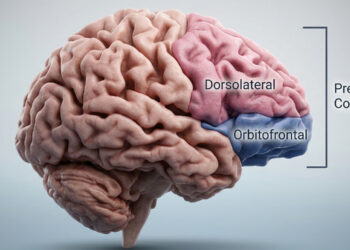
The results revealed that the musical training group showed improvements in short-term memory encoding and maintenance after training, while the control group did not. This was specifically on a part of the task that required participants to recognize recently seen faces. The EEG data also revealed that these changes were accompanied by increased activity in the superior parietal lobule.
“Learning to play an instrument is one of many ways that can help promote cognitive function across the lifespan,” Zanto told PsyPost. “By engaging cognitive complex (and often difficult) tasks, you strengthen those brain networks – which not only improves your ability to do that task, but also will help you do other tasks that rely on those brain networks.”
Interestingly, the musical training did not affect temporal attention or sensory processes, even though the training did challenge these skills. According to the study authors, this suggests that the training “selectively taxes short-term memory resources within the superior parietal lobule to facilitate the encoding and maintenance of visual short-term memory.”
Importantly, the musical training placed no demands on short-term memory for faces. This suggests that the training led to cognitive improvements that transferred to improvements in visual memory for faces, possibly through shared short-term memory resources. This is supported by the fact that improvements were localized in the superior parietal lobule, a brain area implicated in visual aspects of music performance as well as visual working memory in other tasks.
“I’m a little surprised that the neural activity in anticipation of a face didn’t change,” Zanto said. “Given that rhythm training taxes your ability to anticipate future events (such as the beat), I thought that ability to anticipate the onset of faces would also improve.”
The authors discuss the real-world implications of their findings. After only two months, older adult nonmusicians were able to improve their short-term memory for faces with an at-home digital training program. However, “it remains to be seen whether improvements in short-term memory may be observed in a healthy young adult population in such a short amount of time,” the researchers noted, “as their short-term memory ability typically has less room for improvement.”
“It’s a relatively small sample of people – so larger groups will be needed to corroborate these findings,” Zanto explained. “Also, participants underwent a relatively short training duration (two months). Future research will be needed to address whether the small improvements in memory (~4% increase) would be amplified with a longer training duration.”
“We have created a new version of rhythm training that we call Coherence,” he added. “It’s more user friendly, including kids. We recently tested Coherence in third grade children and just submitted a manuscript describing how rhythm training improves timing abilities, which results in enhanced reading fluency. Hopefully this will be in press soon. Beyond digital interventions, I also use non-invasive neurostimulation techniques to promote healthy brain function.”
The study, “How musical rhythm training improves short-term memory for faces”, was authored by Theodore P. Zanto, Vinith Johnson, Avery Ostrand, and Adam Gazzaley.