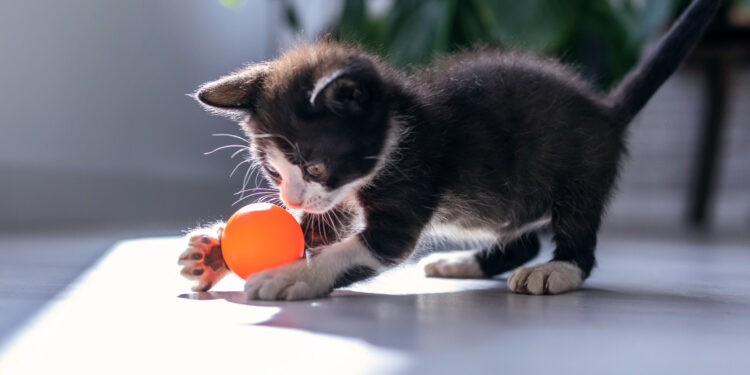

A study of children with autism found that their attention to pictures of cute animals and children varies depending on the severity of their autism symptoms. Children with low-to-moderate autistic symptoms and those without autism spent more time looking at pictures of cute animals and children compared to neutral objects. In contrast, children with more severe autism symptoms, particularly in the area of social emotions, spent less time focusing on cute images than on non-cute pictures. The research was published in the Journal of Autism and Developmental Disorders.
Humans tend to find features similar to those of babies cute—a phenomenon known as the baby schema. Visual stimuli depicting humans, animals, or creatures with round heads, big eyes, chubby cheeks, and other similar features are perceived as cute. These stimuli naturally trigger interest and attention in humans across all cultures, a reaction referred to as the “cuteness effect.” This effect likely stems from evolutionary mechanisms that promote caregiving and protective behaviors toward young, vulnerable beings, reinforcing social bonding and empathy.
The cuteness effect is observable from a very young age. One study showed that infants aged 3 to 12 months, with no prior sibling or nursery experience, already display a weak preference for the faces of other infants over the faces of older children. Another study found that objects adhering to the baby schema attract the gaze of children aged 3 to 6 years more effectively than neutral objects, confirming the presence of the cuteness effect. However, it remains unclear whether the cuteness effect is present in autistic individuals, given the difficulties in social interactions that are a hallmark of the disorder.
Study author Alexandra Zaharia and her colleagues sought to explore the association between autism symptom severity and the cuteness effect. They hypothesized that attention to cute pictures, as opposed to neutral pictures, would depend on the severity of autism symptoms. They also expected that only children with lower severity of autism symptoms and those without autism would spend more time observing cute pictures.
The study involved 63 children aged 1 to 6 years diagnosed with autism spectrum disorder and 31 typically developing children. Among the children with autism, 40 had low-to-moderate symptom severity, while 23 had high symptom severity.
Participants were shown six frames containing colored pictures while wearing an eye-tracking device. One set of frames featured pictures of animals (cats and dogs, considered cute), adult humans, and various objects (e.g., chairs, a sink, a lamp—referred to as neutral stimuli). The other set of frames included pictures of children, animals (cats and dogs), and various objects (e.g., a floppy disk, a chair, a sink, a clothes iron). The researchers recorded the time each child spent looking at each picture in the frames.
Results showed that, in the first set of frames, children without autism and those with low-to-moderate autism symptom severity spent more time looking at animals than at neutral stimuli. However, this difference in attention was significantly lower in children with high autism symptom severity and disappeared after statistical corrections.
In the second set of frames, children with low-to-moderate autism symptoms and those without autism spent more time looking at pictures of children and animals than at neutral objects. In contrast, children with high autism symptom severity showed no such distinction, spending a similar amount of time looking at children, animals, and neutral objects.
“The current study provides evidence for an altered attentional bias toward baby schema in children with high autism severity and suggests that the decreased attention to cute stimuli may be related to social difficulties. Variations linked to the symptom severity observed in the cuteness responses may have important implications in considering individualized approaches in therapies or in the design of interactive agents used in interventions for autistic children,” the study authors concluded.
This study sheds light on an important aspect of perception and motivation in children with autism. However, it is possible that familiarity and previous exposure to stimuli with cute features may have influenced the results, a factor that was not controlled. Additionally, 70 children were excluded from the study because they spent less than 50% of the time looking at the frames.
The paper, “Examining the Link Between Social Affect and Visual Exploration of Cute Stimuli in Autistic Children,” was authored by Alexandra Zaharia, Nada Kojovic, Tara Rojanawisut, David Sander, Marie Schaer, and Andrea C. Samson.