Subscribe
The latest psychology and neuroscience discoveries.
My Account
  • Mental Health
  • Social Psychology
  • Cognitive Science
  • Neuroscience
  • About
No Result
View All Result
PsyPost
PsyPost
No Result
View All Result
Home Exclusive Mental Health Anxiety

Brain activity study links social anxiety to a preoccupation with making errors

by Eric W. Dolan
March 27, 2018
in Anxiety, Mental Health
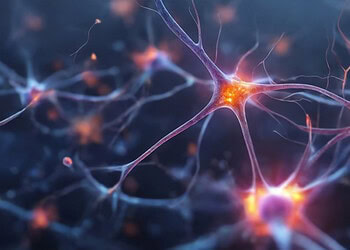
(Photo credit:  Kateryna_Kon)

(Photo credit: Kateryna_Kon)

Share on TwitterShare on Facebook

A new study that monitored children’s brain activity suggests that social anxiety is related to a preoccupation with making mistakes. The research, published in the Journal of the American Academy of Child & Adolescent Psychiatry, provides insight into the neurological mechanisms underlying social anxiety symptoms.

“I am interested in better understanding social anxiety, and how it develops, for a number of reasons,” said study author George Buzzell of the University of Maryland.

“First and foremost, social anxiety is a debilitating disorder affecting many individuals and we need to better understand this disorder if we want to help these people. I myself struggled with social anxiety for almost two decades and feel that I have been largely successful in overcoming it; I want to better understand this disorder so that I can help others find the help they need to do the same.”

The study examined 107 twelve-year-old children who had displayed an early-childhood temperament known as behavioral inhibition when they were younger. The researchers used an electroencephalogram to monitor the electrical brain activity of the children as they completed a psychological test that measures a participant’s ability to focus on information while blocking out distractions.

The children completed the test, known as a flanker task, twice. Once after being told they would be observed and once after being told they would not be observed.

By looking at post-error response times and a particular pattern of brain activity known as Error-Related Negativity, Buzzell and his colleagues were able to find that social anxiety and behavioral inhibition were linked to a hypersensitivity towards errors when under social observation.

“One of the mechanisms through which social anxiety arises is an excessive focus on one’s self, and one’s perceived mistakes, in social situations. For individuals with social anxiety, this excessive focus on one’s perceived mistakes distracts/detracts from the ongoing social interaction,” Buzzell told PsyPost.

But the study has some limitations.

Google News Preferences Add PsyPost to your preferred sources

“First, is that although we were able to assess a child’s temperament early in life, prior to the development of social anxiety symptoms in adolescence, the other neurobehavioral measures were assessed once the adolescents were already showing signs of social anxiety,” Buzzell explained. “A better approach would be to also access the neurobehavioral measures prior to the emergence of social anxiety symptoms in order to truly identify a mechanism that gives rise to it.

“The second major limitation is that our measure of ‘error preoccupation’ is based only on reaction times and is a rather crude measure; currently, we are employing more sophisticated analyses in order to better capture the full cascade of neural processes that precede and follow errors; we hope to publish the results of these new analyses soon.”

“Although I am the one doing the talking right now, this was truly a team effort, involving a lot of very smart people (that are listed as authors on the manuscript). I am very grateful to all of my co-authors for their work on this project over the years and their insight, especially the principal investigator of this project, Dr. Nathan A. Fox,” Buzzell added.

“Additionally, all of us are immensely thankful to all of the families that participated in this research, as it would not have been possible without their participation and commitment to the project. We are also very grateful for the generous funding that this project has received over the years.”

The study, “A Neurobehavioral Mechanism Linking Behaviorally Inhibited Temperament and Later Adolescent Social Anxiety“, was authored by George A. Buzzell, Sonya V. Troller-Renfree, Tyson V. Barker, Lindsay C. Bowman, Andrea Chronis-Tuscano, Heather A. Henderson, Jerome Kagan, Daniel S. Pine, and Nathan A. Fox.


Previous Post

Study: Liberals cognitively suppress stereotypes about conservatives — but not vice versa

Next Post

Runners with higher emotional intelligence finish half marathons quicker

RELATED

Casual sex is linked to lower self-esteem and weaker moral orientations in women but not men
Cognitive Science

Fake medicine yields surprisingly real results for older adults’ memory and stress

April 9, 2026
Social media may be trapping us in a cycle of loneliness, new study suggests
Body Image and Body Dysmorphia

Young men steadily catch up to young women in online appearance anxiety

April 8, 2026
Personalient individuals are happier due to smoother social relations
Depression

New research links meaning in life to lower depression rates

April 8, 2026
A common calorie-free sweetener alters brain activity and appetite control, new research suggests
Anxiety

High sugar intake is linked to increased odds of depression and anxiety in new study

April 8, 2026
Your brain might understand music theory better than you think, regardless of formal training
Early Life Adversity and Childhood Maltreatment

An unpredictable childhood predicts greater psychological distress during the Israel-Hamas war

April 8, 2026
Alcohol use disorder: Novel procedure identifies individual differences in coping strategies
Mental Health

Maternal exposure to short-chain PFAS causes persistent memory problems in adult rats

April 7, 2026
Obesity before pregnancy linked to autism-like behavior in male offspring, study finds
Addiction

Early life stress fundamentally alters alcohol processing in the brain

April 7, 2026
Trump links Tylenol and autism. What does current research actually say?
Autism

Autism associated with age of maternal grandparents in new study

April 7, 2026

STAY CONNECTED

RSS Psychology of Selling

  • Smaller influencers drive engagement while bigger ones drive purchases, meta-analysis finds
  • Political conservatives are more drawn to baby-faced product designs, and purity values explain why
  • Free gifts with no strings attached can boost customer spending by over 30%, study finds
  • New research reveals the “Goldilocks” age for social media influencers
  • What today’s shoppers really want from salespeople, and what drives them away

LATEST

Fake medicine yields surprisingly real results for older adults’ memory and stress

People view coercive control in relationships as less harmful when the victim is a man

Casual sex is linked to lower self-esteem and weaker moral orientations in women but not men

Young men steadily catch up to young women in online appearance anxiety

Teenage brains process mechanical and academic skills differently across the sexes

New study reveals six stages of spiritual growth experienced during a pilgrimage

New research links meaning in life to lower depression rates

High sugar intake is linked to increased odds of depression and anxiety in new study

PsyPost is a psychology and neuroscience news website dedicated to reporting the latest research on human behavior, cognition, and society. (READ MORE...)

  • Mental Health
  • Neuroimaging
  • Personality Psychology
  • Social Psychology
  • Artificial Intelligence
  • Cognitive Science
  • Psychopharmacology
  • Contact us
  • Disclaimer
  • Privacy policy
  • Terms and conditions
  • Do not sell my personal information

(c) PsyPost Media Inc

Welcome Back!

Login to your account below

Forgotten Password?

Retrieve your password

Please enter your username or email address to reset your password.

Log In

Add New Playlist

Subscribe
  • My Account
  • Cognitive Science Research
  • Mental Health Research
  • Social Psychology Research
  • Drug Research
  • Relationship Research
  • About PsyPost
  • Contact
  • Privacy Policy

(c) PsyPost Media Inc