![[Adobe Stock]](https://sp-ao.shortpixel.ai/client/to_webp,q_glossy,ret_img,w_750,h_375/https://www.psypost.org/wp-content/uploads/2025/09/brain-scans-2-750x375.jpg)
A new study has found that psychotherapy can lead to observable changes in the physical structure of the brain for people with major depressive disorder. The research, published in the journal Translational Psychiatry, showed that after a course of cognitive behavioral therapy, patients had increased gray matter volume in brain regions associated with processing emotions, an effect similar to what has been seen with medication.
Cognitive behavioral therapy is a common form of psychotherapy, or talk therapy. It helps people identify and challenge negative thought patterns and behaviors that contribute to their emotional distress. While medication and other physical treatments like electroconvulsive therapy have been shown to alter brain structure, the evidence for similar effects from psychotherapy has been limited. Researchers wanted to know if a standard course of talk therapy, conducted in a real-world clinical setting, could also produce measurable biological changes in the brain.
“Cognitive behavioural therapy leads to positive changes in thought patterns, emotions and behaviour. We assume that this process is also linked to functional and structural changes in the brain,” said Professor Ronny Redlich, who heads the Department of Biological and Clinical Psychology at Martin Luther University Halle-Wittenberg. “The effect has already been demonstrated with therapy involving medication or electrostimulation, but has not yet been proven for psychotherapy in general.”
The research team, led by psychologist Esther Zwiky, was particularly interested in a psychological concept known as alexithymia. This refers to a difficulty in recognizing and describing one’s own emotions. Since depression often involves problems with processing emotions, and the brain regions affected by depression are central to emotion, the scientists hypothesized that changes in alexithymia might be more directly connected to brain changes than a general improvement in depression symptoms.
To investigate this, the scientists designed a study involving 30 patients diagnosed with major depressive disorder and a comparison group of 30 healthy individuals. The patients were recruited from a university outpatient clinic and received 20 sessions of cognitive behavioral therapy from licensed or supervised therapists, following the guidelines of the German public healthcare system. This naturalistic approach was chosen to ensure the findings would be relevant to typical clinical practice.
All participants underwent brain scans at two different times: once before the therapy began, and again after the 20 sessions were completed. The healthy control group had their scans taken at a similar time interval. “MRI scans provide information about the size, shape and location of tissue,” explained Zwiky. The researchers used these scans to measure the volume of gray matter, which is the part of the brain that contains most of the nerve cell bodies and is involved in processing information. Participants also completed clinical interviews and questionnaires to assess the severity of their depression and their levels of alexithymia.
The therapy was clinically effective. After the 20 sessions, patients reported a significant reduction in their overall symptoms of depression. About two-thirds of the patients showed improvement, moving from an acute depressive episode to being partially or fully recovered. The patients also showed a notable improvement in one specific aspect of alexithymia: their ability to identify their own feelings.
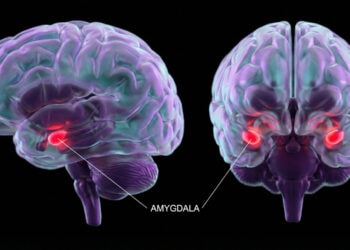
The brain scans revealed physical changes that accompanied these clinical improvements. Specifically, the researchers found that after therapy, the patients showed an increase in gray matter volume in two key brain areas involved in emotion. “We observed a significant increase in the volume of grey matter in the left amygdala and the right anterior hippocampus,” says Zwiky. The amygdala is often considered the brain’s alarm system, central to processing fear and other emotions, while the hippocampus is involved in memory and regulating emotional responses.
Interestingly, the team also observed a decrease in gray matter volume in a different part of the same structure, the right posterior hippocampus. This section of the hippocampus is more closely associated with cognitive functions like spatial memory. The researchers note that this finding was unexpected and its meaning is not yet clear, but it could relate to cognitive aspects of depression that the therapy did not target.
The team then analyzed whether these brain changes were connected to the patients’ symptom improvements. They found a direct link between the physical changes and the improvements in emotional awareness. The patients who showed the largest increase in gray matter in their right amygdala were also the ones who reported the greatest improvement in their ability to identify their feelings. However, the changes in brain volume were not linked to the overall reduction in depressive symptoms. This suggests that the structural changes may be tied to very specific functions rather than a global sense of feeling better.
“Cognitive behavioural therapy was already known to work. Now, for the first time, we have a reliable biomarker for the effect of psychotherapy on brain structure. Put simply, psychotherapy changes the brain,” explained Redlich. These findings help place talk therapy on equal footing with biological treatments, demonstrating that it can have a tangible impact on the brain. The results also support the idea that psychological recovery is a biological process.
The authors note that the study has some limitations. Because there was not a group of depressed patients who did not receive therapy, the researchers cannot completely rule out that some changes were due to the natural course of the illness over time. The naturalistic design, while reflecting real-world conditions, also means it is impossible to know which specific elements of the therapy led to the brain changes. The relatively small number of participants means that smaller effects may have been missed, and the observed correlation between brain changes and emotional awareness was modest.
Future research could use larger sample sizes and randomized controlled trials to confirm these findings. Researchers also suggest that follow-up studies should track patients over a longer period to see if the brain changes are permanent. It would also be informative to investigate how psychotherapy affects other functions associated with depression, such as sleep, rumination, or the ability to experience pleasure, and whether those functions are linked to structural brain changes.
Redlich stresses that these findings do not suggest one treatment is superior to another. Medication, electrostimulation, and psychotherapy are all effective options that may work differently for different individuals. “It is therefore all the more encouraging that we were able to show in our study that psychotherapy is an equally effective alternative from a medical and scientific standpoint,” said Redlich.
The study, “Limbic gray matter increases in response to cognitive-behavioral therapy in major depressive disorder,” was authored by Esther Zwiky, Tiana Borgers, Melissa Klug, Philine König, Konrad Schöniger, Janine Selle, Antonia Küttner, Luisa Brunner, Elisabeth J. Leehr, Udo Dannlowski, Verena Enneking, and Ronny Redlich.