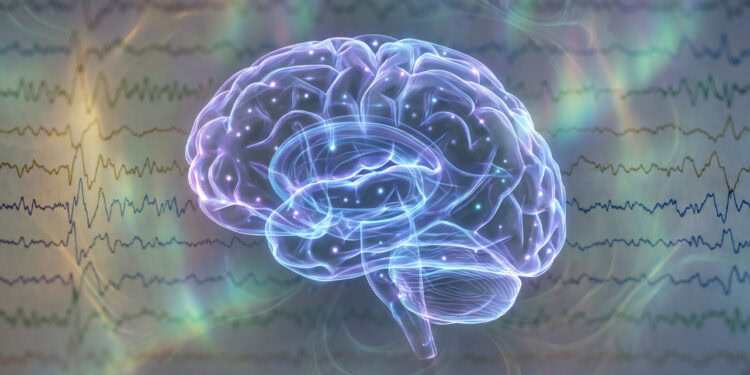

People with alcohol use disorder experience automatic emotional reactions to alcohol-related images that disrupt their basic decision-making processes. Research published in Progress in Neuropsychopharmacology & Biological Psychiatry suggests that the brain attempts to offset these cognitive disruptions by increasing activity in regions associated with deliberate thought.
According to biological models of addiction, chronic substance use creates a disconnect between the brain’s reward centers and its executive control hubs. Over time, the brain assigns a disproportionate motivational weight to the addictive substance. This means that environmental cues, such as the sight of a bottle or a familiar bar, become highly stimulating and command the brain’s attention.
In alcohol use disorder, seeing a picture of a drink can trigger an immediate, positive emotional association. These latent affective connections operate beneath conscious awareness and encourage the individual to seek out alcohol. They often lead to a relapse by making it harder to implement cognitive strategies for resisting cravings.
Traditional psychological tests measure how fast or accurately someone reacts to a stimulus. These basic metrics do not fully capture the hidden cognitive steps involved in making a choice. To separate these underlying components, researchers use computational frameworks that break down the milliseconds of decision-making into distinct mathematical variables.
This computational approach quantifies how much information a person needs before acting, how fast they process that information, and how long they spend physically executing a response. The biological side of these automatic reactions also requires precise measurement. Scientists use electroencephalography, a method of recording electrical activity on the scalp, to track brain waves known as event-related potentials.
These electrical signals correspond to specific cognitive events and happen in fractions of a second. Early brain waves reflect automatic, unconscious attention. Later waves indicate top-down cognitive control, which involves conscious effort to evaluate a situation and guide behavior.
Researchers wanted to understand the sequence of these neural and behavioral events in people with alcohol use disorder. Zijing Wang, Jiang Du, Tianzhen Chen, and Min Zhao at the Shanghai Mental Health Center, along with colleagues at the Third People’s Hospital of Fuyang, conducted the research. They aimed to map exactly how early emotional biases affect later cognitive control, and how these brain wave patterns correlate with real-time decision-making speeds.
The team recruited 47 men diagnosed with alcohol use disorder and 32 healthy control participants. Because the total sample included 79 participants, this is considered a small study. The individuals with alcohol use disorder were hospitalized and in the withdrawal phase of recovery, having abstained from alcohol for two weeks to six months.
Participants sat in a sound-attenuated room and completed an emotional association task on a computer. In each trial, they viewed a picture for one second. Half of the images depicted alcohol, while the other half depicted healthy activities. Immediately after the picture disappeared, a word appeared on the screen.
Participants had one second to press a key categorizing the word as either positive or negative. The underlying logic of the test is that if a preceding picture elicits a positive emotional state, the participant will categorize a positive word more quickly due to a priming effect. Throughout the task, participants wore sensor caps containing electrodes that recorded their brain’s electrical activity in real time.
The researchers fed the behavioral data into a computational model to separate the decision-making process into three distinct parts. First, they looked at the decision threshold, which represents how much evidence a person needs to make a choice. Second, they analyzed the drift rate, which measures how fast a person accumulates that sensory evidence. Third, they measured non-decision time, which covers the physical execution of the button press and basic sensory encoding.
For positive words that followed alcohol pictures, the men with alcohol use disorder showed a lower decision threshold than the healthy controls. This indicates that they made choices more impulsively, requiring less mental evidence to trigger a response. At the same time, their drift rate was slower, meaning they were less efficient at actually processing the visual information on the screen.
The group with alcohol use disorder also exhibited a longer non-decision time during the alcohol trials. They spent more time physically or perceptually preparing to press the button. The researchers suggest that the emotional weight of the alcohol images likely caused a cognitive conflict that disrupted their basic motor responses.
The electroencephalography data provided a real-time map of the brain’s electrical activity during these delayed responses. The researchers focused on an early brain wave that peaks around 200 to 260 milliseconds after a stimulus appears. This wave tracks automatic emotional processing and early visual attention.
When viewing alcohol-related images, the group with alcohol use disorder showed a heightened electrical response in this early wave compared to the healthy controls. This heightened neural activity points to an unconscious, automatic sensitivity to alcohol cues. Such immediate biological engagement can overwhelm a person’s ability to shift their attention elsewhere.
The team also examined a later brain wave that occurs 600 to 800 milliseconds after a stimulus. This late-stage electrical activity is tied to cognitive reappraisal and the conscious reallocation of mental resources. For the images depicting healthy activities, the men with alcohol use disorder showed a larger late-stage brain wave response than the healthy controls.
The researchers propose that this increased late-stage activity represents a compensatory effort. Because healthy activities lack the dominant emotional pull of alcohol for these individuals, their brains had to exert more conscious cognitive control to process the non-addictive stimuli. This reveals an imbalance in the brain, where high automatic reactivity is paired with an increased need for deliberate mental effort.
Finally, the researchers ran a statistical analysis to see if the brain wave activity directly influenced the behavioral delays. They looked specifically at the relationship between the delayed non-decision time and the late-stage brain waves during the alcohol trials. They found that higher amplitudes in the late-stage brain waves were associated with a reduction in the non-decision time delay.
Even though the men with alcohol use disorder generally had slower physical response times, those who generated stronger late-stage electrical activity managed to speed up their reactions slightly. The brain’s evaluative systems were actively working to suppress the behavioral deficit caused by the emotional distraction. This indicates that enhanced conscious processing can partially counteract the impairments caused by automatic emotional reactions.
The study relied on a small sample of exclusively male participants. Brain responses and emotional association patterns might differ in women. All the individuals with alcohol use disorder were hospitalized and experiencing the withdrawal phase of recovery.
The observed neural and behavioral patterns may not reflect the cognitive processes of people actively consuming alcohol or those in long-term abstinence. Future research will need to track individuals over time to see how these cognitive and biological markers shift as a person transitions from early withdrawal into sustained recovery.
The study, “Neurocognitive mechanisms underlying alcohol-related emotional association bias among alcohol use disorder: Evidence from a hierarchical drift-diffusion model and event-related potentials,” was authored by Zijing Wang, Dapeng Zhang, Jiayi Zhu, Fanfan Luo, Dongli Fan, Luxing Cai, Fei Cheng, Jing Tian, Shiyan Qu, Jiang Du, Tianzhen Chen, and Min Zhao.