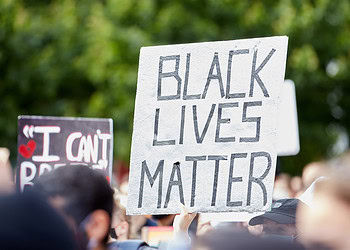
In an era where the lines between corporate identity and social activism blur, brands increasingly find themselves navigating the treacherous waters of public opinion on social media. At the heart of this phenomenon is the question: What happens to brands that align themselves with movements like Black Lives Matter (BLM)?
A recent study published in the INFORMS journal Marketing Science offers an answer, revealing that companies endorsing BLM have faced a backlash from consumers. This backlash manifests as a decline in social media engagement, measured by followers and likes, alongside an uptick in negative commentary.
The study was spurred by the observation that while brands are increasingly expected to take stands on social issues, the actual impact of such endorsements on consumer behavior, especially in the context of racial justice movements, remains underexplored. The researchers sought to fill this gap by examining whether brands’ support for BLM positively or negatively influenced consumer engagement on social media platforms.
The researchers programmatically collected data from two major social media platforms: Instagram and Twitter. Their dataset included information from 435 brands spanning multiple industries such as automotive, clothing, food, high-tech, jewelry, and sporting goods. This broad sample was chosen based on the availability of data concerning foot traffic (from Safegraph) and social media accounts on both platforms.
The study period covered posts from June 1, 2019, to October 31, 2020, which allowed for the analysis of over 396,988 social media posts, including the period before, during, and after Blackout Tuesday — a key event in the BLM movement. For each post, the researchers gathered details such as the timestamp, captions, content, likes, and follower growth metrics.
A cornerstone of the study’s methodology was its use of Blackout Tuesday as a natural experiment. Blackout Tuesday, which occurred on June 2, 2020, was a day when individuals and organizations posted black squares on Instagram to show solidarity with the BLM movement. This event provided a unique opportunity to compare the effects of BLM support on consumer engagement in a quasi-experimental setup.
Instagram, where the black square posting was prevalent, served as the treatment group, while Twitter, which did not experience the same level of participation in the event, served as the control group. This allowed the researchers to isolate the impact of BLM support from other factors that might influence social media engagement.
To analyze the vast amount of textual data in the social media posts, the researchers employed machine learning methods, specifically natural language processing (NLP) and deep learning tools. These tools enabled them to categorize posts into different topics, such as prosocial (e.g., supporting societal causes) and self-promotional content.
They used guided Latent Dirichlet Allocation (LDA) and a bidirectional Long Short-Term Memory (LSTM) model with attention mechanisms to predict the probability that each post related to specific topics. This sophisticated analysis allowed them to examine the nuances of how different types of content influenced consumer responses to brands’ BLM support.
The researchers found that brands that publicly supported BLM on social media generally saw a decrease in follower growth. The comparison of follower growth rates on Instagram (where Blackout Tuesday participation was widespread) with Twitter (used as a control group where the event was not mirrored) revealed a significant decline in follower growth on Instagram. This decline suggests that, contrary to the expectations that aligning with social justice causes might bolster a brand’s social media presence, public endorsements of BLM often led to a backlash among consumers.
Apart from the slowdown in follower growth, brands supporting BLM also faced an uptick in negative commentary on their social media posts. This backlash was not uniform but varied depending on the nature of the brands’ posts and their audience’s political leanings.
The study highlighted that the negative sentiment was particularly strong among consumers with Republican political affiliations who opposed the BLM movement. However, a segment of Democratic consumers also contributed to the negative commentary, criticizing brands for engaging in what they perceived as “slacktivism” – showing support for a cause without accompanying their words with actions or financial contributions.
An intriguing aspect of the study’s findings was the moderating effect of self-promotional content posted by brands alongside their BLM support messages. When brands continued to post self-promotional content in close proximity to their BLM endorsements, the negative impact on consumer engagement was exacerbated. This suggests that consumers may view the juxtaposition of social justice support with commercial promotions as inauthentic or as an attempt to capitalize on the social movement for commercial gain.
“One of the interesting findings is that negative associations were stronger when more brands posted in support of BLM, while concurrently posting self-promotional messages,” explained study author Yang Wang. “This suggests that large-scale BLM allyship programs that also included self-promotional posts created a ‘bandwagon effect’ that had a negative impact on those brands.”
“Brands that sought to capitalize by jumping on the bandwagon by allying with salient racial justice movements should have heeded caution,” added study author Xueming Luo. “And they should not have been too quick to resume business as usual with their product promotions while at the same time supporting BLM.”
The study also found that the negative repercussions of BLM support were not uniform across all brands. Brands with a history of engaging in social activism or those with mission statements emphasizing social causes experienced less severe declines in consumer engagement. In some cases, these brands may have even benefited from their support of BLM, suggesting that a consistent track record of social activism can mitigate potential backlash.
“Some brands with more historical prosocial posting on social media and with socially oriented missions suffered less from the negative effects and may even benefit from supporting BLM,” Luo said.
Moreover, the political affiliation of a brand’s consumer base played a significant role in moderating the impact of BLM support. Brands primarily followed by Republican consumers faced more significant negative effects, highlighting the polarized nature of political and social issues in consumer behavior.
But the researchers acknowledged that their focus on social media engagement metrics might not fully capture the broader impact of BLM support on a brand’s reputation or financial performance. Future research could extend this work by linking social media activism to tangible business outcomes or exploring consumer responses to brand activism across other social issues.
The study, “How Support for Black Lives Matter Impacts Consumer Responses on Social Media,” was authored by Yang Wang, Marco Shaojun Qin, Xueming Luo, and Yu (Eric) Kou.