Subscribe
The latest psychology and neuroscience discoveries.
My Account
  • Mental Health
  • Social Psychology
  • Cognitive Science
  • Neuroscience
  • About
No Result
View All Result
PsyPost
PsyPost
No Result
View All Result
Home Exclusive Psychopharmacology Cannabis

Cannabis use often co-occurs with suicidal thoughts and psychological distress — and more-so among women

by Eric W. Dolan
November 23, 2018
in Cannabis, Psychopharmacology
(Photo credit: Cannabis Culture)

(Photo credit: Cannabis Culture)

Share on TwitterShare on Facebook

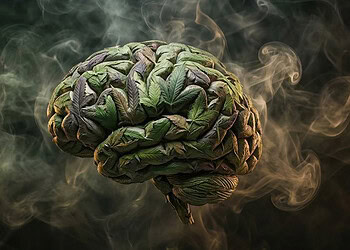
The link between cannabis use and psychological distress is stronger for women than men, according to new research published in The Canadian Journal of Psychiatry. The findings indicate that the negative effects of cannabis use may be more pronounced for women.

“Regular cannabis use is much more common among individuals who have mental health disorders. Depression (the most common mental health disorder) and suicide have been consistently associated with cannabis use,” said study author Jillian Halladay of McMaster University.

“Given Canada recently legalized recreational cannabis nationally, we thought it was important to examine who might be at particular risk of both using cannabis and also experiencing depression or suicide.”

“There is evidence to suggest that females respond to substance use differently than males. While males may be more likely to use substances, females may experience more consequences from substance use. In regards to cannabis specifically, it is thought that the area of the brain that cannabis acts on develops and acts differently in females compared to males,” Halladay explained.

“We wanted to examine whether being female and using cannabis was associated with a greater likelihood of experiencing suicidal thoughts or attempts, depression, and psychological distress.”

For their study, Halladay and her colleagues analyzed data from 43,466 individuals who participated in the 2002 and 2012 Canadian Community Health Survey.

The researchers found that people who reported using cannabis occasionally or regularly tended to also report more major depressive episodes, suicidal thoughts and attempts, and psychological distress.

“Both males and females who used cannabis at least once a month were more likely to experience depression, psychological distress, and suicidal thoughts or attempts than those who did not use cannabis,” Halladay told PsyPost.

Google News Preferences Add PsyPost to your preferred sources

“This association was stronger for females compared to males when considering more frequent use of cannabis. For example, males who used cannabis more than once a week were 3 times as likely to experience suicidal thoughts or attempts compared to males who did not use cannabis while females who used more than once a week were 5 times as likely.”

The study includes some limitations. It is unclear whether cannabis use increases the risk of depression, psychological distress, and suicidal thoughts — or whether people who are depressed, distressed, and suicidal are more likely to use cannabis.

“Our data is cross-sectional (i.e. collected at one point in time), which means we can not determine causality or what came first. What we do know is that cannabis use often co-occurs alongside suicidal thoughts, depression and psychological distress, and more-so among females,” Halladay explained.

Previous research that reviewed 12 longitudinal studies, however, suggests that cannabis use is linked to poorer treatment outcomes in patients with anxiety and mood disorders.

“Cannabis is complicated,” Halladay added. “There are over 500 different compounds in cannabis that occur in various combinations. These different combinations of compounds are likely going to produce different effects in different people. Our findings are based on recreational cannabis use among Canadian adults aged 15 years or older in the general population over the past 20 years.”

The study, “Sex Differences in the Association Between Cannabis Use and Suicidal Ideation and Attempts, Depression, and Psychological Distress Among Canadians“, was authored by Jillian E. Halladay, Michael H. Boyle, Catharine Munn, Susan M. Jack, and Katholiki Georgiades.
Previous Post

People who experience traumatic events as children are more empathetic as adults

Next Post

Neuroimaging study links brain activity in the prefrontal cortex to certain psychopathic traits

RELATED

Your music playlist might reveal subtle clues about your intelligence
Neuroimaging

Psilocybin unlocks a specific biological signature in the brain linked to profound mystical states

March 19, 2026
Does cannabidiol reduce worry severity or anxiety symptoms? New placebo-controlled study says no
Autism

New trial suggests CBD oil could lower anxiety in autistic children and reduce parenting stress

March 18, 2026
Harvard scientist reveals a surprising split in psychological well-being between the sexes
Cannabis

A massive review reveals cannabis falls short in treating psychiatric disorders

March 17, 2026
Capsule pills with green and yellow color for mental health or nutritional supplements.
Mental Health

A common antidepressant shows promise for treating post-orgasmic illness syndrome

March 16, 2026
Does cannabidiol reduce worry severity or anxiety symptoms? New placebo-controlled study says no
Addiction

Cannabidiol may help treat severe alcohol addiction and protect the brain from damage

March 16, 2026
Does psilocybin really provide long-term relief from depression, as new study suggests?
Psilocybin

Psilocybin might not be the most psychoactive ingredient in magic mushrooms, new research suggests

March 16, 2026
Can Acacia catechu and Scutellaria baicalensis extracts enhance brain function?
Depression

Ashwagandha shows promise as a treatment for depression in new rat study

March 13, 2026
Alcohol dampens reactivity to psychological stress, especially for uncertain stressors
Addiction

Researchers identify personality traits that predict alcohol relapse after treatment

March 12, 2026

STAY CONNECTED

RSS Psychology of Selling

  • When saying sorry with a small discount actually makes things worse
  • How dark and light personality traits relate to business owner well-being
  • Why mobile game fail ads make you want to download the app
  • The science of sound reduplication and cuteness in product branding
  • How consumers react to wait time predictions from humans versus AI chatbots

LATEST

New research reveals why storytelling works better than bullet points in online dating

News chatbots that present multiple viewpoints tend to earn the trust of conspiracy believers

New study finds link between receptivity to “corporate bullshit” and weaker leadership skills

An analysis of data from 75 countries confirms that nature connectedness predicts well-being

The psychological impact of ghosting lasts longer than outright rejection

Building muscle strength may help prevent depression, especially in women

Researchers use machine learning to reveal how gasoline prices drive presidential approval ratings

A faulty brain waste disposal system may lead to psychosis

PsyPost is a psychology and neuroscience news website dedicated to reporting the latest research on human behavior, cognition, and society. (READ MORE...)

  • Mental Health
  • Neuroimaging
  • Personality Psychology
  • Social Psychology
  • Artificial Intelligence
  • Cognitive Science
  • Psychopharmacology
  • Contact us
  • Disclaimer
  • Privacy policy
  • Terms and conditions
  • Do not sell my personal information

(c) PsyPost Media Inc

Welcome Back!

Login to your account below

Forgotten Password?

Retrieve your password

Please enter your username or email address to reset your password.

Log In

Add New Playlist

Subscribe
  • My Account
  • Cognitive Science Research
  • Mental Health Research
  • Social Psychology Research
  • Drug Research
  • Relationship Research
  • About PsyPost
  • Contact
  • Privacy Policy

(c) PsyPost Media Inc