New research published in Drug and Alcohol Dependence provides evidence that experiencing depression symptoms alongside cannabis use is linked to less efficient communication across the brain compared to cannabis use alone. The study suggests that while cannabis use tends to increase overall connectivity in the brain, the presence of depression weakens this effect, resulting in a less integrated brain network.
Scientists conducted this study to better understand the underlying biology of why cannabis use and depression frequently occur together. Heavy or chronic cannabis use might increase the risk of developing depression, while individuals experiencing depression often turn to cannabis to self-medicate. Both cannabis use and depression individually alter the way different areas of the brain communicate with each other.
This baseline brain communication is known as resting-state functional connectivity, which refers to the brain activity that happens when a person is awake but not focused on a specific task. Prior studies have shown changes in resting-state connectivity in people who use cannabis and in those with depression, but the combined effect of both factors on the brain remained largely unexplored. The researchers wanted to see if depression strengthens or weakens the brain connectivity changes normally associated with cannabis use.
The human brain contains an endocannabinoid system, a biological network that plays a role in mood regulation and responding to stress. Deficits in this biological signaling are often associated with depression. Because cannabis contains chemical compounds that interact directly with these same biological receptors, the researchers suspected that cannabis might impact the brain differently depending on a person’s level of depression.
“There is high co-morbidity between cannabis use and depression symptoms based on behavioral and epidemiological studies. However, we barely understood the underlying brain mechanisms linking them. We wanted to investigate how cannabis use and depression symptoms interactively affect the way different parts of the brain communicate,” said study author Che Liu, a postdoctoral researcher at the University of Texas at Dallas and member of Francesca M. Filbey’s Neuroimaging of Reward Dynamics (NiRD) Lab.
For their study, the research team analyzed brain imaging and behavioral data from 395 adults aged 18 to 55 across four different research sites. The sample included 223 individuals who used cannabis weekly and tested positive for cannabis in a urinalysis. This group had an average age of 26.8 years, and 61.9 percent were male. The control group consisted of 172 individuals with an average age of 25.0 years, and 48.3 percent were male.
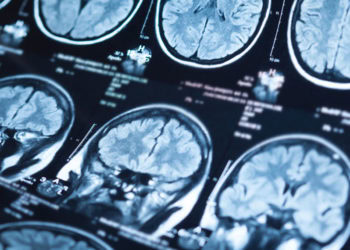
Participants completed detailed questionnaires about their substance use, including the timeline of their cannabis, alcohol, and nicotine habits. They also took the Beck Depression Inventory-II, a standard survey used to measure the severity of recent depression symptoms. After completing the questionnaires, participants underwent magnetic resonance imaging, or MRI, to scan their brain activity while resting.
The scientists used a mathematical approach called graph theory to analyze the MRI data. This method maps the brain as a complex network of hubs and the connections between them, allowing researchers to measure how efficiently information travels. They looked at global measures, which capture how well the entire brain communicates across long distances, as well as local measures, which examine the activity within localized functional neighborhoods.
These specific functional neighborhoods included the default mode network, which handles self-reflection and emotional processing. The team also looked at the frontoparietal network, which manages decision-making and attention. Finally, they examined the salience network, which helps the brain prioritize important stimuli, and the subcortical network, which is involved in reward processing.
The data revealed that individuals in the cannabis group had higher global efficiency and shorter communication paths across the brain compared to the control group. This pattern indicates a state of heightened connectivity, meaning information was traveling faster and more broadly across different regions. The cannabis group also showed increased localized connectivity in the salience, frontoparietal, and subcortical networks.
However, the presence of depression symptoms appeared to alter these outcomes. As depression scores increased among participants who used cannabis, the heightened global efficiency and integration normally linked to cannabis use weakened. The researchers noted that the combination of cannabis use and depression tends to result in a less efficient and less integrated brain network than cannabis use alone.
“Our findings suggest that having depression symptoms weaken the effects of cannabis on brain communication, potentially resulting in less efficient and less integrated brain network function compared to cannabis use alone,” Liu told PsyPost.
The scientists also examined whether the frequency of a person’s cannabis use changed these outcomes. Looking strictly at the drug’s direct effects, they found that smoking more frequently led to even higher brain connectivity and integration. Yet, the researchers were surprised to find that frequency of use did not change how depression affected the brain. The dampening effect of depression on brain connectivity happened simply because a person was a regular cannabis user.
“We were surprised to find that while depression symptoms moderated the effects of cannabis use status on the brain, it didn’t seem to matter how often a person used cannabis,” Liu said. “This suggests a potential ‘threshold effect’ where even minimal use may be enough to interact with depression and alter the way the brain communicates, rather than the effects increasing with higher doses.”
As with all research, there are limitations to consider. Because the study observed participants at a single point in time, the scientists cannot definitively prove that cannabis use and depression caused the observed changes in brain connectivity. The results only show a statistical association between these factors. Additionally, the study sample contained very few participants with moderate or severe depression.
“Most participants in this study had relatively mild depression symptoms, which might limit our ability to detect the full impact of depression on the brain,” Liu said. “Additionally, we only looked at the data a single time point, thus we cannot determine whether cannabis use or depression occurs first.”
“We aim to conduct longitudinal studies that track individuals who use cannabis over time to better understand the cause-and-effect relationship between cannabis use, depression, and brain function. We also want to expand our scope by examining brain function during specific tasks and including participants with a broader range of depression severity, including those with clinical major depressive disorder.”
“Our findings highlight the ‘intersectionality’ of depression and cannabis use, showing that they don’t just exist side-by-side but actively interact to shape our brain,” Liu added.
The study, “The intersectionality of cannabis use and depression symptoms on functional brain topology in adults,” was authored by Che Liu, Janna Cousijn, Emese Kroon, and Francesca M. Filbey.