People with anxiety or depression show distinct patterns in their gut bacteria, and commonly prescribed psychiatric medications may shift the gut microbiome even more than the disorders themselves. That’s according to a new study published in Molecular Psychiatry, which analyzed fecal samples from hundreds of individuals and found specific microbial signatures linked to both mental health diagnoses and the use of antidepressants and anti-anxiety medications.
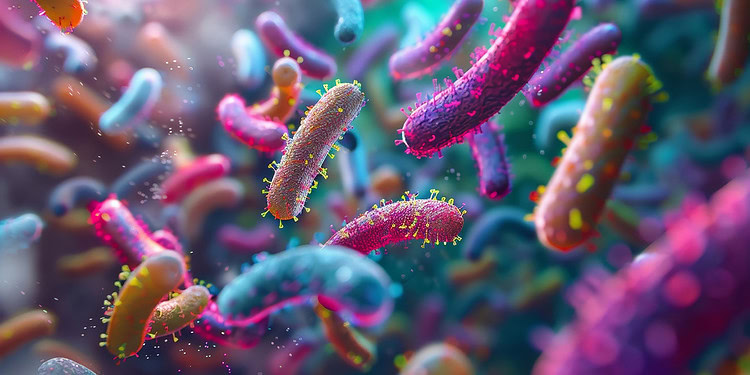
The trillions of microbes that inhabit the intestine—often called the gut microbiota—help break down food, guide immune activity, and generate chemicals that influence the brain. Over the past decade scientists have linked unusual microbial patterns to a range of mental health problems, raising hopes that diet, probiotics, or other microbe‑directed therapies could complement traditional care.
Yet many previous projects were small, drew volunteers who were not taking medication, or came from countries where treatment routines differ from those in the United States. The new research set out to fill those gaps by analyzing gut organisms in a broad American cohort that included many people who already used pharmaceuticals for mood or anxiety symptoms.
“Past work, including ours, has linked microbes in the gut to anxiety and depression. We wanted to test whether the use of specific medications had the same or different effects on the microbiome, and whether the effects were similar or different in the two conditions,” said study author Rob Knight, a professor at UC San Diego and director of the Center for Microbiome Innovation.
Participants came from two Oklahoma‑based projects: the Tulsa 1000 study and the Neurocomputational Mechanisms of Affiliation and Personality initiative. Together they provided 666 stool samples—502 from adults diagnosed with an anxiety disorder, major depressive disorder, or both, and 164 from healthy comparison volunteers. Diagnosis was confirmed in structured clinical interviews, and symptom intensity was recorded with standard questionnaires for anxiety and depression.
The scientists also logged every drug each person was using and grouped those medicines with the Anatomical Therapeutic Chemical classification system, paying special attention to antidepressants such as selective serotonin reuptake inhibitors and to anti‑anxiety drugs like benzodiazepines.
Each stool sample underwent two layers of genetic analysis. First, the team amplified and sequenced a short genetic marker that acts like a barcode for bacteria, giving a precise but affordable snapshot of which species were present. A subset of samples then went through whole‑genome sequencing, a deeper method that captures longer stretches of genetic material and can spot less common organisms. After quality filtering, each participant contributed the best‑sequenced sample to the final data set, ensuring that no one skewed the results by providing multiple specimens of different quality.
The researchers examined microbial diversity in several ways. Alpha diversity, a measure of how many species live in one person’s gut, did not differ between healthy volunteers and those with anxiety, depression, or both. Beta diversity, which asks how different one person’s total community is from another’s, told a richer story. In statistical models that considered all participants together, antidepressant use produced the strongest separation between microbial communities, exceeding the effect linked to a diagnosis of major depressive disorder.
Anti‑anxiety medicines, biological sex, and study cohort also showed measurable associations with beta diversity. When the scientists looked only at people who were not taking psychotropic drugs, sex emerged as the lone significant factor, suggesting that pharmaceuticals were indeed a prime driver of the broader community shifts.
“We were surprised that medications have a larger effect on the composition of the gut microbiome than the conditions that they are used to treat,” Knight told PsyPost.
Pinpointing individual organisms, the team compared people with anxiety alone, depression alone, both conditions, and healthy controls—but only among volunteers who were not using mood‑altering medicines. Forty‑four bacterial types were more common in anxiety, while fifty tended to be higher in healthy controls. A calculated ratio between anxiety- and control-associated microbes was elevated in participants with anxiety, in those with depression, and especially in those who carried both diagnoses.
The same pattern held for women and showed a weaker trend in men. When that ratio was plotted against anxiety severity scores, higher microbial values tracked with more intense worry, although the correlation was modest.
A similar hunt for depression‑linked organisms identified forty‑seven bacteria enriched in depressed participants and sixty‑four enriched in controls. A ratio based on those organisms rose in every diagnostic group compared with healthy volunteers. Again the signal was clearer in women than in men, and the ratio edged upward alongside depression severity on the Patient Health Questionnaire.
Medication exerted its own signatures. Comparing people who used anti‑anxiety drugs with unmedicated peers who had anxiety revealed 88 bacterial types tied to the drugs and 77 tied to no medication. Contrasting antidepressant users with unmedicated depressed participants spotlighted 102 drug‑associated organisms and seventy‑three linked to no medication.
When the scientists built ratios from those bacterial sets, the numbers distinguished not only drug users from non‑users but also separated volunteers who took both antidepressants and anti‑anxiety drugs from those on either class alone.
To explore whether such microbial fingerprints could aid diagnosis, the team trained a random‑forest machine‑learning model on the bacterial data. Across repeated cross‑validation runs the model consistently identified anxiety, depression, or both with accuracy well above chance, especially when it relied on the organisms flagged in the earlier statistical screens. Performance was strongest in women, echoing the sex differences seen in the diversity analyses. A separate classifier that tried to detect medication use also beat chance, though with lower precision than the diagnosis model.
For added confirmation, the researchers tested their depression‑related bacterial ratio in an independent data set from the American Gut Project, selecting more than eight thousand stool samples from adults under fifty‑six. Volunteers who reported a clinician‑diagnosed depression showed higher ratios than those who did not, mirroring the Tulsa findings and hinting that the microbial signal generalizes to other American populations.
“We were also surprised by how reliable the signatures of medication use were, suggesting that they might be developed into a test that could check for medication adherence through the effects on the microbiome,” Knight explained.
The project highlights several intertwined themes. First, prescriptions meant to treat mood and anxiety symptoms appear to shape the gut ecosystem at least as much as the psychiatric conditions themselves. Second, despite that pharmaceutical influence, certain bacteria still line up with anxiety, depression, or combined symptoms, and their relative abundance drifts upward as self‑reported distress intensifies. Finally, microbial profiles alone carry enough information to allow an algorithm to flag who is likely living with a mood or anxiety disorder, raising the prospect of stool‑based screening tools down the road.
“Specific microbes are associated with anxiety and depression, suggesting that addressing these conditions may involve different strategies to target these different microbes as part of the overall therapeutic strategy,” Knight said. “Medications that target anxiety and depression affect many gut microbes including these, although future studies are needed to determine how much of therapeutic effectiveness comes from these effects on microbes rather than effects on the human body and brain directly.”
Yet the study also carries caveats. It tracked associations rather than assigning treatments or manipulating microbes, so it cannot reveal which changes come first—the microbial shifts, the mental‑health symptoms, or the remedies. Dosage information was not dissected, and smaller sample sizes in the deeper whole‑genome sequencing limited some comparisons. The healthy control group also contained fewer men than women, which might have exaggerated sex differences. Future projects will need larger, balanced cohorts, repeated sampling over time, and experiments that intervene in diet, microbial composition, or medication schedules to tease apart cause and effect.
The investigators plan to probe those questions by coupling longitudinal human follow‑ups with animal studies that transfer specific bacteria into germ‑free mice. If particular microbes can blunt anxious or depressed behavior in animals, that will strengthen the case that they contribute to mental‑health resilience rather than merely reflecting it. Clinical trials could then test whether targeted probiotics, fiber‑rich diets that foster beneficial species, or even tailored antibiotic courses improve mood or enhance the response to standard drugs.
The study, “Medication use is associated with distinct microbial features in anxiety and depression,” was authored by Amanda Hazel Dilmore, Rayus Kuplicki, Daniel McDonald, Megha Kumar, Mehrbod Estaki, Nicholas Youngblut, Alexander Tyakht, Gail Ackermann, Colette Blach, Siamak MahmoudianDehkordi, Boadie W. Dunlop, Sudeepa Bhattacharyya, Salvador Guinjoan, Pooja Mandaviya, Ruth E. Ley, Rima Kaddaruh-Dauok, Martin P. Paulus, and Rob Knight on behalf of Alzheimer Gut Microbiome Project Consortium.