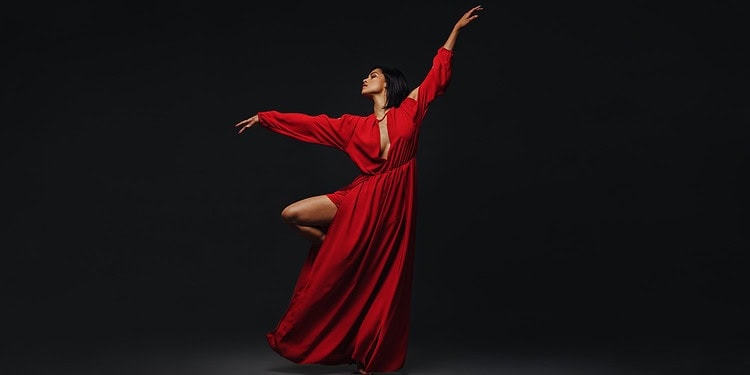
A new study published in Personality and Individual Differences has found that dancers tend to have distinct personality traits compared to non-dancers. The research, conducted in Sweden and Germany, shows that dancers are generally more open to new experiences, more extroverted, and more agreeable, while being less prone to negative emotions like anxiety. The findings also suggest that dance school entrepreneurs, who combine dancing with business, exhibit even stronger versions of these traits.
While previous studies have examined the cognitive and emotional benefits of dancing, the researchers wanted to determine whether these benefits stem from engaging in dance or are influenced by the personalities of those drawn to dance in the first place. They were particularly interested in comparing the personality profiles of dancers, musicians, and singers, given that all three art forms involve creative expression, but through different modes—either through the body, as in dance and singing, or through an instrument, as in music.
To conduct their study, the researchers gathered data from two large, representative samples—one in Sweden and one in Germany. In Sweden, the sample consisted of over 5,400 participants, drawn from the Swedish Twin Registry, who were between 27 and 54 years old. Participants were asked about their dance engagement using a web-based survey, which included a detailed assessment of their dance history, creative achievement, and personality traits.
The German sample included 574 participants, ranging from 18 to 83 years old, who were recruited from dance communities. This sample also included a unique group of dance school entrepreneurs, which allowed the researchers to investigate the personality traits of individuals who engage with dance not just as performers but also as business owners.
“What is unique about this work is that we have brought together very large samples from two different countries. Such data are generally scarce, and previous studies have often been based on rather small samples,” explained senior author Fredrik Ullén, director at the Max Planck Institute for Empirical Aesthetics
Participants in both countries completed the Big Five Inventory (BFI), a well-known tool for measuring five core personality traits: openness to experience, conscientiousness, extraversion, agreeableness, and neuroticism. In Sweden, the 44-item version of the BFI was used, while in Germany, participants completed a shorter 30-item version. Additionally, the German participants indicated which dance style they primarily practiced, which allowed for comparisons across different types of dance.
The study found several significant differences between dancers and non-dancers. Dancers consistently scored higher in openness to experience, extraversion, and agreeableness while being less neurotic. This suggests that people who engage in dance may be more open to trying new things, more outgoing, and more cooperative than those who do not. The researchers also found that performing dancers, whether amateurs or professionals, were even more open than those who only practiced dance without performing. This aligns with previous studies that link performing arts to higher levels of openness and extraversion.
“In general, both dancers and singers show a high degree of extraversion in their personality—which may be due to the fact that their means of expression when dancing and singing is their body—and this is a very socially exposed situation, more than if you express through an instrument, for example. However, more in-depth investigations are needed to explore this further,” said lead author Julia F. Christensen.
Interestingly, dance school entrepreneurs—who combine dancing with managing a dance-related business—showed the highest levels of openness, extraversion, and agreeableness, while being the least neurotic. This suggests that the added responsibilities of entrepreneurship might attract individuals who are especially outgoing, open to new experiences, and capable of handling stress without becoming anxious or emotionally unstable.
The researchers also looked at personality differences across different dance styles in the German sample. They found that ballet and Argentine tango dancers scored higher in openness than dancers of other styles, such as Latin or standard ballroom dance. This could be because these two styles require a high level of creativity and adaptation to new routines, making them more appealing to individuals who are naturally open to new experiences. On the other hand, street dancers were found to be less open than ballet dancers, possibly because street dance involves a different type of creativity that may not require the same level of openness.
One of the most striking findings was the lower level of neuroticism among dancers, especially when compared to musicians. Previous research has shown that musicians, particularly professional ones, tend to score higher in neuroticism, which means they are more prone to experiencing negative emotions like anxiety or depression. In contrast, dancers in this study were less neurotic, which may suggest that the physical nature of dance helps buffer against such emotions. The researchers speculate that because dance involves expressing emotions through the body, it may attract individuals who are less emotionally sensitive or, alternatively, help reduce emotional instability over time.
The study does, however, have some limitations. First, the data was collected through self-report questionnaires, which can be subject to bias. Participants may not always accurately assess their own personalities or behaviors. Moreover, the German sample was collected during the COVID-19 pandemic, which could have affected participants’ engagement with dance and their overall mental health, potentially influencing the results. The researchers also note that the study focused on Western dance styles, meaning the findings may not apply to dancers from other cultures or traditions. Future research could explore how personality traits differ among dancers from non-Western countries or those who practice non-Western dance forms.
Despite these limitations, the study provides valuable insights into the personality traits of dancers and how they differ from non-dancers. It also highlights the importance of considering both individual personality traits and the specific demands of different dance styles when studying the psychology of dancers. Future research could build on these findings by investigating how these personality traits influence dancers’ success and well-being, both on and off the stage.
The study, “The dancer personality: Comparing dancers and non-dancers in Germany and Sweden,” Julia F. Christensen, Laura W. Wesseldijk, Miriam A. Mosing, Kirill Fayn, Eva-Madeleine Schmidt, Matthias Blattmann, Luisa Sancho-Escanero, and Fredrik Ullén