Subscribe
The latest psychology and neuroscience discoveries.
My Account
  • Mental Health
  • Social Psychology
  • Cognitive Science
  • Psychopharmacology
  • Neuroscience
  • About
No Result
View All Result
PsyPost
PsyPost
No Result
View All Result
Home Exclusive Social Psychology Dark Triad

Dark Triad personality traits linked to more favorable attitudes toward cognitive enhancement

by Christian Rigg
February 25, 2021
in Dark Triad, Psychopharmacology, Social Psychology
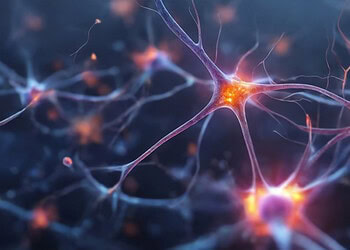
[Image by Phoenix Locklear from Pixabay]

[Image by Phoenix Locklear from Pixabay]

Share on TwitterShare on Facebook

While cognitive enhancement may sound like something out of a science fiction movie, it actually refers to any number of activities aimed at improving cognitive performance, from the mundane to the elicit. This includes non-pharmacological cognitive enhancement like meditation and a healthy diet as well as pharmacological cognitive enhancement (e.g., Adderall and Ritalin), which is particularly high among certain professional groups and students.

Views on the second type are varied, but this kind of cognitive enhancement tends to be perceived negatively by the general public, often due to their long term, deleterious effects, and also because they are seen as “cheating” and dishonest.

Other behaviors described as such, however, are often viewed positively by those demonstrating Machiavellianism, narcissism, and psychopathy traits, known collectively as the Dark Triad.

A group of Swiss researchers thus hypothesized that Dark Triad traits would correlate positively with favorable attitudes toward cognitive enhancement. A sample of 326 US employees were recruited from Amazon Mechanical Turk and asked to complete a short online questionnaire, including general attitude to pharmacological cognitive enhancement based on a 9-item scale.

Results show that Dark Triad traits were indeed positively associated with favorable attitudes toward pharmacological cognitive enhancement. In addition, openness to pharmacological cognitive enhancement was not on its own associated with either trait competitiveness nor competitive climates, which were also measured during the survey. Machiavellianism was most significantly related to positive attitudes, with narcissism and psychopathy traits coming in second and third, although in a statistically insignificant manner in robust analyses.

Together, these results indicate that context may be less important than personality when it comes to attitudes towards (pharmacological) cognitive enhancement, but also that Machiavellianism is a mediating factor. In fact, while competitive traits and climates alone were not associated with pharmacological cognitive enhancement favor, when paired with Dark Triad traits, a relationship emerged such that a more competitive climate led to more positive attitudes. This suggests that high Dark Triad individuals are either susceptible to influence by or willing to exploit such contexts.

Pharmacological cognitive enhancement is associated with a host of long term deleterious secondary effects, although in general, individuals fail to grasp their seriousness. The present study, “The Dark Triad of personality and attitudes toward cognitive enhancement”, may help prevention campaigns more effectively target those at risk of using pharmacological cognitive enhancement substances and educate them on the associated dangers.


RELATED

Shame makes people living in poverty more supportive of authoritarianism, study finds
Political Psychology

Egalitarians and anti-egalitarians share the same negative mental image of the poor

December 19, 2025
Cannabidiol may ease Alzheimer’s-related brain inflammation and improve cognition
Addiction

Non-intoxicating cannabis compound may reverse opioid-induced brain changes

December 19, 2025
Melatonin trial in older adults with cognitive impairment shows strong feasibility, but no clear effects yet
Anxiety

Escitalopram normalizes brain activity related to social anxiety disorder, study finds

December 19, 2025
Enhanced testosterone levels, hormonal balance, and their impact on male health and behavior.
Evolutionary Psychology

Testosterone alters how men respond to unfairness against women

December 19, 2025
Early trauma may hinder the ability to communicate sexual needs and boundaries in adulthood
Alcohol

Alcohol use linked to lower psychological resilience in soldiers, study finds

December 18, 2025
Girl taking a selfie on her smartphone, enjoying a drink, smiling and outdoors, illustrating social media, happiness, and modern communication.
Cognitive Science

Large meta-analysis links TikTok and Instagram Reels to poorer cognitive and mental health

December 18, 2025
Neuroscientists pinpoint part of the brain that deciphers memory from new experience
Ketamine

Volume reduction in amygdala tracks with depression relief after ketamine infusions

December 16, 2025
New psychology research flips the script on happiness and self-control
Cannabis

Naturalistic study reveals nuanced cognitive effects of cannabis on frequent older users

December 16, 2025

PsyPost Merch

STAY CONNECTED

LATEST

Egalitarians and anti-egalitarians share the same negative mental image of the poor

Does body mass index influence sperm quality in committed couples?

Non-intoxicating cannabis compound may reverse opioid-induced brain changes

How running tricks your brain into overestimating time

Escitalopram normalizes brain activity related to social anxiety disorder, study finds

Testosterone alters how men respond to unfairness against women

Scientists explain why nothing feels quite like the first time by tracking dopamine during fly sex

New AI system reduces the mental effort of using bionic hands

RSS Psychology of Selling

  • Experiments in sports marketing show product fit drives endorsement success
  • Study finds consumers must be relaxed for gamified ads to drive sales
  • Brain scans reveal increased neural effort when marketing messages miss the mark
  • Mental reconnection in the morning fuels workplace proactivity
  • The challenge of selling the connected home
         
       
  • Contact us
  • Privacy policy
  • Terms and Conditions
[Do not sell my information]

Welcome Back!

Login to your account below

Forgotten Password?

Retrieve your password

Please enter your username or email address to reset your password.

Log In

Add New Playlist

Subscribe
  • My Account
  • Cognitive Science Research
  • Mental Health Research
  • Social Psychology Research
  • Drug Research
  • Relationship Research
  • About PsyPost
  • Contact
  • Privacy Policy