![[Photo by Gage Skidmore]](https://sp-ao.shortpixel.ai/client/to_webp,q_glossy,ret_img,w_750,h_375/https://www.psypost.org/wp-content/uploads/2026/01/donald-trump-750x375.jpg)
A new analysis of American political discourse suggests that humor has evolved into a strategic weapon used to attack opponents and solidify support bases. The research indicates that both Donald Trump and Alexandria Ocasio-Cortez rely heavily on aggressive forms of comedy to persuade voters and deflect criticism. These findings were published in The European Journal of Humour Research.
Beer Prakken, a PhD candidate at the University of Groningen and visiting researcher at Utrecht University, led this investigation. He noticed a significant shift in how humor operates within the public sphere over the last decade. Scholars have historically viewed political comedy as a positive force for democracy or a tool for social justice.
Current trends indicate that right-wing populist leaders have effectively co-opted humor for different ends. Prakken sought to move beyond analyzing how comedians mock politicians on late-night television. He aimed to understand how politicians themselves utilize jokes to shape public perception and policy.
Existing research often characterizes the far-right through negative emotions such as anger or fear. Prakken wanted to investigate the role of positive emotions, such as fun and amusement, in these political movements. He argues that understanding the mechanics of political joking is essential to comprehending modern polarization.
“This study addresses both a real-world problem and a relevant academic gap. The problem is how politicians, especially far-right populists, increasingly use humor as a strategy to implement radical policy changes,” Prakken told PsyPost.
“For instance, the current Greenland situation started out as a joke by Trump, and it is still often presented as a ‘meme’ or humor by Trump, his team, and supporters. However academically, there remains a lack of scholarly work on how politicians, especially populists, use humor.”
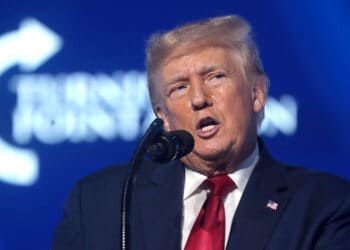
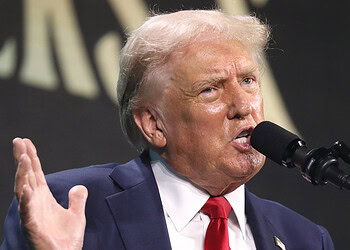
Prakken focused his analysis on two prominent but ideologically opposed figures: Donald Trump and Alexandria Ocasio-Cortez. He selected these two because they are highly visible on social media and serve as cultural icons for their respective bases. The study examined a specific timeframe in May 2019.
This period included active campaigning and online engagement for both politicians. The researcher collected data from 498 tweets and three major campaign speeches. Two speeches were from Trump rallies in Florida and Pennsylvania. One speech was from an Ocasio-Cortez rally regarding the Green New Deal in Washington, D.C.
The analysis employed a coding system to categorize humor into four distinct styles. These styles were aggressive, affiliative, self-promoting, and self-defeating. Aggressive humor involves ridicule or teasing, while affiliative humor is used to amuse others and facilitate relationships.
To ensure accuracy, the researcher used an intercoder agreement process. This involved multiple independent coders reviewing the text to verify that the categorization of humor was consistent and objective. The study sought to quantify not just the amount of humor, but the specific rhetorical function it served.
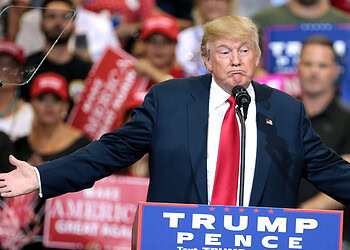
The analysis revealed significant differences in how these politicians employ humor across different platforms. Trump used humor extensively during his live rallies. He averaged about 1.2 humorous moments every minute in his speeches.
His use of humor on Twitter was relatively low by comparison, appearing in only about 9 percent of his posts. When Trump did joke online, it was almost exclusively hostile. The study found that 92 percent of his humorous tweets were classified as aggressive.
Ocasio-Cortez displayed an inverse pattern in her communication strategy. She used almost no humor during her live speech on the Green New Deal. In contrast, her Twitter feed was highly comedic.
Approximately 29 percent of her tweets during the study period contained humor. Like Trump, her online humor was predominantly aggressive in nature. She often used ridicule to target political opponents or critics.
Prakken identified a pattern he calls Humorous Political Rhetoric. This rhetorical strategy relies heavily on aggression to belittle opponents. It functions as a tool for persuasion by creating a sense of superiority over the target.
The research provides evidence that “humor is not ‘just a joke’ but a strategic weapon used by politicians,” Prakken explained. “We should take humor by politicians seriously, especially if politicians joke about violating liberal-democratic norms (such as being a dictator or invading foreign countries). Moreover, humor by both U.S. right-wing and left-wing politicians seems to manifest itself in negative ways. Their humor is mostly aggressive, deflects accountability, and complicates constructive political debate.”
The study also highlights how this dynamic creates a bond between the politician and their followers. Laughing together at a common enemy strengthens in-group loyalty. This shared amusement serves as an exclusionary tactic that solidifies the political base.
A key component of this rhetoric is the ability to deflect responsibility. By framing comments as jokes, speakers can claim they were not being serious if they face backlash. This creates a buffer that protects the speaker from the consequences of controversial statements.
Trump’s rhetoric often employed what Prakken describes as “liquid racism.” This refers to comments that rely on stereotypes but remain ambiguous enough to be denied. For example, the study cites a rally where Trump joked about identifying terrorists by their appearance.
The audience laughed, treating the comment as a shared joke. However, the underlying implication relied on racial profiling. The humor masked the severity of the statement while reinforcing stereotypes.
Ocasio-Cortez also utilized humor to deflect criticism and attack opponents. The study cites an instance where she faced backlash for a hyperbolic statement about the economy. She defended the remark as “dry humor” and mocked her critics for lacking a sense of humor.
She compared the Republican Party to the character Dwight Schrute from the television show The Office. This comparison used ridicule to frame her opponents as uptight and absurd. It effectively shifted the conversation from her factual accuracy to the personality of her critics.
The research also points to the deceptive nature of this rhetorical style. Both politicians engaged in trolling, which involves provoking opponents to elicit an emotional reaction. For Trump, this often involved jokes about extending his presidential term limits.
Prakken suggests that such jokes introduce ambiguity about democratic norms. It becomes difficult for audiences to distinguish between playful exaggeration and genuine intent. This ambiguity allows controversial ideas to enter the public discourse under the guise of comedy.
The researcher describes a phenomenon he calls “dark play.” This occurs when deceptive humor creates an environment where radical ideas are normalized. Over time, these playful interactions can transform into serious policy proposals or beliefs. The study suggests that the speaker themselves may become radicalized by this process. This phenomenon is referred to as “dark absorption.”
The humor serves as a testing ground for extreme ideas. If the reaction is negative, the politician can claim it was a joke. If the reaction is positive, the idea gains traction and legitimacy.
“Humor is not only used strategically,” Prakken told PsyPost. “Particularly, I argue that deceptive humor which never reveals itself (think about Trump joking about a third term to trigger liberal media) can transform playful intentions (such as just triggering liberals and having fun) into more serious actions amongst supporters and Trump himself. This deceptive humor called ‘dark play’ (playing with others in the dark) often enables serious radicalization, even if the intention started out as just a joke.”
“While there is not a lot of research into Trump’s humor use, the effects of his humor appear to be pretty significant. As said before, the Greenland stand-off with Europe began as a joke, Trump jokes about locking political adversaries up, Trump sends out memes about him as King or deporting immigrants, he often jokes about being a dictator for years now.”
“Humor should be interpreted broadly, as a playful in-group bonding of laughing together at a certain outgroup, in Trump’s case often U.S. liberals,” Prakken continued. “Hence, the popular internet phrase ‘trigger the libs’. Humor is able to mobilize and radicalize political support, or even transform jokes (such as invading Greenland) into serious policies.”
One limitation of this study is its focus on only two politicians during a single month. This narrow scope means the findings may not apply to all political discourse globally. The reliance on specific definitions of humor styles may also influence the interpretation of the data.
The study also focuses heavily on the American political context. Cultural differences in humor could lead to different results in other countries. The findings primarily address the output of the politicians rather than the direct psychological effect on the audience.
Future research could examine a broader range of political figures to see if these trends are universal. Prakken suggests that more work is needed to understand how humor contributes to radicalization. He intends to interview supporters to analyze how they perceive these humorous messages. He also plans to investigate figures who explicitly blend comedy with white nationalist ideologies.
“To be clear: I do not propose that we should ban politician’s humor, or any political speech for that matter,” Prakken said. “However, people should treat humor by politicians not as ‘just an unserious joke’ but as a political weapon. Also, liberal-minded people should be careful not to deny that Trump or conservatives use or experience humor. Right-wing humor is often characterized as ‘not real humor or not funny’ in liberal discourse or even in academic research.”
“Far-right movements are often portrayed through emotions like anger or fear in academic studies. I wanted to analyze the positive emotions in the far-right like humor and fun. For this project, I have already collected interview data with former and current MAGA supporters in the United States. Moreover, I am interested in the current rise of white nationalist Nick Fuentes who calls himself ‘somewhat of a comedian’ and clearly uses humor too to push his political agenda.”
The study, “Humorous political rhetoric in the US: analysing Trump’s and Ocasio-Cortez’s use of humour,” was authored by Beer Prakken.