![[Adobe Stock]](https://sp-ao.shortpixel.ai/client/to_webp,q_glossy,ret_img,w_750,h_375/https://www.psypost.org/wp-content/uploads/2024/04/mother-talking-with-child-daughter-750x375.jpg)
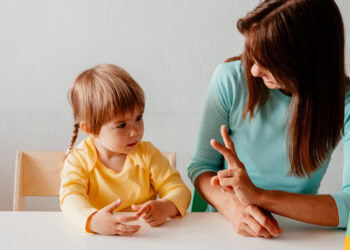
Children often learn how to navigate the world from their parents. A new study published in Developmental Science suggests that this includes how they interpret emotionally ambiguous situations. The findings indicate that children are more likely to mirror their parents’ emotional outlook—known as valence bias—particularly when the parent and child report higher levels of communication. This intergenerational pattern may play a subtle but important role in shaping how children approach uncertainty in daily life.
Valence bias refers to the tendency to interpret ambiguous emotional information—such as a surprised facial expression—as either positive or negative. For instance, a surprised face could signal good news, like an unexpected gift, or something more troubling, like an accident. How a person typically interprets these ambiguous cues offers insight into their emotional style. Some people lean toward optimistic interpretations, while others may expect the worst.
This bias tends to emerge early in development and appears to remain fairly stable over time. Research has shown that a more negative valence bias is associated with elevated symptoms of depression, anxiety, social withdrawal, and greater emotional reactivity. Understanding how this bias develops in children has implications for early interventions that promote emotional resilience.
The research team behind the new study, led by scientists at the University of Nebraska–Lincoln, wanted to investigate whether valence bias is passed down from parents to children. They also examined whether aspects of the parent–child relationship—particularly communication—might influence this process.
“For nearly 20 years now, I’ve been studying individual differences in how we respond to emotional ambiguity. That is, why is it that two people can look at the same image and have very different responses to it – one person seeing it as more negative and another as more positive?” explained study author Maital Neta, Happold Professor of Psychology, director of the Cognitive and Affective Neuroscience Lab, and co-author of the textbook Psychology of Emotion.
“We have found that the tendency to default to negative interpretations seems to be associated with symptoms of depression and anxiety, and we started to wonder how people come to have the lens, or the bias, that they have. And that’s what we explored in this latest study.”
The study included 136 parent–child pairs, with children ranging in age from 6 to 17 years. Most parents were mothers, and the sample came from urban and suburban communities in the Midwestern United States. To assess valence bias, both parents and children completed a behavioral task in which they viewed facial expressions and categorized them as either positive or negative. The task included clearly positive (happy) and negative (angry) expressions, as well as ambiguous ones (surprised).
The key focus was on how participants interpreted surprised faces. A higher proportion of “negative” responses to these expressions indicated a more negative valence bias. Children and parents completed the task separately, ensuring that children did not directly observe their parent’s choices.
In addition to the behavioral task, children completed a questionnaire assessing their attachment to their parent. This measure included three components: communication (the quality and quantity of communication between parent and child), trust (the degree of mutual understanding), and alienation (feelings of disconnection or separation).
The researchers used structural equation modeling, a statistical method that can estimate relationships between multiple variables even when some data are missing. They also conducted a permutation test, shuffling parent–child pairs to determine whether the observed relationships were stronger than what might be expected by chance.
The researchers found that children’s valence bias tended to resemble that of their parents. Specifically, there was a significant positive relationship between parent and child responses to the ambiguous stimuli. This association remained even after accounting for the child’s age and sex.
To test whether this effect was meaningful or could have occurred by chance, the researchers compared it to a null distribution created by randomly pairing children with adults who were not their parents. The real parent–child pairs showed significantly stronger alignment in valence bias than the randomly assigned pairs, lending weight to the idea that this pattern reflects an intergenerational link.
The study also explored whether the quality of the parent–child relationship influenced this transmission. Among the three attachment subscales, only communication emerged as a significant moderator. In families where children reported high levels of communication with their parent, the link between the parent’s and child’s valence bias was stronger. When communication was lower, this connection disappeared.
This suggests that children may be more likely to adopt their parent’s emotional interpretations of ambiguous events when there is an open line of communication between them. In families where emotional dialogue is more frequent or effective, children may learn not just what their parents believe, but how they process uncertainty or emotionally ambiguous situations.
“One of the major take-homes, which likely comes as no surprise, is that we are powerfully shaped by our caregivers,” Neta told PsyPost. “The way that our parents or other primary caregivers see the world dramatically shapes the way we see it. But in addition to that, our attachment to our caregivers influences the extent to which we are shaped by them –the more we have open lines of communication with our caregivers, the more likely they are to shape our world view.”
The other two dimensions of attachment—trust and alienation—did not show statistically significant effects, although there was a near-significant trend for alienation. Children who reported lower levels of alienation (i.e., feeling closer to their parent) also tended to show more alignment in valence bias with their parent, but this effect did not reach the conventional threshold for significance.
“It turned out that the extent to which a child reported having better communication with their parent was the main factor in how influential parents were in shaping their child’s bias. But other attachment-related factors like trust or companionship (the opposite of alienation) were not as important,” Neta said.
The researchers acknowledged some limitations, including the relatively homogenous sample and use of only White facial stimuli, which may restrict how broadly the findings apply. They also noted the lack of socioeconomic data and the cross-sectional design, which limits conclusions about causality. The study could not determine whether similarities in valence bias stem from genetic, environmental, or relational factors. Future research may explore the roles of temperament, brain mechanisms, other caregivers, and peers in shaping how children learn to interpret emotionally ambiguous situations.
“We studied children and adolescents and their primary caregiver – we did not intentionally recruit biological parents, but in this sample, all the primary caregivers were biological parents, and a large majority of them were mothers,” Neta noted. “Much more research is needed to understand the influence of fathers and non-biologically related caregivers, as these individuals surely also have a powerful influence on shaping our biases.”
“One next step is to broaden our scope to better characterize the influence of other caregivers, and even peers, on our bias. We’d also like to better understand the mechanism of these intergenerational influences – for example, is there a genetic explanation for the transmission of bias, or is it based more on parental modeling, or something else (and maybe there are multiple mechanisms acting together). Finally, we’d like to explore the brain mechanisms that shape the transmission of bias from parent to child.”
“We worked with an incredible team of collaborators on this work, and I am beyond grateful for all the shared ideas and expertise, and for our funding from the National Institute of Mental Health,” Neta added.
The study, “Intergenerational Transmission of Valence Bias Is Moderated by Attachment,” was authored by Ashley Humphries, Isabella Peckinpaugh, Grace Kupka, Robert James R. Blair, Nim Tottenham, and Maital Neta.